Sony ZV-E1 vs ZV-E10 • Which one is better?
Sony ZV-E1 vs ZV-E10 – Which One Is Better?
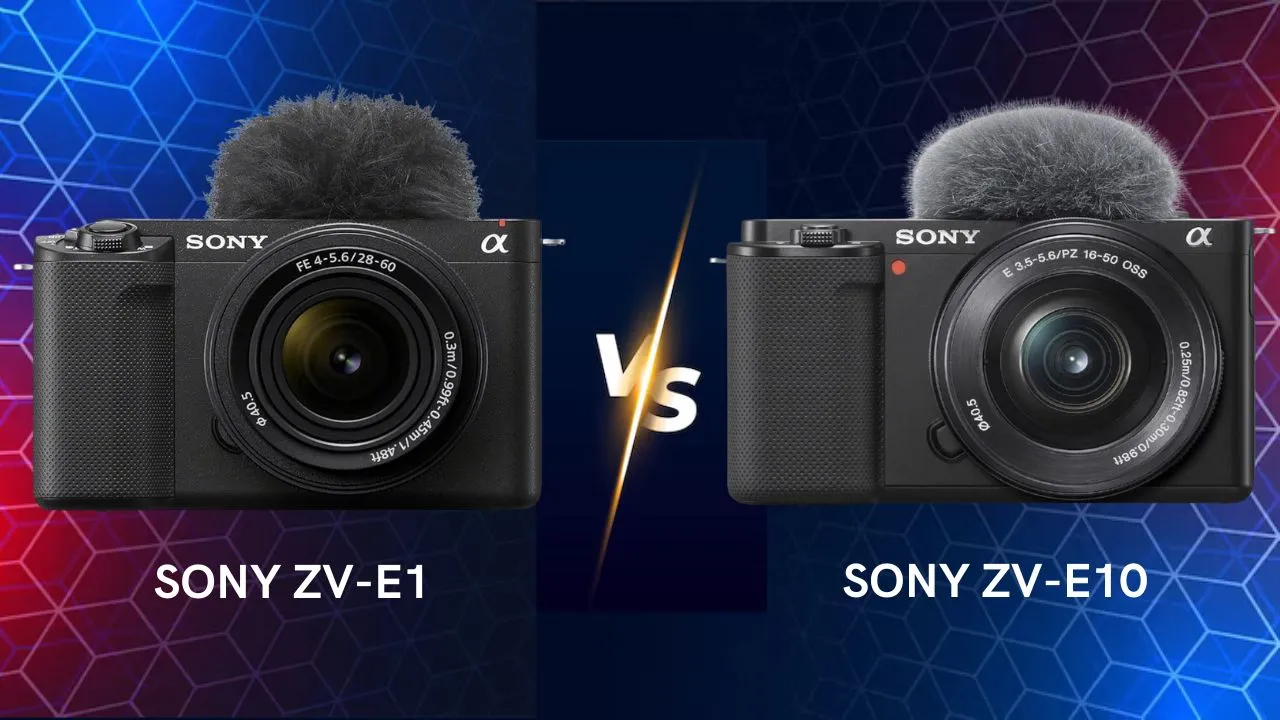
The Sony ZV-E1 and Sony ZV-E10 are two of Sony’s most popular cameras for creators — both designed specifically for vloggers, YouTubers, and content creators.
At first glance, they seem similar: both have a flip-out touchscreen, real-time Eye AF, and Sony’s signature color science. But under the hood, they’re very different.
The ZV-E1 is a premium full-frame camera built for cinematic-quality video and professional performance. The ZV-E10, on the other hand, is a budget-friendly APS-C camera that offers incredible value for beginners and intermediate creators.
So, which one is better for you? Let’s find out.
⚙️ Overview – Full-Frame Power vs Creator Value
Sony ZV-E1:
Sony’s flagship vlogging camera — featuring a 12 MP full-frame sensor (the same as the FX3), 4K 120p video, in-body stabilization, and advanced AI tracking. It’s designed for professional creators who want cinematic results in a compact form.
Sony ZV-E10:
A lightweight, affordable APS-C mirrorless camera with interchangeable lenses, a 24 MP sensor, and 4K 30p video. It’s perfect for beginners and YouTubers who want great quality without breaking the bank.
In short:
-
ZV-E1 = Premium full-frame video performance.
-
ZV-E10 = Budget-friendly APS-C for beginner creators.
📸 Specifications Comparison
| Feature | Sony ZV-E1 | Sony ZV-E10 |
|---|---|---|
| Release Date | March 2023 | July 2021 |
| Camera Type | Full-Frame Mirrorless (Video-centric) | APS-C Mirrorless (Entry-level Hybrid) |
| Sensor | 12.1 MP Full-Frame BSI CMOS | 24.2 MP APS-C CMOS |
| Processor | BIONZ XR + AI Processor | BIONZ X |
| Lens Mount | Sony E-Mount | Sony E-Mount |
| Crop Factor | 1.0x (Full-Frame) | 1.5x (APS-C) |
| ISO Range | 80–102,400 (expandable to 409,600) | 100–32,000 (expandable to 51,200) |
| Dynamic Range | 15+ Stops | ~13 Stops |
| In-Body Stabilization (IBIS) | 5-Axis IBIS + Dynamic Active Mode | ❌ No IBIS (Digital only) |
| Autofocus System | 759 Phase-Detect Points + AI Tracking | 425 Phase-Detect Points + Real-Time Eye AF |
| Video Recording | 4K 120p / 60p / 30p (10-bit 4:2:2) | 4K 30p / Full HD 120p (8-bit 4:2:0) |
| Bit Depth / Color | 10-bit 4:2:2 | 8-bit 4:2:0 |
| Log Profiles | S-Cinetone, S-Log3, HLG | Picture Profiles, No S-Log3 |
| Slow Motion | Up to 240 fps (Full HD) | Up to 120 fps (Full HD) |
| Stabilization Modes | Standard + Active + Dynamic Active | Electronic (Active only) |
| Microphone Input | ✅ 3.5mm | ✅ 3.5mm |
| Headphone Output | ✅ Yes | ❌ No |
| Built-in Mic | Directional 3-Capsule | Directional 3-Capsule |
| Screen Type | 3.0” Fully Articulating Touch LCD | 3.0” Fully Articulating Touch LCD |
| Viewfinder | ❌ No | ❌ No |
| Connectivity | USB-C 3.2, Wi-Fi 5GHz, Bluetooth | USB-C, Wi-Fi 2.4GHz, Bluetooth |
| Battery Type | NP-FZ100 | NP-FW50 |
| Battery Life (CIPA) | ~570 shots | ~440 shots |
| Body Material | Magnesium Alloy | Polycarbonate |
| Weight (Body Only) | 483 g | 343 g |
| Price (Body Only) | ~$2,199 (check on Amazon) | ~$699 (check on Amazon) |
🧱 Build and Handling
Both cameras share a compact, lightweight design and a flip-out screen — perfect for vloggers and handheld shooting.
The ZV-E1 feels more premium, with a magnesium alloy build, weather-resistant design, and deeper grip. It also includes advanced stabilization and a cleaner button layout.
The ZV-E10, while more basic, is incredibly portable and easy to use — ideal for beginners who want a straightforward camera that “just works.”
👉 Verdict:
-
ZV-E1: Better build, stabilization, and ergonomics.
-
ZV-E10: Smaller, simpler, and more travel-friendly.
🎯 Autofocus and Performance
Sony’s autofocus is industry-leading on both cameras — fast, accurate, and reliable.
The ZV-E1 takes it further with its AI Processing Unit, allowing Auto Framing, Multiple Face Recognition, and Real-Time Subject Tracking powered by deep learning.
The ZV-E10 also offers Real-Time Eye AF, but without AI-based subject tracking or the same processing speed.
👉 Verdict:
-
ZV-E1: Professional-level AI autofocus for dynamic scenes.
-
ZV-E10: Excellent AF for basic vlogging and talking-head videos.
🎥 Video Capabilities
This is where the ZV-E1 truly shines. It’s built for creators who demand cinematic video.
Sony ZV-E1
-
4K up to 120 fps (no crop)
-
10-bit 4:2:2 internal recording
-
S-Cinetone and S-Log3 profiles
-
Full-frame shallow depth of field
-
Dynamic Active Stabilization for smooth handheld shots
-
AI-powered Auto Framing
Sony ZV-E10
-
4K up to 30 fps (no crop)
-
8-bit 4:2:0 recording
-
No in-body stabilization
-
Great for talking-head or stationary video
-
120 fps slow motion in Full HD
👉 Verdict:
-
ZV-E1: Best for professional-grade, cinematic video.
-
ZV-E10: Best for casual or entry-level creators.
🧠 Image Quality
The ZV-E1 uses a full-frame sensor — delivering incredible low-light performance, better color depth, and that coveted cinematic bokeh.
The ZV-E10’s APS-C sensor still produces sharp, vibrant images, but can’t match the ZV-E1 in noise control or dynamic range.
👉 Verdict:
-
ZV-E1: Superior image quality, especially in low light.
-
ZV-E10: Excellent image quality for the price.
🔋 Battery Life and Connectivity
The ZV-E1’s NP-FZ100 battery delivers outstanding endurance and supports USB-C streaming and fast charging.
The ZV-E10, using the smaller NP-FW50 battery, offers decent life but shorter recording times.
Both feature Wi-Fi and Bluetooth, but the ZV-E1 adds 5GHz Wi-Fi for faster wireless transfers and livestreaming.
👉 Verdict:
-
ZV-E1: Longer battery life and better connectivity.
-
ZV-E10: Sufficient for casual use.
💰 Price and Value
| Model | Approx. Price | Ideal For |
|---|---|---|
| Sony ZV-E1 | ~$2,199 | Professional creators, filmmakers, vloggers |
| Sony ZV-E10 | ~$699 | Beginners, students, and travel vloggers |
_
The ZV-E1 costs over three times more, but delivers true full-frame performance and advanced features borrowed from Sony’s cinema line.
The ZV-E10, while limited in comparison, is unbeatable in value for entry-level creators.
👉 Verdict:
-
ZV-E1: Best for professionals or serious creators.
-
ZV-E10: Best for beginners on a budget.
Check availability and price on Amazon 🛒
📷 Sony ZV-E10 — Amazon USA / Amazon Canada / Amazon UK / Amazon Australia
📷 Sony ZV-E1 — Amazon USA / Amazon Canada / Amazon UK / Amazon Australia
Note: camerafight.com participates in the Amazon Associates Program. As an Amazon Associate, we earn from qualifying purchases.
🏁 Final Verdict – Sony ZV-E1 vs ZV-E10
| Type of User | Recommended Camera |
|---|---|
| Beginner YouTuber / Vlogger | ZV-E10 |
| Professional Content Creator | ZV-E1 |
| Travel Creator | ZV-E10 |
| Cinematic Filmmaker / Director | ZV-E1 |
| Low-Light Shooter | ZV-E1 |
| Budget Buyer | ZV-E10 |
| Hybrid Photo + Video User | ZV-E1 |
_
✅ In short:
Choose the Sony ZV-E10 if you want a lightweight, affordable, and easy-to-use camera that delivers great image quality and 4K video for social media.
Choose the Sony ZV-E1 if you’re a serious creator or filmmaker looking for cinematic video, AI tools, and professional performance in a compact body.
🧠 Final Thoughts
Both cameras are outstanding for creators, but they serve very different audiences.
The Sony ZV-E10 is the best entry-level mirrorless camera for beginners and casual vloggers — offering great 4K quality and simplicity at an amazing price.
The Sony ZV-E1, however, is a professional powerhouse — full-frame cinematic quality, unmatched low-light performance, and smart AI tools that make solo filmmaking easier than ever.
If you’re starting out, go for the ZV-E10.
If you’re ready to level up your content, the ZV-E1 is the camera that will take your videos to the next level.