Sony Alpha 7R IV vs Canon R6 Mark II – Which one is better?
Sony Alpha 7R IV vs Canon R6 Mark II – Which One Is Better?
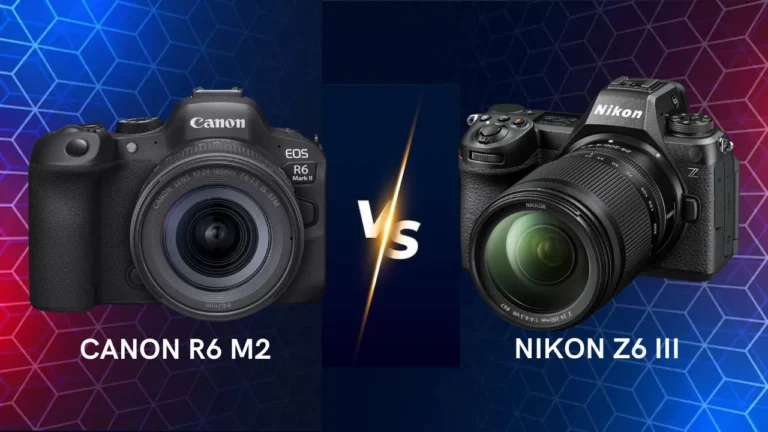
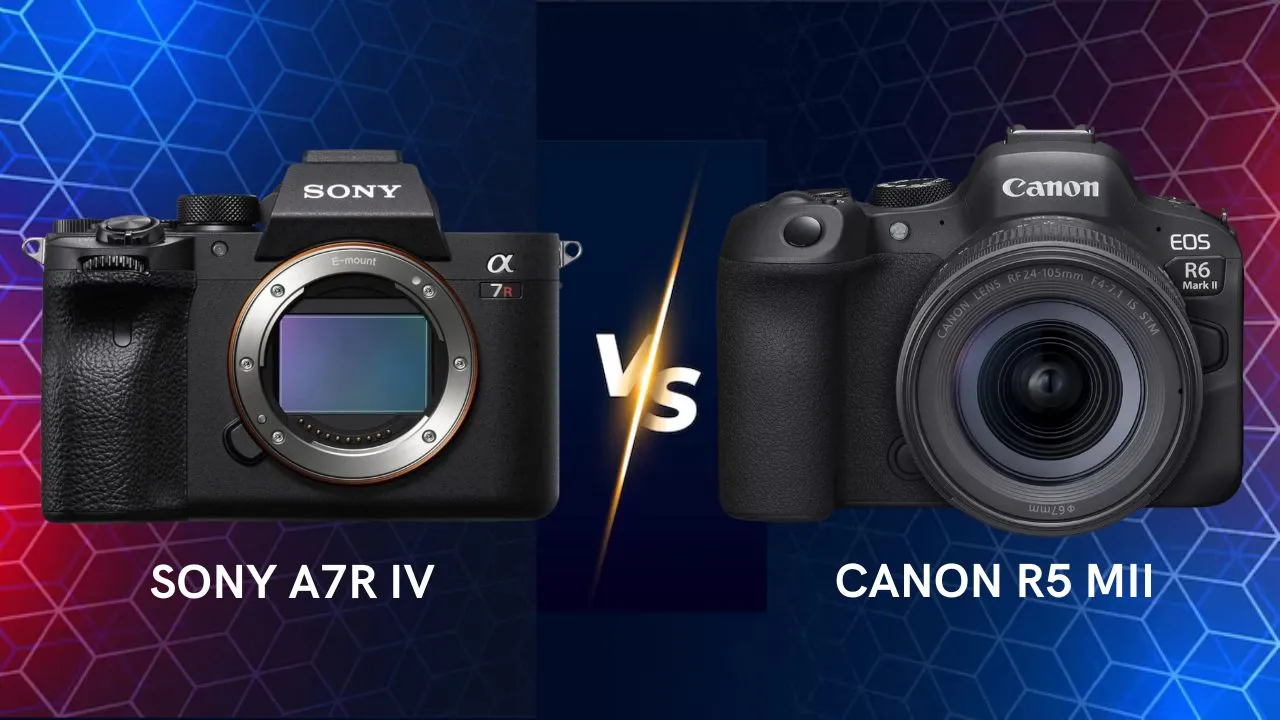
The Sony Alpha 7R IV and Canon EOS R6 Mark II are two excellent full-frame mirrorless cameras targeting advanced photographers and hybrid creators – but they serve very different purposes.
The A7R IV is a resolution powerhouse, designed for photographers who demand maximum detail and image fidelity. The R6 Mark II, on the other hand, is a versatile hybrid performer, combining speed, low-light excellence, and impressive video capabilities.
So, which one gives you the best value for your needs today? Let’s find out.
⚙️ Overview – Resolution Master vs Speedy Hybrid
Sony Alpha 7R IV:
A 61 MP full-frame mirrorless camera built for professional stills shooters. It offers exceptional resolution, dynamic range, and detail — perfect for landscapes, studio portraits, and commercial work.
Canon R6 Mark II:
A 24.2 MP full-frame hybrid camera that balances stills and video performance. With 40 fps burst shooting, superb autofocus, and 4K 60p 10-bit video, it’s ideal for creators who shoot both photo and video regularly.
In short:
-
A7R IV = Maximum resolution and detail for photography.
-
R6 Mark II = All-round hybrid camera with speed and low-light power.
📸 Specifications Comparison
| Feature | Sony Alpha 7R IV | Canon EOS R6 Mark II |
|---|---|---|
| Release Date | July 2019 | November 2022 |
| Sensor | 61 MP Full-Frame BSI CMOS | 24.2 MP Full-Frame CMOS |
| Processor | Dual BIONZ X | DIGIC X |
| Lens Mount | Sony E-Mount | Canon RF Mount |
| In-Body Stabilization (IBIS) | ✅ Yes (5-axis, up to 5.5 stops) | ✅ Yes (5-axis, up to 8 stops with lens) |
| Video Recording | 4K 30p (8-bit 4:2:0) | 4K 60p (10-bit 4:2:2, no crop) |
| Autofocus System | 567 Phase-Detect Points | Dual Pixel CMOS AF II (AI-based subject detection) |
| Continuous Shooting | 10 fps | 40 fps (electronic) / 12 fps (mechanical) |
| Viewfinder | 5.76M-dot OLED EVF | 3.69M-dot OLED EVF |
| Screen | 3.0” Tilting LCD | 3.0” Fully Articulating Touch LCD |
| Dual Card Slots | ✅ Dual UHS-II SD | ✅ CFexpress Type B + SD UHS-II |
| Weather Sealing | ✅ Yes | ✅ Yes |
| Battery Life (CIPA) | ~670 shots | ~580 shots |
| Connectivity | Wi-Fi, Bluetooth, USB-C | Wi-Fi, Bluetooth, USB-C, full-size HDMI |
| Weight (Body Only) | 665 g | 670 g |
| Price (Body Only) | ~$2,999 (check on Amazon) | ~$2,499 (check on Amazon) |
🧱 Build and Handling
Both cameras are built to professional standards with durable magnesium alloy bodies and full weather sealing.
The A7R IV has Sony’s traditional compact design with a tilting screen and a robust, premium feel. It’s optimized for tripod and studio use, with precise controls for detailed shooting.
The R6 Mark II offers a more ergonomic grip and user-friendly interface, especially for hybrid creators. Its fully articulating touchscreen and Canon’s intuitive menu system make it ideal for vloggers and filmmakers.
👉 Verdict:
-
A7R IV: Better for photographers working in controlled or studio environments.
-
R6 Mark II: More ergonomic and versatile for hybrid users and video work.
🎯 Autofocus and Performance
The A7R IV uses a 567-point phase-detection system that’s fast and accurate — especially for stills. However, it lacks newer AI-based subject recognition introduced in Sony’s latest cameras.
The R6 Mark II employs Canon’s Dual Pixel CMOS AF II with deep-learning AI detection, capable of recognizing humans, animals, vehicles, and even trains or planes. It’s faster, smarter, and extremely reliable in both stills and video.
With 40 fps burst shooting, the R6 Mark II is also far ahead in speed compared to the A7R IV’s 10 fps.
👉 Verdict:
-
A7R IV: Excellent autofocus for still photography.
-
R6 Mark II: Next-generation AF performance for both photo and video.
🎥 Video Capabilities
This is where the R6 Mark II shines as a hybrid camera.
Sony A7R IV
-
4K 30p (8-bit 4:2:0)
-
1080p 120p slow motion
-
S-Log2 / S-Log3 / HLG
-
Clean HDMI output
-
Limited to basic video users
Canon R6 Mark II
-
4K 60p (10-bit 4:2:2, full sensor readout)
-
6K RAW output via HDMI
-
Canon Log 3 / HDR PQ profiles
-
No 30-minute recording limit
-
Great heat management for long shoots
👉 Verdict:
-
A7R IV: Good for occasional video use.
-
R6 Mark II: Excellent for hybrid creators and professional video workflows.
🧠 Image Quality
The A7R IV’s 61 MP sensor produces breathtakingly detailed images — one of the highest resolutions available in a full-frame camera. It’s ideal for large prints, studio work, and commercial photography.
The R6 Mark II’s 24 MP sensor, while lower in resolution, offers excellent color science, smoother tonal transitions, and better low-light performance thanks to larger pixel size.
👉 Verdict:
-
A7R IV: Unbeatable resolution and detail for photography.
-
R6 Mark II: Cleaner high-ISO results and beautiful color rendering.
🔋 Battery Life and Connectivity
Both cameras use efficient, high-capacity batteries and support USB-C power delivery.
The A7R IV has slightly better endurance for still photography, lasting around 670 shots per charge, while the R6 Mark II offers around 580 shots, depending on usage.
Connectivity is more advanced on the Canon R6 Mark II, which supports CFexpress cards, full-size HDMI, and faster data transfers — great for hybrid workflows.
👉 Verdict:
-
A7R IV: Longer endurance for photography sessions.
-
R6 Mark II: Superior connectivity and workflow options for hybrid creators.
💰 Price and Value
| Model | Approx. Price | Ideal For |
|---|---|---|
| Sony A7R IV | ~$2,999 (check on Amazon) | Landscape, studio, and commercial photographers |
| Canon R6 Mark II | ~$2,499 (check on Amazon) | Hybrid creators, vloggers, and event photographers |
–
The A7R IV offers unmatched image resolution and is a better long-term tool for high-end still photographers.
The R6 Mark II, at a lower price, is the better all-around performer — faster, smarter, and far more capable for video.
👉 Verdict:
-
A7R IV: Best for photographers seeking maximum detail.
-
R6 Mark II: Best for hybrid creators who want speed, flexibility, and superior video performance.
Check availability and price on Amazon 🛒
📷 Sony A7R IV — Amazon USA / Amazon Canada / Amazon UK / Amazon Australia
📷 Canon R6 M2 — Amazon USA / Amazon Canada / Amazon UK / Amazon Australia
Note: camerafight.com participates in the Amazon Associates Program. As an Amazon Associate, we earn from qualifying purchases.
🏁 Final Verdict — Sony A7R IV vs Canon R6 Mark II
| Type of User | Recommended Camera |
|---|---|
| Landscape Photographer | A7R IV |
| Commercial / Studio Photographer | A7R IV |
| Portrait Photographer | A7R IV |
| Wedding / Event Shooter | R6 Mark II |
| Vlogger / YouTuber | R6 Mark II |
| Hybrid Creator (Photo + Video) | R6 Mark II |
| Low-Light Shooter | R6 Mark II |
| Fine-Art Photographer | A7R IV |
| Budget-Conscious Professional | R6 Mark II |
–
✅ In short:
Choose the Sony A7R IV if you’re a photographer focused on ultimate resolution, fine detail, and dynamic range.
Choose the Canon R6 Mark II if you’re a hybrid creator who values speed, advanced autofocus, and professional-grade 4K video performance.
🧠 Final Thoughts
The Sony A7R IV remains a benchmark for high-resolution photography — a true workhorse for professionals who prioritize detail and precision.
The Canon R6 Mark II, however, represents the new generation of hybrid cameras: fast, intelligent, and incredibly capable in both photo and video.
If your passion lies in pure photography, go for the A7R IV.
If you want a balanced, modern hybrid system that excels in any scenario, the R6 Mark II is the smarter and more versatile choice.