Sony Alpha 7R VI: The Reviews Are In! A Roundup of Web and YouTuber Opinions
Sony Alpha 7R VI Hands-On: Why Reviewers Call It a Game Changer
Test & Review – Sony Alpha Series – May 13, 2026
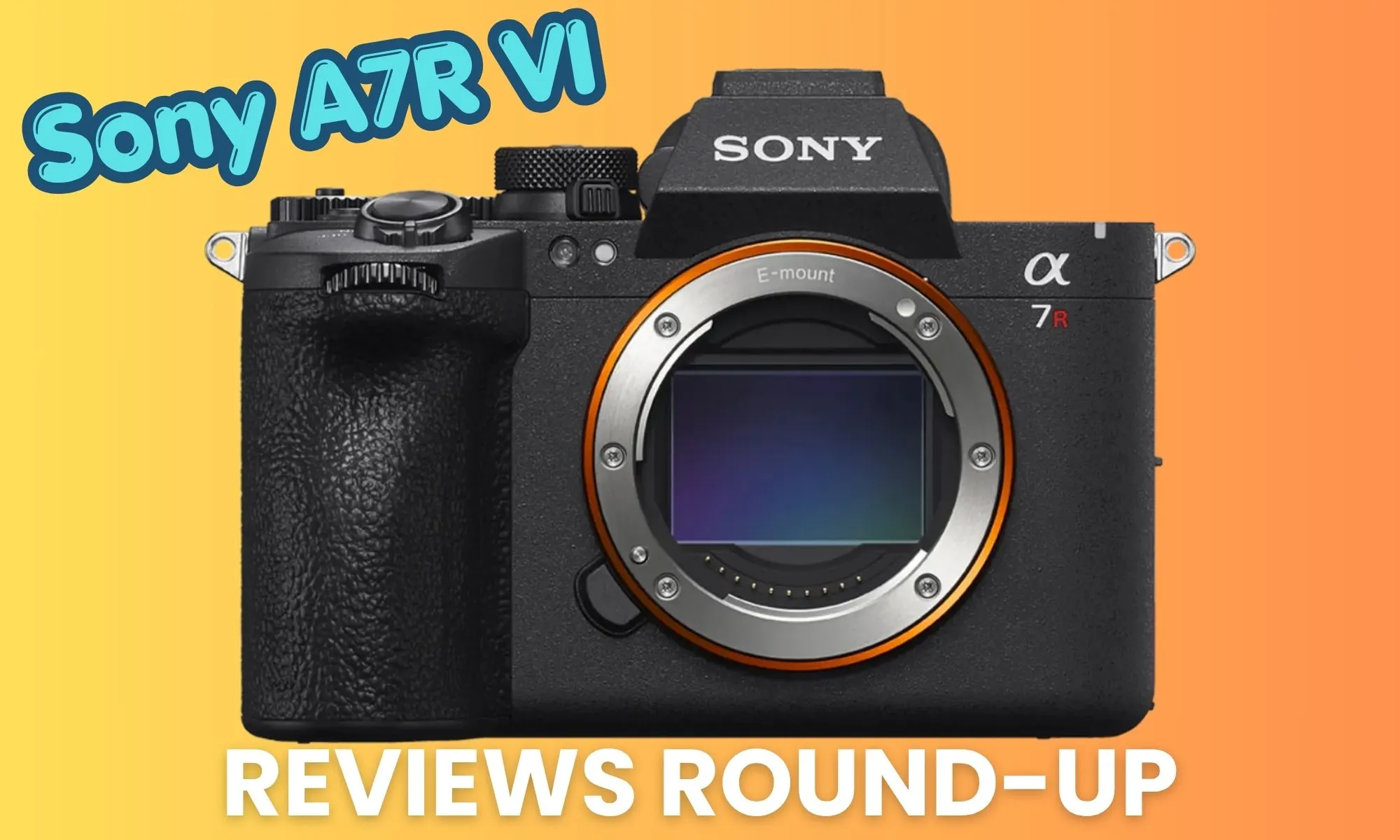
The direct successor to the Alpha 7R V, the Sony Alpha 7R VI is far more than a cosmetic refresh. By combining, for the first time, a 67-megapixel high-resolution sensor with a stacked architecture, Sony has created a camera capable of delivering both extreme precision and unprecedented speed.
But what do the people who have actually used it think?
The Specs That Change Everything
Before diving into the reviews, here’s what separates the A7R VI from its predecessor on paper:
| Feature | A7R V | A7R VI |
|---|---|---|
| Sensor | 61 MP BSI Exmor R | 67 MP stacked Exmor RS |
| Processor | BIONZ XR | BIONZ XR2 (2nd generation) |
| Burst Shooting | 10 fps | 30 fps blackout-free |
| Video | 8K 24p / 4K 60p | 8K 30p / 4K 120p (10-bit 4:2:2) |
| Stabilization | 8 stops | 8.5 stops + Dynamic Active Mode |
| Autofocus | 759 AI points | 759 points + insect detection |
| Battery Life | ~530 shots (NP-FZ100) | ~710 shots (NP-SA100) |
| Pre-Capture | No | Up to 1 second RAW |
| Dynamic Range | – | Claimed 16 stops |
| Rolling Shutter | Noticeable | Drastically reduced |
Ergonomics: The Small Details That Matter
While shooting in Japan, French photographer and YouTuber Pierre T. Lambert was particularly impressed by the ergonomic improvements. Minor on paper, but highly noticeable in daily use.
Redesigned Lens Mount Alignment
A small raised tactile marker now makes it easier to align lenses without looking at the front of the camera – a detail that matters during stressful or fast-paced shooting situations.
Finally, a Truly Tactile Mode Dial
The Auto button now protrudes clearly enough to identify by touch alone.
“Tactilely, it makes a real difference,” says Lambert.
Backlit Buttons
A small lamp illuminates the rear buttons in the dark – ideal for concert or night photographers, and fully customizable if you don’t need the feature.
The Electronic Viewfinder: A Quiet Revolution
According to Lambert, this may be the most impressive upgrade:
“The resolution is just insane. We now have an HDR EVF with 10-bit display – it felt like looking into an ultra-high-resolution screen.”
In practical terms, it allows photographers to see clipped highlights in real time – something the A7R V struggled with.
The Stacked Sensor: The Real Game Changer
The A7R VI’s biggest innovation is its 67 MP stacked Exmor RS sensor. Unlike traditional BSI sensors, this architecture enables ultra-fast readout speeds, bringing major benefits across the board.
Rolling Shutter Finally Under Control
This is one of the three main reasons Lambert recommends the camera:
“The drastic reduction in rolling shutter – that skew effect common with high-resolution sensors – has been massively reduced thanks to the new stacked sensor and processing architecture.”
French publication Phototrend agrees, noting that handheld 8K shooting now feels realistic rather than impossible.
30 FPS: Wildlife Photography Becomes Realistic
Jumping from 7 fps to 30 fps in 14-bit RAW completely transforms the “R” series.
Combined with pre-capture (up to 1 second before pressing the shutter) and the 66.8 MP sensor, the A7R VI now becomes viable for wildlife and sports photography – genres previously out of reach for the series.
Autofocus: Almost Surgical
Lambert recalls:
“Sometimes the camera locked onto a subject milliseconds before I even noticed it visually.”
Detection now includes insects alongside humans, animals, birds, and vehicles.
Color Science and White Balance: The Surprise of the Test
Perhaps the most unexpected discovery from field testing.
The A7R VI includes two small front-facing sensors – one infrared and one visible-light sensor – enabling more precise ambient light measurement and more pleasing color rendering.
“In shadows or dense vegetation, the difference is obvious. Images look warmer and more beautiful – to the point where I barely want to edit them anymore.”
– Pierre T. Lambert
This translates directly into less post-processing time – a major advantage for both professionals and enthusiasts.
In terms of pure image quality, the 67 MP sensor combined with a claimed 16-stop dynamic range puts the A7R VI at the top of its category. Sony also offers a 134 MP upscale mode via Imaging Edge software.
8.5 Stops of Stabilization: Handheld Shooting Gets Serious
Lambert tested stabilization under demanding conditions:
“I managed 4-second handheld exposures with a 55mm lens. On the A7R V, reaching 3 seconds was already difficult.”
In practice, this means tripod-free shooting in places where tripods are inconvenient – museums, Japanese streets, heritage sites.
One caveat: Dynamic Active stabilization introduces a fairly heavy crop. Phototrend notes that wide-angle lenses become almost mandatory in this mode.
New Battery: A Controversial Change
The A7R VI abandons the long-standing NP-FZ100 battery in favor of the new NP-SA100.
While existing Sony users may dislike the lack of compatibility, the performance gains seem justified.
Lambert reported shooting two full days:
- Day one: 500–1,000 photos over 4–5 hours, battery still at 61%
- Day two: from 100% down to 41% after a full day
“Honestly, battery life is great. I was surprised it lasted that long.”
Sony claims 710 shots per charge versus 530 on the A7R V.
Video: Strong, But Not Perfect
The A7R VI offers:
- 8K 30p
- 4K 120p 10-bit 4:2:2
- 32-bit float audio recording (via the new XLR handle)
A Sony first.
Dual Gain Mode
This new mode improves low-light dynamic range by combining two gain levels.
However, limitations include:
- 4K only
- Max 30 fps
- ISO capped at 400
- Slower sensor readout
Sony clearly positions it for static subjects like landscapes or posed portraits.
The Limitations
- No ProRes
- No internal RAW
- No Open Gate
- Heavy crop in Dynamic Active stabilization
Lambert is blunt:
“This is more for static-shot video. I wouldn’t recommend it for run-and-gun filmmaking.”
Press Roundup: What the Experts Say
PetaPixel – Editor’s Choice
★★★★★
For nature, landscape, and wildlife photographers, the A7R VI is described as near perfection.
“The a7R VI might be the last camera some photographers ever need to buy.”
PetaPixel even calls it:
“Arguably the most impressive camera Sony has ever released.”
Digital Camera World
4.5/5
Described as an “extraordinary high-resolution mirrorless camera” that transforms the A7R line from a slow studio tool into a fast hybrid flagship.
Main criticism: if resolution alone matters, upgrading from the A7R V may be difficult to justify financially.
Amateur Photographer
★★★★½
The 66.8 MP stacked sensor:
“Sets a new bar for high-resolution full-frame.”
Criticisms include:
- no wired remote trigger option
- slightly weaker AF reliability on bright subjects
- incompatibility with older batteries and accessories
Phototrend (9/10)
Recommended.
The most detailed French review concludes:
“Sony brilliantly reinvents its high-resolution lineup.”
The camera is no longer just a landscape specialist:
“It’s essentially a higher-resolution A7 V.”
However, frustrations remain:
- RAW buffer limited to 60 images
- new battery ecosystem
- 20/30 fps unavailable with some lenses
Who Is the Sony A7R VI For?
🏔️ Landscape Photographers
67 MP, 16 stops of dynamic range, and 8.5-stop stabilization make it ideal for huge prints and maximum detail.
🦅 Wildlife Photographers
30 fps, 1-second pre-capture, and AI subject detection finally make the R-series suitable for action shooting.
🎥 Hybrid Video Creators
8K 30p, 4K 120p, and 32-bit float audio make it excellent for travel and cinematic static shots.
🌆 Street & Documentary Photographers
Backlit controls, improved stabilization, and discreet handheld shooting make it an incredibly versatile premium camera.
Final Verdict
The Sony Alpha 7R VI is one of the most ambitious upgrades Sony has ever delivered in the R-series.
By adopting a stacked sensor, Sony finally breaks the wall separating high resolution from high speed.
For landscape, wildlife, and travel photographers, the value proposition is extremely compelling. For dedicated videographers, compromises remain – no ProRes, no internal RAW, and heavy stabilization crop.
Is it worth €600 more than the A7R V?
If versatility matters as much as resolution, probably yes.
Otherwise, the A7R V remains an excellent value on the used market.
As Lambert concludes:
“This camera is incredible.”
And that’s not something you often hear from a reviewer who initially admitted he “wasn’t excited at first.”