Sony A7 IV vs FX3 – Which one is better?
Sony A7 IV vs FX3 – Which One Is Better?
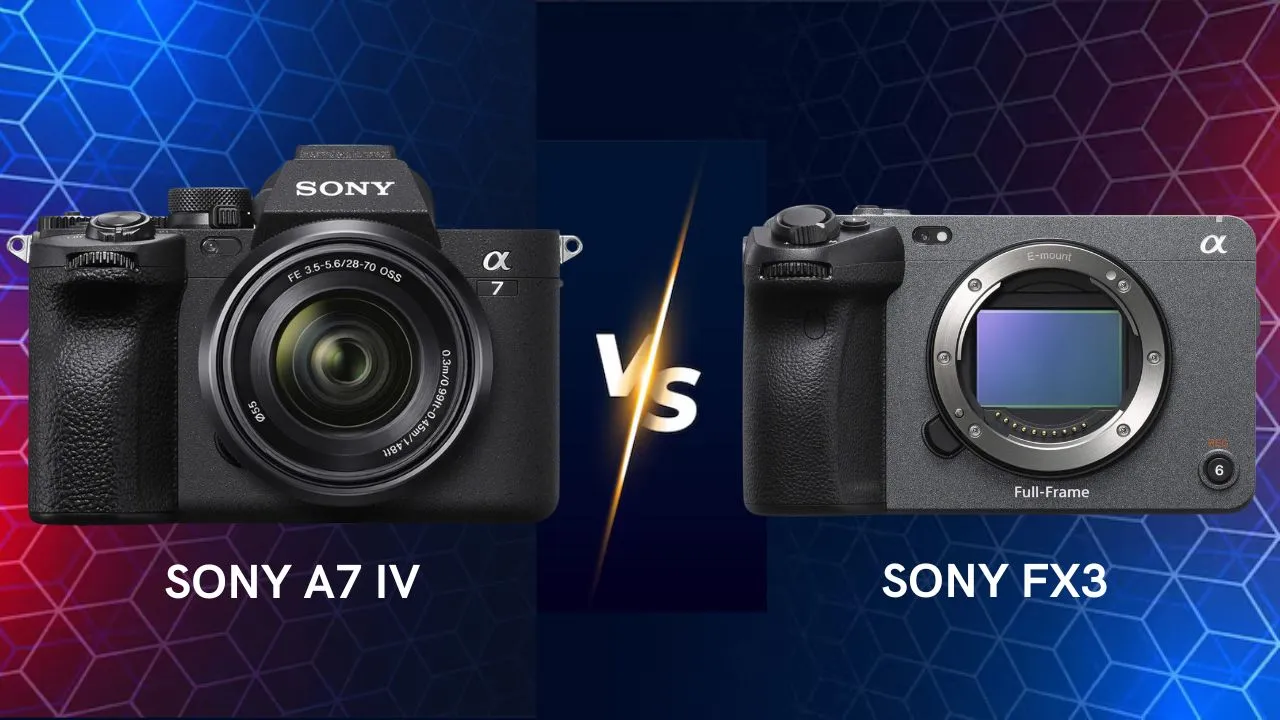
The Sony A7 IV and Sony FX3 are two of Sony’s most capable full-frame mirrorless cameras — both using the same 33 MP sensor and BIONZ XR processor.
However, while they share the same DNA, they target different kinds of creators. The A7 IV is a hybrid camera built for both stills and video, whereas the FX3 is a dedicated video tool in Sony’s Cinema Line.
So, which one should you choose? Let’s break it down.
⚙️ Overview – Hybrid Versatility vs Cinematic Focus
Sony A7 IV:
A do-it-all hybrid camera with outstanding image quality, 10-bit 4K recording, and professional autofocus. It’s designed for photographers, videographers, and content creators who need a single camera for everything.
Sony FX3:
A cinema-grade version of Sony’s A7 series, optimized for filmmaking. It offers identical image quality but adds advanced video features, active cooling, better audio options, and a design tailored for rigs and professional video work.
In short:
-
A7 IV = Balanced hybrid camera for both photos and video.
-
FX3 = Dedicated video camera for filmmakers and professionals.
📸 Specifications Comparison
| Feature | Sony A7 IV | Sony FX3 |
|---|---|---|
| Release Date | October 2021 | February 2021 |
| Sensor | 33 MP Full-Frame Exmor R CMOS | 12.1 MP Full-Frame Exmor R CMOS (same as A7S III) |
| Processor | BIONZ XR | BIONZ XR |
| Mount | Sony E-Mount | Sony E-Mount |
| In-Body Stabilization (IBIS) | ✅ Yes (up to 5.5 stops) | ✅ Yes (up to 5-axis with Active Mode) |
| Video Recording | 4K 60p (10-bit 4:2:2) / 4K 30p (full sensor) | 4K 120p (10-bit 4:2:2) / 4K 60p full-frame |
| Autofocus System | 759 Phase-Detection Points | 759 Phase-Detection Points |
| Continuous Shooting (Stills) | 10 fps | — (No photo shutter or viewfinder) |
| Viewfinder | 3.68M-dot OLED EVF | ❌ None |
| Screen | 3.0” Fully Articulating Touch LCD (1.03M dots) | 3.0” Fully Articulating Touch LCD (1.44M dots) |
| Audio Inputs | Mic + Headphone Jack | XLR/TRS combo (via handle) + 3.5mm jack |
| Cooling System | Passive | ✅ Active cooling fan (unlimited recording) |
| Dual Card Slots | ✅ Yes (CFexpress Type A + SD UHS-II) | ✅ Yes (CFexpress Type A + SD UHS-II) |
| Weather Sealing | ✅ Yes | ✅ Yes |
| Battery Life (CIPA) | ~580 shots / 100 min video | ~135 min video (longer via USB-C) |
| Weight (Body Only) | 659 g | 715 g |
| Price (Body Only) | ~$2,499 (check on Amazon) | ~$3,699 (check on Amazon) |
🧱 Build and Handling
The A7 IV has a classic mirrorless camera design — complete with an electronic viewfinder, deep grip, and photo/video selector. It’s comfortable to use for still photography and equally capable for handheld video work.
The FX3, on the other hand, ditches the viewfinder and mode dial for a compact, rig-friendly design. It includes multiple mounting threads, a top handle with XLR audio inputs, and built-in fan cooling for unlimited recording. The textured finish and layout are designed with filmmakers in mind.
👉 Verdict:
-
A7 IV: Best for hybrid users who shoot both photos and videos.
-
FX3: Best for filmmakers who rely on cages, rigs, and professional audio.
🎯 Autofocus and Performance
Both cameras use Sony’s 759-point phase detection AF system with Real-Time Eye AF and Real-Time Tracking for humans and animals.
The FX3 benefits from slightly refined autofocus tuning for video work — smoother focus transitions and better rack focus control.
Still photographers will appreciate the A7 IV’s ability to shoot up to 10 fps, while the FX3 lacks a mechanical shutter altogether (it can take stills, but it’s not optimized for photography).
👉 Verdict:
-
A7 IV: Best for photography and hybrid work.
-
FX3: Slightly smoother and more cinematic autofocus for video.
🎥 Video Capabilities
This is where the FX3 really earns its “Cinema Line” badge.
Sony A7 IV:
-
4K 60p (Super 35 crop) / 4K 30p (full sensor)
-
10-bit 4:2:2 internal recording
-
S-Cinetone, S-Log3, HLG profiles
-
Focus breathing compensation
-
4K recording limit-free, but no active cooling
Sony FX3:
-
4K 120p / 4K 60p (full-frame, 10-bit 4:2:2)
-
S-Cinetone, S-Log3, and HLG profiles
-
Active cooling fan (no overheating)
-
XLR handle for professional audio
-
Tally lights, timecode port, and better button placement for video operation
The FX3 produces identical image quality to the A7S III — rich dynamic range, excellent low-light performance, and cinematic color reproduction. It’s designed for long takes, professional sets, and heavy video workflows.
👉 Verdict:
-
A7 IV: Fantastic hybrid video quality for creators and YouTubers.
-
FX3: True cinema-grade experience with superior usability and cooling.
🧠 Image Quality
While both cameras produce stunning images, their strengths differ.
The A7 IV’s 33 MP sensor offers excellent detail and flexibility for both stills and video, with great dynamic range and manageable file sizes.
The FX3’s 12 MP sensor sacrifices resolution for low-light power — delivering cleaner footage at higher ISOs and better performance in dark scenes.
👉 Verdict:
-
A7 IV: Sharper, more detailed images for photography.
-
FX3: Superior low-light video performance and dynamic range.
🔋 Battery Life and Connectivity
Both use Sony’s long-lasting NP-FZ100 battery, but their endurance differs slightly due to design.
The A7 IV lasts longer for still photography, while the FX3’s cooling system allows uninterrupted video recording without overheating. Both feature USB-C PD charging, Wi-Fi, and Bluetooth for remote operation and streaming.
👉 Verdict:
-
A7 IV: Better overall endurance for hybrid users.
-
FX3: Unlimited recording with reliable cooling for video professionals.
💰 Price and Value
| Model | Approx. Price | Ideal For |
|---|---|---|
| Sony A7 IV | ~$2,499 | Photographers, hybrid creators, content makers |
| Sony FX3 | ~$3,699 | Professional filmmakers, videographers, production crews |
The A7 IV gives you incredible value as a true all-rounder camera — perfect for anyone balancing photo and video work.
The FX3, while pricier, justifies its cost with professional video features like XLR audio, unlimited recording, and cinema-ready usability.
👉 Verdict:
-
A7 IV: Best value for hybrid and solo creators.
-
FX3: Best investment for serious filmmaking.
Check availability and price on Amazon 🛒
📷 Sony FX3 — Amazon USA / Amazon Canada / Amazon UK / Amazon Australia
📷 Sony A7 IV — Amazon USA / Amazon Canada / Amazon UK / Amazon Australia
Note: camerafight.com participates in the Amazon Associates Program. As an Amazon Associate, we earn from qualifying purchases.
🏁 Final Verdict – Sony A7 IV vs FX3
| Type of User | Recommended Camera |
|---|---|
| Photographer | A7 IV |
| Hybrid Shooter | A7 IV |
| Professional Filmmaker | FX3 |
| Content Creator / YouTuber | A7 IV |
| Documentary Shooter | FX3 |
| Travel Filmmaker | FX3 |
| Event Shooter | A7 IV |
| Low-Light Videographer | FX3 |
| Budget-Conscious Buyer | A7 IV |
✅ In short:
Choose the Sony A7 IV if you need a camera that excels in both photography and video — with great image quality, reliability, and flexibility.
Choose the Sony FX3 if your focus is professional filmmaking — with the best low-light performance, unlimited recording, and cinema-ready ergonomics.
🧠 Final Thoughts
The Sony A7 IV is one of the best hybrid full-frame cameras ever made — a true all-rounder that delivers professional quality for both stills and video.
The Sony FX3, meanwhile, is a filmmaker’s dream: small, powerful, and purpose-built for cinema production. It trades away photography features for advanced video performance and reliability under demanding conditions.
If you shoot a mix of photography and video, go for the A7 IV.
If you shoot video full-time and need a camera that fits perfectly into a professional production pipeline, the FX3 is the clear winner.