Sony A7 III vs Sony A6700 – Which one is better?
Sony A7 III vs Sony A6700 – Which One Is Better?
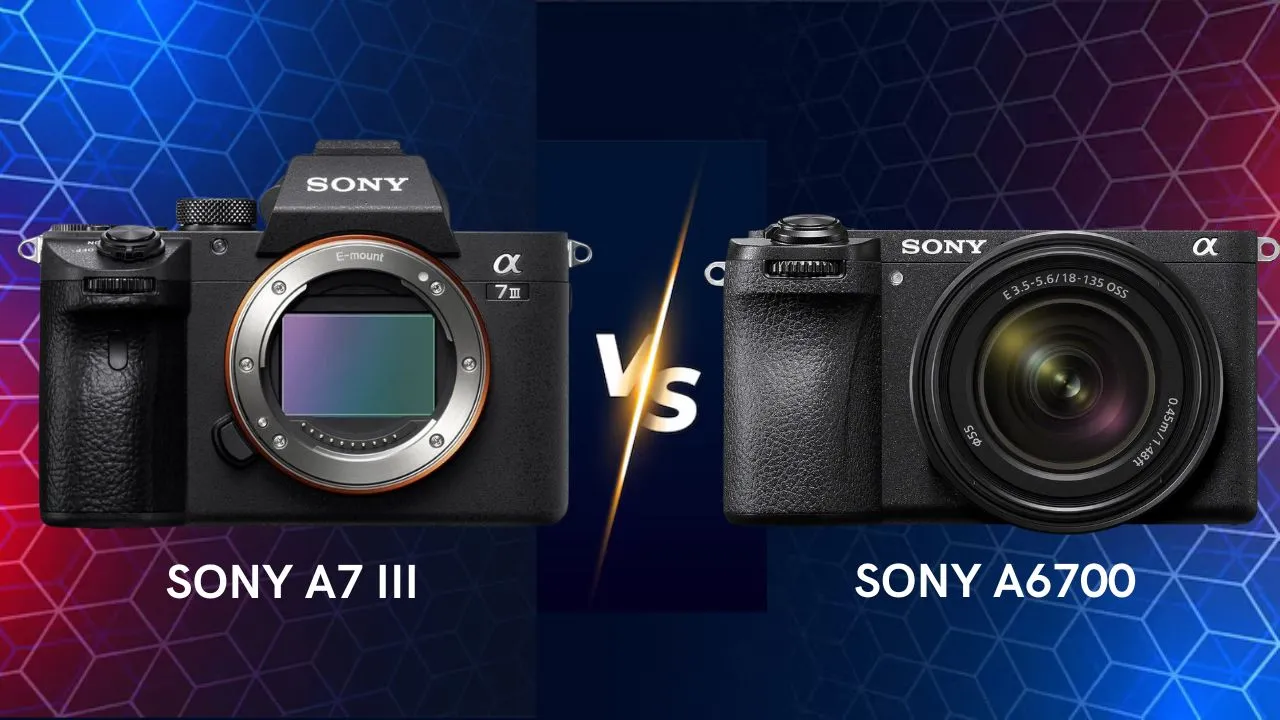
Deciding between the Sony A7 III and the Sony A6700 means comparing two very capable mirrorless cameras — but for quite different needs.
The A7 III is a full-frame powerhouse, built for serious stills and hybrid work.
The A6700 is a high-end APS-C model optimized for creators wanting a smaller body and modern features.
Let’s look at which one may be the better fit for you.
⚙️ Overview – Full-Frame All-Rounder vs APS-C Compact Hybrid
Sony A7 III (released February 2018)
A full-frame mirrorless camera aimed at photographers and hybrid creators who want full-frame image quality, robust lens options, good low-light performance, and a mature system.
Sony A6700 (released July 2023)
An APS-C mirrorless camera that brings very modern features — high-performance autofocus, compact body, creator-friendly video/stills hybrid capabilities — but with the APS-C size trade-offs.
In short:
-
Choose A7 III if full-frame image quality, lens system depth and long term flexibility matter most.
-
Choose A6700 if portability, hybrid workflow (video + stills), and a modern APS-C body are your priorities.
📸 Detailed Specifications Comparison
| Specification | Sony A7 III | Sony A6700 |
|---|---|---|
| Release date | April 2018 | July 2023 |
| Camera type | Mirrorless | Mirrorless |
| Sensor format | Full Frame (35.6 × 23.8 mm) | APS-C (23.3 × 15.5 mm) |
| Sensor type | BSI-CMOS | BSI-CMOS |
| Resolution | 24.2 MP | 26.0 MP |
| Image processor | BIONZ X | BIONZ XR + AI Processing Unit |
| ISO range | 100–51,200 (expandable to 204,800) | 100–32,000 (expandable to 102,400) |
| Autofocus system | 693-point phase-detection AF | 759-point phase-detection AF with AI subject recognition |
| Continuous shooting | Up to 10 fps | Up to 11 fps |
| Video recording | 4K up to 30p (8-bit, 4:2:0 internal) | 4K up to 120p (10-bit, 4:2:2 internal) |
| Viewfinder | 2.36M-dot OLED EVF | 2.36M-dot OLED EVF |
| LCD screen | 3.0″ tilting screen, 922k dots | 3.0″ fully articulating touchscreen, 1.03M dots |
| In-body image stabilization (IBIS) | Yes, 5-axis | Yes, 5-axis |
| Memory card slots | 2× SD (1× UHS-II, 1× UHS-I) | 1× SD (UHS-II) |
| Battery life (CIPA) | Approx. 710 shots | Approx. 570 shots |
| Weight (with battery & card) | Approx. 650 g | Approx. 493 g |
| Launch price (body only) | Approx. USD 2,000 (check on Amazon) | Approx. USD 1,400 (check on Amazon) |
🧱 Build, Handling & Portability
The A7 III gives you a full-frame body with deep grip, strong ergonomics, larger lens options, and a system built for serious use. If you often shoot with full-frame lenses, need depth, and don’t mind slightly larger/heavier gear, this body delivers.
The A6700 offers a lighter, more compact body thanks to the APS-C format. For creators who carry their camera a lot, travel often, shoot hybrid content (still + video) and prefer a smaller footprint, the A6700 is compelling.
Verdict:
-
Go A7 III if system size/weight is less of a concern and full-frame advantages matter.
-
Go A6700 if portability, carry-ease and modern hybrid features matter more.
🎯 Autofocus & Performance
Both cameras offer very capable autofocus systems, but with different strengths:
-
The A7 III offers mature full-frame AF, robust tracking and proven performance across many workflows.
-
The A6700 brings latest generation hybrid AF tuned for creators, video + stills, and benefits from recent technology.
Verdict:
-
For demanding subjects, deeper lens choices, full-frame depth → A7 III.
-
For fast hybrid workflows, creators juggling stills + video and smaller rigs → A6700.
🎥 Video Capabilities
If video is prominent in your workflow:
-
The A7 III provides full-frame look (depth of field, low-light) and strong stills + video hybrid credentials.
-
The A6700 may offer more modern video-centric features, in a lighter body, optimized for creator setups.
Verdict:
-
If full-frame video and stills are key → A7 III.
-
If video + stills in a compact, portable form matter → A6700.
🧠 Image Quality (Stills)
Full-frame (A7 III) provides advantages: better low-light performance, greater depth of field control, and more flexibility with lens choices. APS-C (A6700) still delivers excellent image quality, but there are trade-offs especially if you print very large or need maximum shallow depth.
Verdict:
-
For maximum still image quality and flexibility → A7 III.
-
For very good quality with lighter gear and more portability → A6700.
🔋 Ecosystem & Future-Proofing
The Sony E-Mount full-frame system (A7 III) is extremely mature: many lenses, third-party support, extensive accessories. That gives long-term flexibility.
The A6700 (APS-C) uses the same mount, so lenses are compatible, but if you later want full-frame lenses or larger format, you may face limitations or need new gear.
Verdict:
-
If long-term system growth, lens investment, full-frame future matter → A7 III.
-
If you are focusing now, value portability and modern features, and maybe stay APS-C → A6700.
💰 Price & Value
The A7 III, being older yet still very capable, presents strong value for full-frame. The A6700 offers modern features in APS-C format and as a newer model, may cost more relatively, but gives excellent performance for its category.
Verdict:
For best value full-frame → A7 III. Check the price of the Sony A7 III on Amazon USA!
For high performance in smaller format and modern feature set → A6700.
Check availability and price on Amazon 🛒
📷 Sony A6700 — Amazon USA / Amazon Canada / Amazon UK / Amazon Australia
📷 Sony A7 III — Amazon USA / Amazon Canada / Amazon UK / Amazon Australia
Note: camerafight.com participates in the Amazon Associates Program. As an Amazon Associate, we earn from qualifying purchases.
🏁 Final Verdict — Sony A7 III vs Sony A6700
| Type of User | Recommended Camera |
|---|---|
| Hybrid creator wanting full-frame image quality and system flexibility | Sony A7 III |
| Travel/creator who shoots stills + video, values light gear, modern APS-C features | Sony A6700 |
| Photographer who prioritises stills and full-frame depth of field | A7 III |
| Photographer or creator needing portability and modern workflow optimisations | A6700 |
✅ In Short:
Choose Sony A7 III if you want a full-frame body with broad lens ecosystem, strong performance, and you’re comfortable with a slightly larger gear load.
Choose Sony A6700 if you want excellent performance in a lighter APS-C body, prioritise portability, and work in hybrid workflows (video + stills).
🧠 Final Thoughts
Both cameras are excellent — the “better” one is really the one that aligns with your shooting style, workflow, gear preferences and future plans.
-
If you carry your camera often, shoot both stills and video in varying locations and want lighter gear → go A6700.
-
If you shoot serious stills, video, invest in lenses, aim for full-frame look and system growth → go A7 III.
Consider how you shoot, what gear you have or plan to buy, and what your priorities are — then choose the camera that fits you best.