Sony A7 III vs Panasonic G9 – Which one is better?
Sony A7 III vs Panasonic Lumix G9 – Which One Is Better?
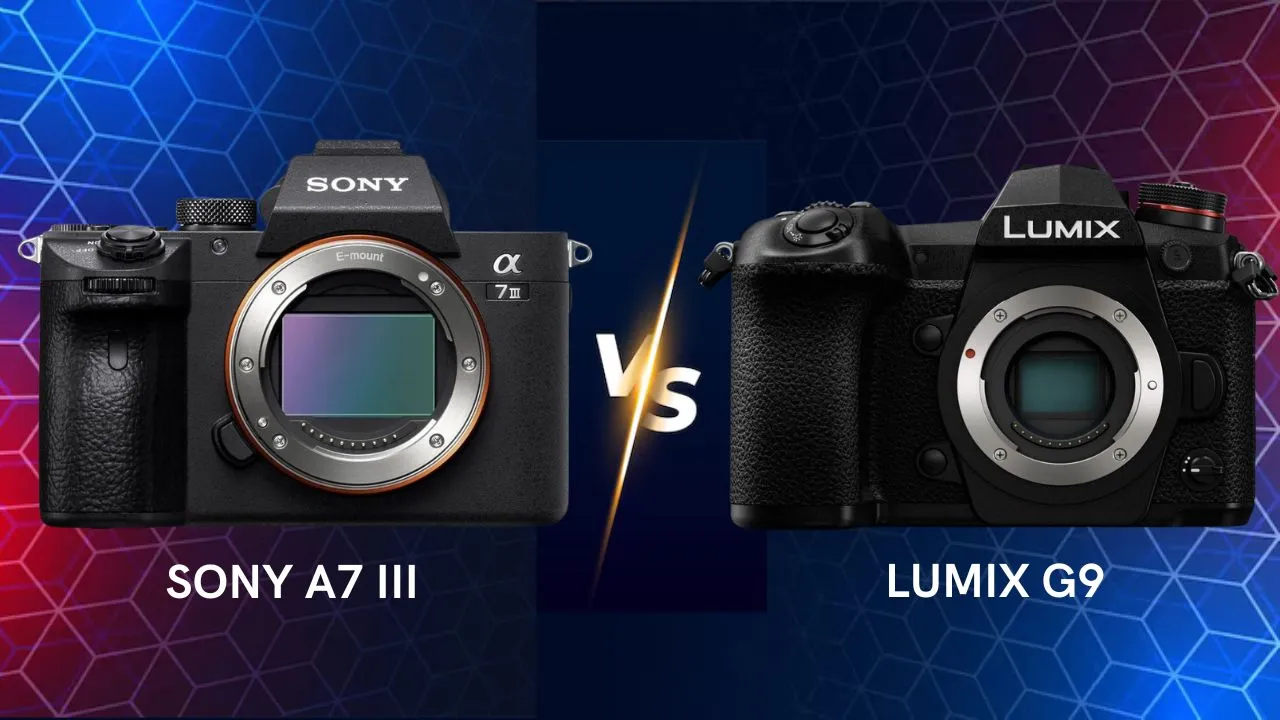
Comparing the Sony A7 III and the Panasonic Lumix G9 means weighing a full-frame powerhouse against a high-performing Micro Four Thirds (MFT) specialist.
They serve very different kinds of photographers with distinct priorities and workflows.
Let’s break down how they differ, and which might be the better fit for you.
⚙️ Overview — Full-Frame All Rounder vs MFT Action/Still Specialist
Sony A7 III:
A full-frame mirrorless camera that offers excellent image quality, strong hybrid video/still performance, a mature lens ecosystem and broad use-case flexibility.
Panasonic Lumix G9:
A Micro Four Thirds mirrorless camera geared toward high-speed stills, action, portability and strong stabilization—especially suited for photographers who prioritise handheld shooting, speed and versatility at lighter gear sizes.
In short:
-
A7 III = Best if you want full-frame image quality, depth of field control, strong low-light performance and a system you can grow into.
-
Lumix G9 = Best if you value speed, portability, high burst stills, compact lenses, and carry-light gear for action/travel.
📸 Key Specifications Comparison
| Specification | Sony A7 III | Panasonic Lumix G9 |
|---|---|---|
| Release date | April 2018 | November 2017 |
| Camera type | Mirrorless | Mirrorless |
| Sensor format | Full Frame (35.6 × 23.8 mm) | Micro Four Thirds (17.3 × 13.0 mm) |
| Sensor type | BSI-CMOS | CMOS |
| Resolution | 24.2 MP | 20.3 MP |
| Image processor | BIONZ X | Venus Engine |
| ISO range | 100–51,200 (expandable to 204,800) | 200–25,600 (expandable to 100) |
| Autofocus system | 693-point phase-detection AF | Contrast-detect DFD AF (225 areas) |
| Continuous shooting | Up to 10 fps | Up to 20 fps (electronic), 9 fps (mechanical) |
| Video recording | 4K up to 30p (8-bit, 4:2:0 internal) | 4K up to 60p (10-bit via firmware update, 8-bit internal) |
| Viewfinder | 2.36M-dot OLED EVF | 3.68M-dot OLED EVF |
| LCD screen | 3.0″ tilting screen, 922k dots | 3.0″ fully articulating touchscreen, 1.04M dots |
| In-body image stabilization (IBIS) | Yes, 5-axis | Yes, 5-axis (up to 6.5 stops with Dual I.S. 2) |
| Memory card slots | 2× SD (1× UHS-II, 1× UHS-I) | 2× SD (UHS-II) |
| Battery life (CIPA) | Approx. 710 shots | Approx. 400 shots |
| Weight (with battery & card) | Approx. 650 g | Approx. 658 g |
| Launch price (body only) | Approx. USD 2,000 (check on Amazon) | Approx. USD 1,700 |
🧱 Build, Handling & Portability
The Sony A7 III offers a full-frame body with substantial lens choices and a system built for serious photography/video work. It has good ergonomics, a deep grip and solid build, but full-frame lenses tend to be larger and heavier.
The Lumix G9, being a MFT format, allows smaller, lighter lenses and a body better optimized for handheld, fast capture and portability. If you travel a lot or shoot dynamic subjects handheld, the smaller system can be a big advantage.
Verdict:
-
Choose A7 III if you’re fine with larger lenses and gear for the benefits of full-frame.
-
Choose Lumix G9 if portability, speed and lighter gear matter most.
🎯 Autofocus & Performance
The A7 III’s autofocus is very capable, hybrid use proven and well-supported across many lenses. It’s strong in many scenarios including stills and video.
The Lumix G9 shines especially in still-photography speed: high burst rates, very good stabilization, compact lenses meaning quicker setups. For action, wildlife or fast-moving situations in a lighter rig, it has the edge.
Verdict:
-
For diverse use including video + stills, with full-frame benefits → A7 III.
-
For fast action stills, handheld speed, lighter rig → Lumix G9.
🎥 Video Capabilities
Both cameras deliver strong video, but with different emphases. The A7 III brings full-frame depth, great low-light capability, excellent lens choices for video. The G9 brings great handheld support, stabilization, smaller rig setups and very good video in a more portable package.
Verdict:
-
If you prioritise video + stills and full-frame look → A7 III.
-
If you primarily shoot stills but also want video and value a compact setup → Lumix G9.
🧠 Image Quality (Stills)
Full-frame (A7 III) naturally gives advantages: better depth of field control, improved high-ISO/low-light performance, full-frame lens optics. The G9 still produces excellent results, but MFT format has inherent trade-offs in depth, background blur, and full-frame sensor size benefits.
Verdict:
-
Choose A7 III if image quality and full-frame look are top priorities.
-
Choose Lumix G9 if you accept the trade-offs in exchange for portability and speed.
🔋 Ecosystem & Future-Proofing
Sony’s E-Mount full-frame system is mature, with a wide range of lenses (native and third-party) and strong future support. The Lumix G9’s MFT format also has many good lenses, particularly in the compact hero category, but may have less full-frame upgrade path if that matters to you.
Verdict:
-
For long-term growth and full-frame lens investment → A7 III.
-
For immediate performance, lighter kit and maybe staying MFT format → Lumix G9.
💰 Price & Value
The A7 III often offers strong value given its maintenance in the market, full-frame performance and lens ecosystem. The G9 offers fantastic value if you align with its strengths (speed, portability, stills focus) and don’t require full-frame depth.
Verdict:
For value in full-frame → A7 III.
For value in speed/lighter system → Lumix G9.
Check availability and price on Amazon 🛒
📷 Panasonic Lumix G9 — Amazon USA / Amazon Canada / Amazon UK / Amazon Australia
📷 Sony A7 III — Amazon USA / Amazon Canada / Amazon UK / Amazon Australia
🏁 Final Verdict — Sony A7 III vs Panasonic Lumix G9
| Type of User | Recommended Camera |
|---|---|
| Photographer/creator wanting full-frame image quality and a system built to grow | Sony A7 III |
| Photographer needing high speed, portability, action/focus priority, lighter gear | Panasonic Lumix G9 |
| Travel/handheld shooter needing lightweight rig | Lumix G9 |
| Hybrid still + video creator with full-frame look | A7 III |
✅ In Short:
Choose Sony A7 III if you value full-frame image quality, extensive lens ecosystem, hybrid stills + video capability and are okay with somewhat larger gear.
Choose Panasonic Lumix G9 if you value speed (especially for stills), portability, handheld operation and lighter gear, accepting the trade-offs of a smaller sensor format.
🧠 Final Thoughts
Both cameras are excellent—but the “better” one depends on how you shoot, what gear you carry, and what your priorities are.
-
If your priority is top-tier still image quality, full-frame look, great low-light performance and long-term system investment → go A7 III.
-
If you shoot action/faster stills, carry gear a lot, travel frequently, and want a very capable camera in a lighter package → go Lumix G9.
Reflect on your workflow, lens collection (or plans), travel habits, subject types and gear constraints — then pick the camera that fits you.