Sony A7 III vs Nikon Z7 – Which one is better?
Sony Alpha A7 III vs Nikon Z7 – Which One Is Better?
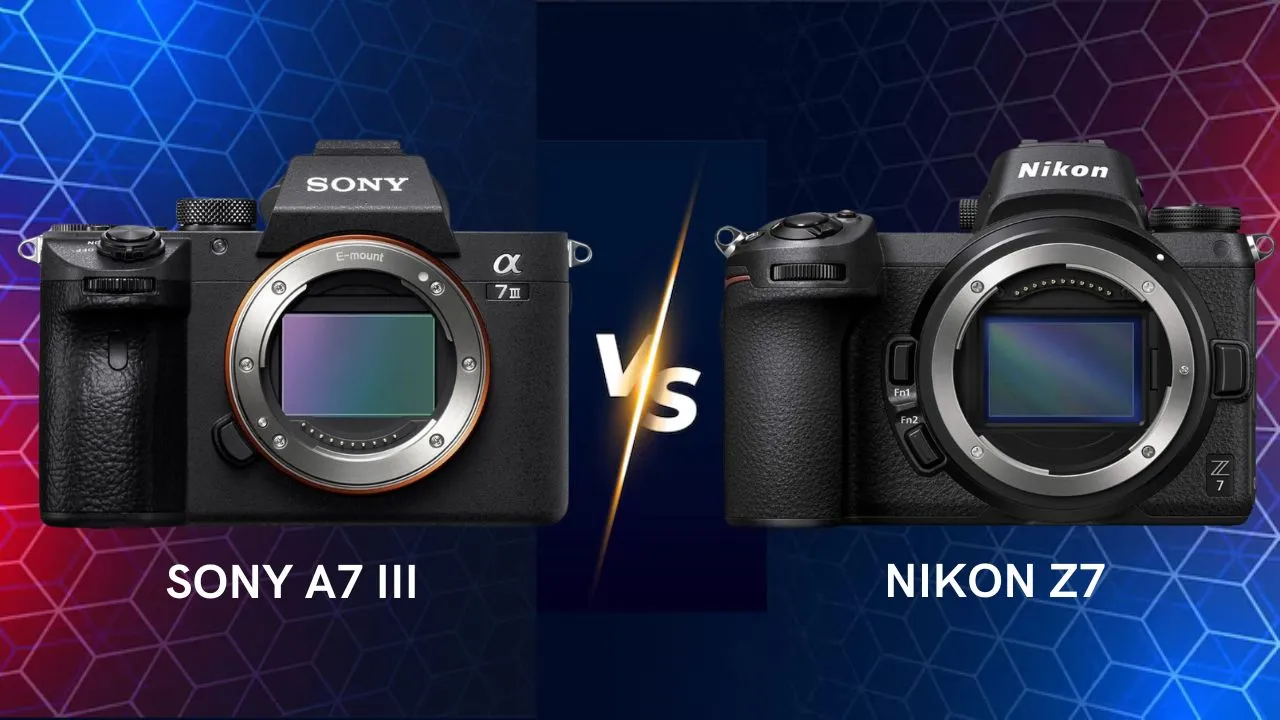
When comparing the Sony A7 III and the Nikon Z7, you’re looking at two full-frame mirrorless cameras that cater to slightly different priorities.
The A7 III is a well-rounded full-frame hybrid workhorse; the Z7 is a high-resolution full-frame shooter leaning more toward detail-oriented stills.
Let’s dive into how they stack up and which might be a better fit for you.
⚙️ Overview – Balanced Full-Frame Hybrid vs High-Resolution Full-Frame Specialist
Sony A7 III (released April 2018)
A full-frame mirrorless camera designed to offer excellent stills image quality, very capable video performance, strong autofocus, and broad system support. It’s often seen as a “sweet spot” full-frame camera for many photographers and hybrid users.
Nikon Z7 (released September 2018)
A full-frame mirrorless camera built around a high-resolution ~45.7 MP sensor, aimed at photographers who prioritise detail, resolution, large prints, and high-end stills. While it also handles video and hybrid workflows, its main strength is resolution and image quality.
In short:
-
A7 III = Best for versatility, hybrid work (stills + video), system flexibility.
-
Z7 = Best for high-resolution stills, print work, photographers focused on detail and image quality.
📸 Detailed Specifications Comparison
| Specification | Sony Alpha A7 III | Nikon Z7 |
|---|---|---|
| Release date | April 2018 | August 2018 |
| Camera type | Mirrorless | Mirrorless |
| Sensor format | Full Frame (35.6 × 23.8 mm) | Full Frame (35.9 × 23.9 mm) |
| Sensor type | BSI-CMOS | BSI-CMOS |
| Resolution | 24.2 MP | 45.7 MP |
| Image processor | BIONZ X | EXPEED 6 |
| ISO range | 100–51,200 (expandable to 204,800) | 64–25,600 (expandable to 32–102,400) |
| Autofocus system | 693-point phase-detection AF | 493-point phase-detection AF |
| Continuous shooting | Up to 10 fps | Up to 9 fps |
| Video recording | 4K up to 30p (8-bit, 4:2:0 internal) | 4K up to 30p (10-bit via HDMI, 8-bit internal) |
| Viewfinder | 2.36M-dot OLED EVF | 3.69M-dot OLED EVF |
| LCD screen | 3.0″ tilting screen, 922k dots | 3.2″ tilting touchscreen, 2.1M dots |
| In-body image stabilization (IBIS) | Yes, 5-axis | Yes, 5-axis |
| Memory card slots | 2× SD (1× UHS-II, 1× UHS-I) | 1× XQD / CFexpress Type B |
| Battery life (CIPA) | Approx. 710 shots | Approx. 330 shots |
| Weight (with battery & card) | Approx. 650 g | Approx. 675 g |
| Launch price (body only) | Approx. USD 2,000 (check on Amazon) | Approx. USD 3,400 (check on Amazon) |
🧱 Build, Handling & Portability
The A7 III offers a very well-balanced full-frame body: robust handling, good ergonomics, and deep system support. It shines for creators who shoot both stills and video, carry the gear often, and want flexibility.
The Z7, with its high-resolution sensor, may entail larger file sizes, more demanding lenses to fully utilise the resolution, and possibly heavier/ more premium gear to match its ambitions. For photographers focused on detail and print, these trade-offs are acceptable.
Verdict:
-
If you want a more general-purpose full-frame body with great ergonomics and broad support → go A7 III.
-
If you are focused on maximal image detail, high-resolution stills and don’t mind the larger investment in lenses and storage → consider Z7.
🎯 Autofocus & Performance
The Sony A7 III benefits from a mature autofocus system with excellent subject tracking, eye/face detection, and strong video/hybrid focus performance. The Nikon Z7 has a very capable AF system, focused on stills, but some users find it less nimble in fast-motion or hybrid video workflows compared to Sony.
Verdict:
-
For fast action, hybrid shooting (stills + video) and general-purpose performance → A7 III has the edge.
-
For controlled stills work (studio, landscape) where resolution matters more than frantic subject motion → Z7 is strong.
🎥 Video Capabilities
Both cameras support full-frame video workflows, but the Sony A7 III arguably has more balance between video and stills, making it a better hybrid tool. The Nikon Z7, while video capable, is more stills-oriented given its resolution and file load demands.
Verdict:
-
If video is a significant part of your workflow and you want stills+video hybrid flexibility → choose A7 III.
-
If video is secondary and stills resolution is primary → Z7 could be the better choice.
🧠 Image Quality (Stills)
Here is where the Nikon Z7 shines: with ~45.7 MP, it offers greater cropping flexibility, more detail for large prints, and higher resolution headroom. The A7 III’s ~24 MP sensor still delivers excellent image quality and is more than sufficient for many uses—but if ultra-detail is key, the Z7 has the advantage.
Verdict:
-
If stills image quality and resolution are your top priority → Z7.
-
If you want very good image quality with easier file management, faster performance and more versatility → A7 III.
🔋 Ecosystem, Lenses & Future-Proofing
Sony’s full-frame E-Mount system (for A7 III) is extremely mature: many lenses, strong third-party support, extensive accessories, and a large user base. The Nikon Z-Mount full-frame system (for Z7) is very good, especially for Nikon users, but its ecosystem was younger at launch and high-resolution workflows may demand more investment in lenses, storage etc.
Verdict:
-
For maximum lens access, system flexibility and upgradeability → A7 III wins.
-
For Nikon users or if you’re committed to Nikon’s system and high resolution work → Z7 is viable and strong.
💰 Price & Value
Given its broader adoption and lower resolution (hence fewer demands), the Sony A7 III often offers better value and is a more economical full-frame choice. The Nikon Z7, being higher resolution, may cost more in total system investment (lenses, storage, processing) but justifies it if you need the resolution.
Verdict:
For budget-conscious full-frame choice with strong all-round performance → A7 III.
If your budget allows and resolution is mission-critical → Z7.
Check availability and price on Amazon 🛒
📷 Nikon Z7 — Amazon USA / Amazon Canada / Amazon UK / Amazon Australia
📷 Sony A7 III — Amazon USA / Amazon Canada / Amazon UK / Amazon Australia
🏁 Final Verdict — Sony A7 III vs Nikon Z7
| Type of User | Recommended Camera |
|---|---|
| Hybrid shooter who does stills + video, values flexibility | Sony A7 III |
| Photographer needing high resolution stills, print work, detail-oriented | Nikon Z7 |
| Travel/field shooter needing full-frame in manageable gear | A7 III |
| Studio/landscape shooter needing large files and product detail | Z7 |
✅ In Short:
Choose the Sony A7 III if you want a versatile, mature full-frame camera system with great balance between stills, video and gear size.
Choose the Nikon Z7 if you prioritise resolution, detail and still photography, and are comfortable with the extra gear demands.
🧠 Final Thoughts
Both cameras are excellent—and the “better” one depends on how you shoot, what gear you carry, what system you prefer, and what your workflow demands.
-
If you carry your camera a lot, shoot both stills and video, value flexibility and system breadth → go A7 III.
-
If your work demands large prints, maximum detail, stills over video, and you’re committed to a high-res mindset → go Z7.
Think about your workflow, existing lenses, upgrade path and what you need most — then pick the camera that aligns best with you.