Sony A7 III vs Canon R7 – Which one is better?
Sony Alpha A7 III vs Canon EOS R7 – Which One Is Better?
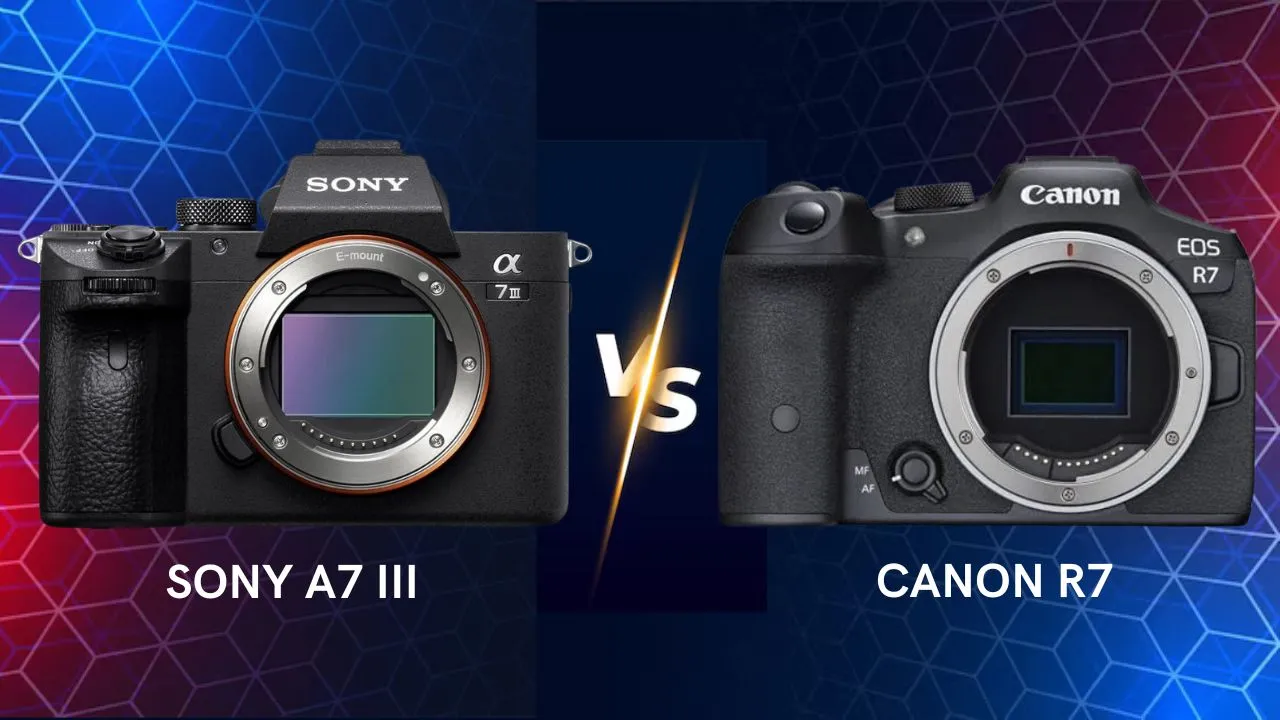
Choosing between the Sony A7 III and the Canon R7 means deciding not just between camera models, but between formats, ecosystems, and priorities.
The A7 III is a full-frame powerhouse, while the R7 is a high-achieving APS-C model.
Here’s a detailed comparison to help you determine which one is the better fit for you.
⚙️ Overview – Full-Frame Performer vs APS-C Specialist
Sony A7 III:
A full-frame mirrorless camera aimed at photographers and hybrid creators who want full-frame image quality, depth-of-field control, better low-light performance, and access to a broad full-frame lens ecosystem.
Canon R7:
An APS-C mirrorless camera designed for photographers (especially those shooting action, wildlife, travel) who value high resolution, fast burst rates, modern autofocus, and a lighter lens load.
In short:
-
A7 III = Best for full-frame image quality, system depth, serious hybrid work.
-
R7 = Best for high performance in APS-C format, lighter gear, high resolution for stills/action.
📸 Key Specifications Comparison
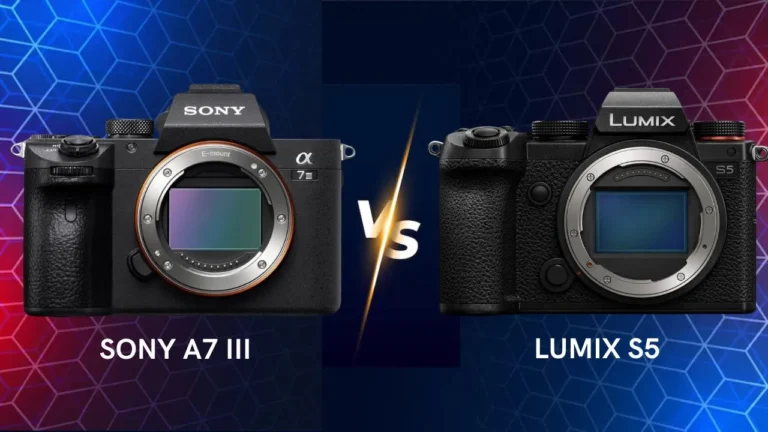
| Specification | Sony Alpha A7 III | Canon EOS R7 |
|---|---|---|
| Release date | April 2018 | June 2022 |
| Camera type | Mirrorless | Mirrorless |
| Sensor format | Full Frame (35.6 × 23.8 mm) | APS-C (22.3 × 14.8 mm) |
| Sensor type | BSI-CMOS | CMOS |
| Resolution | 24.2 MP | 32.5 MP |
| Image processor | BIONZ X | DIGIC X |
| ISO range | 100–51,200 (expandable to 204,800) | 100–32,000 (expandable to 51,200) |
| Autofocus system | 693-point phase-detection AF | Dual Pixel CMOS AF II (651 zones) |
| Continuous shooting | Up to 10 fps | Up to 15 fps (mechanical), 30 fps (electronic) |
| Video recording | 4K up to 30p (8-bit, 4:2:0 internal) | 4K up to 60p (oversampled from 7K, 10-bit internal) |
| Viewfinder | 2.36M-dot OLED EVF | 2.36M-dot OLED EVF |
| LCD screen | 3.0″ tilting screen, 922k dots | 3.0″ fully articulating touchscreen, 1.62M dots |
| In-body image stabilization (IBIS) | Yes, 5-axis | Yes, 5-axis (up to 7 stops with coordinated control) |
| Memory card slots | 2× SD (1× UHS-II, 1× UHS-I) | 2× SD (UHS-II) |
| Battery life (CIPA) | Approx. 710 shots | Approx. 660 shots |
| Weight (with battery & card) | Approx. 650 g | Approx. 612 g |
| Launch price (body only) | Approx. USD 2,000 (check on Amazon) | Approx. USD 1,500 (check on Amazon) |
🧱 Build, Handling & Portability
The A7 III offers a more traditional full-frame size and build, offering robust handling especially with large lenses, deeper grip, and full-feature body. It’s ideal if you don’t mind carrying larger gear.
The R7, being APS-C, brings a lighter lens load and more portability. If you shoot a lot on the go, travel frequently, or prefer lighter setups, the APS-C format gives you advantage in size and weight.
👉 Verdict:
-
Choose A7 III if you value full-frame handling, grip, and are okay with larger gear.
-
Choose R7 if you prioritise lighter weight, smaller lens size, and travel-friendly gear.
🎯 Autofocus & Performance
Autofocus is strong in both:
-
The A7 III brings full-frame hybrid AF, strong subject tracking, solid for both stills and video.
-
The R7 has very capable AF, high resolution APS-C sensor, faster burst rates (especially in APS-C crop), making it excellent for action, wildlife, sports.
👉 Verdict:
-
For demanding shoots, professional work, full-frame depth → A7 III has the edge.
-
For action, faster stills burst, lighter gear → R7 might be more suitable.
🎥 Video Capabilities
For video creators:
-
The A7 III delivers full-frame sensor benefits: shallower depth of field, better low-light performance, more cinematic look.
-
The R7, while APS-C, offers very good video capability and might even have advantages in lens size/weight for mobile rigs, but full-frame advantages are reduced.
👉 Verdict:
-
If full-frame video look matters: go A7 III.
-
If lighter rigs, travel, or stills-first creators who do video occasionally → R7 is strong.
🧠 Image Quality (Stills)
Full-frame (A7 III) generally has advantages: better high-ISO performance, more depth control, larger sensor benefits. APS-C (R7) still offers excellent image quality, especially for its size, but in very low light or critical large prints full-frame may have a lead.
👉 Verdict:
-
For maximum still image quality, full-frame look → A7 III.
-
For very good image quality with lighter gear and cost savings → R7.
🔋 Ecosystem & Future-Proofing
Lens/gear ecosystem matters a lot.
-
Sony’s full-frame E-Mount gives access to a vast range of full-frame lenses (which can be expensive and large).
-
Canon’s RF-Mount for APS-C (and full-frame) is strong, especially if you’re staying APS-C, but upgrading to full-frame later might involve new lenses.
👉 Verdict:
-
For long-term system building and full-frame flexibility → A7 III.
-
For immediate performance in APS-C and lighter investment → R7.
💰 Price & Value
The R7 may offer a better value if you’re getting APS-C performance at a lower gear cost and lighter setup. The A7 III costs more (especially when you factor full-frame lenses), but justifies it for full-frame benefits.
👉 Verdict:
-
On budget or lighter gear priority → R7.
-
If investment and full-frame quality matter → A7 III.
Check availability and price on Amazon 🛒
📷 Canon EOS R7 — Amazon USA / Amazon Canada / Amazon UK / Amazon Australia
📷 Sony A7 III — Amazon USA / Amazon Canada / Amazon UK / Amazon Australia
🏁 Final Verdict – Sony A7 III vs Canon R7
| Type of User | Recommended Camera |
|---|---|
| Photographer/creator who wants full-frame, maximum image quality and system flexibility | Sony A7 III |
| Creator or enthusiast who values lighter gear, faster burst, APS-C size and action capability | Canon R7 |
| Travel-oriented shooter needing portability | R7 |
| Hybrid content creator wanting full-frame look | A7 III |
✅ In Short:
Choose Sony A7 III if you want full-frame image quality, future-proof system, and don’t mind larger gear.
Choose Canon R7 if you want high performance, lighter gear, strong action/stills capability in APS-C format, and cost-efficient investment.
🧠 Final Thoughts
Both cameras are excellent—but the “better” one depends on how you shoot, what gear you carry, and what features you value most.
-
If you carry your camera often, travel frequently, shoot a lot of action and value light gear → go R7.
-
If you shoot serious stills + video, build up a lens system, and want full-frame advantages → go A7 III.
Consider your workflow, lens collection, budget and long-term goals — then pick the camera that aligns best with you.