Sony A7 III vs A7C – Which one is better?
Sony A7 III vs Sony A7C – Which One Is Better?
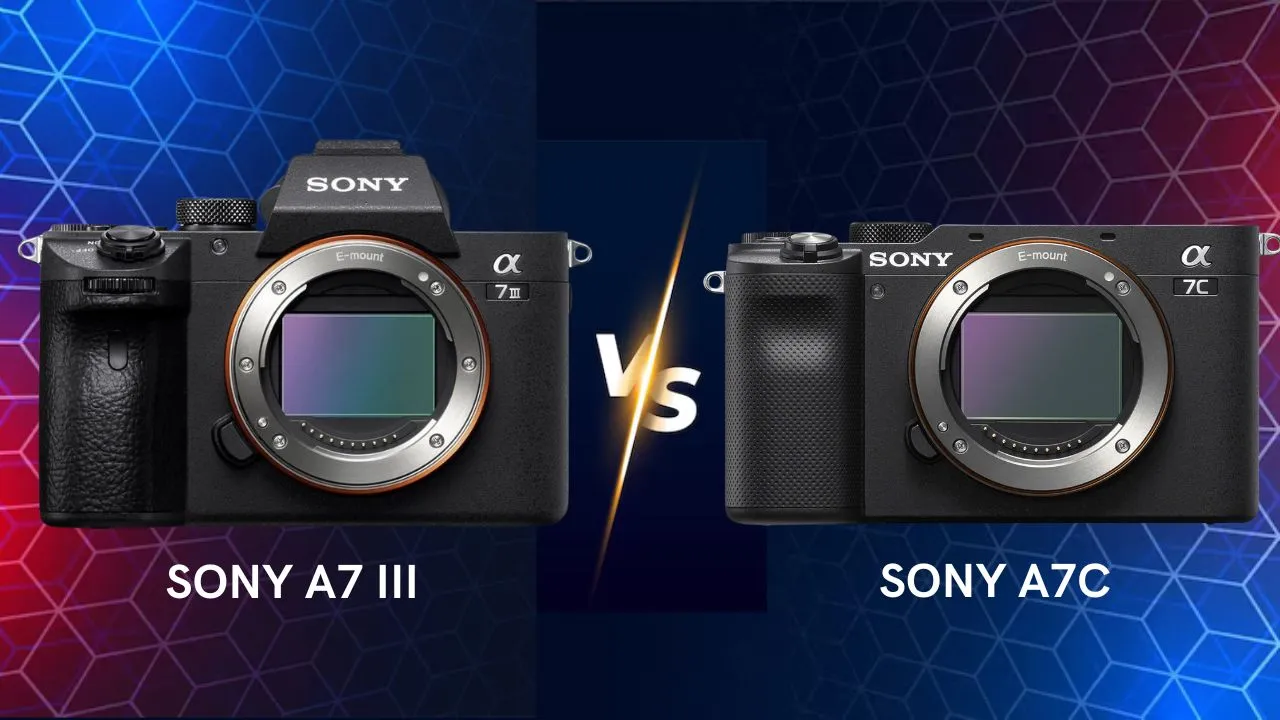
Choosing between the Sony A7 III and the Sony A7C comes down to balancing full-frame performance, portability, system needs, and budget.
Both are full-frame mirrorless cameras, but they suit different workflows and user preferences.
Here’s a detailed comparison to help you decide which one fits you best.
⚙️ Overview — Hybrid All-Rounder vs Compact Full-Frame Performer
Sony A7 III:
A full-frame mirrorless camera celebrated as a well-rounded “work-horse” for photographers and hybrid shooters alike. It offers excellent stills quality, stable video performance, strong build, and deep system flexibility.
Sony A7C:
A compact full-frame mirrorless body designed for creators who want full-frame image quality in a lighter, smaller package. It’s built for portability and ease of carry while delivering full-frame benefits.
In short:
-
A7 III = Best if you prioritise system flexibility, full-feature performance, and don’t mind slightly larger gear.
-
A7C = Best if you want full-frame image quality in a compact body, prioritise portability and lighter gear.
📸 Detailed Specifications Comparison
| Specification | Sony A7 III | Sony A7C |
|---|---|---|
| Release date | April 2018 | October 2020 |
| Camera type | Mirrorless | Mirrorless |
| Sensor format | Full Frame (35.6 × 23.8 mm) | Full Frame (35.6 × 23.8 mm) |
| Sensor type | BSI-CMOS | BSI-CMOS |
| Resolution | 24.2 MP | 24.2 MP |
| Image processor | BIONZ X | BIONZ X |
| ISO range | 100–51,200 (expandable to 204,800) | 100–51,200 (expandable to 204,800) |
| Autofocus system | 693-point phase-detection AF | 693-point phase-detection AF with Real-time Tracking & Eye AF |
| Continuous shooting | Up to 10 fps | Up to 10 fps |
| Video recording | 4K up to 30p (8-bit, 4:2:0 internal) | 4K up to 30p (8-bit, 4:2:0 internal) |
| Viewfinder | 2.36M-dot OLED EVF (center-mounted) | 2.36M-dot OLED EVF (rangefinder-style, corner-mounted) |
| LCD screen | 3.0″ tilting screen, 922k dots | 3.0″ fully articulating touchscreen, 921k dots |
| In-body image stabilization (IBIS) | Yes, 5-axis | Yes, 5-axis |
| Memory card slots | 2× SD (1× UHS-II, 1× UHS-I) | 1× SD (UHS-II) |
| Battery life (CIPA) | Approx. 710 shots | Approx. 740 shots |
| Weight (with battery & card) | Approx. 650 g | Approx. 509 g |
| Launch price (body only) | Approx. USD 2,000 (check on Amazon) | Approx. USD 1,800 (check on Amazon) |
🧱 Build, Handling & Portability
The A7 III offers a more “traditional” full-frame body: comfortable grip, full-feature ergonomics, dual card slots (in many versions), and is geared for serious hybrid work and extended shooting sessions.
The A7C brings full-frame sensor capability in a smaller, more portable body—ideal for travel, everyday carry, creators who move fast, or those concerned with gear size/weight.
👉 Verdict:
-
Choose A7 III if you prioritise ergonomic comfort, feature-rich body, deep hand-grip, longer sessions and system flexibility.
-
Choose A7C if portability, compactness and full-frame quality in a lighter body matter most.
🎯 Autofocus & Performance
Both cameras deliver excellent autofocus performance, but the A7 III often edges ahead in terms of overall tracking, frame coverage, and system maturity because it’s been around longer and matured with firmware updates. The A7C offers nearly all of that performance in a smaller body but may trade off slightly in grip or extendibility in demanding professional workflow contexts.
👉 Verdict:
-
For demanding hybrid shooting (photo + video), action, professional work → A7 III.
-
For everyday shooting, travel, carrying light and strong AF performance in compact body → A7C.
🎥 Video Capabilities
Both handle video very well, offering full-frame advantages in depth of field, low-light performance, and creative flexibility. The A7 III may have more dedicated features, options or accessories available given its position; the A7C gives nearly full performance but in a smaller footprint.
👉 Verdict:
-
If video is a large part of your workflow, and you use accessories, rigs, or need extensive features → A7 III.
-
If you do stills + video but favour lighter gear and portability → A7C.
🧠 Image Quality (Stills)
Since both are full-frame and of similar resolution, image quality will be very close. You’ll benefit from full-frame depth, high dynamic range, better low-light performance vs APS-C. Differences come down more to lens quality, shooting conditions and workflow than the sensor itself.
👉 Verdict:
-
Both deliver excellent still image quality.
-
Choose A7 III if you want maximum flexibility, and lens/system growth.
-
Choose A7C if you want excellent quality with smaller size and greater portability.
🔋 Ecosystem & Future-Proofing
Because both share the Sony E-Mount full-frame system, you have access to the same lens ecosystem. However:
-
The A7 III may offer more full-feature support for future upgrades, accessories, rigs and professional workflows.
-
The A7C offers full-frame access in more compact body, and may make lens/lens-size tradeoffs requiring smaller or lighter options.
👉 Verdict:
-
For long-term system building and extra flexibility → A7 III.
-
For compact full-frame access and travel/system-light approach → A7C.
💰 Price & Value
The A7 III is often found at a very strong full-frame value relative to many newer full-frame models. The A7C commands a premium for compact full-frame format but offers strong value if size matters.
👉 Verdict:
-
Choose A7 III if you want full-frame performance and are okay with a slightly larger/older body for less cost.
-
Choose A7C if you value the smaller size and are willing to pay (or accept) slightly less grip/expandability for portability.
Check availability and price on Amazon 🛒
📷 Sony A7C — Amazon USA / Amazon Canada / Amazon UK / Amazon Australia
📷 Sony A7 III — Amazon USA / Amazon Canada / Amazon UK / Amazon Australia
🏁 Final Verdict — Sony A7 III vs Sony A7C
| Type of User | Recommended Camera |
|---|---|
| Hybrid photographers/creators needing full-feature body and system flexibility | Sony A7 III |
| Travel/content creators wanting full-frame in a compact, light setup | Sony A7C |
| Still/image-centric photographers who want full-frame quality with less bulk | A7C |
| Event/portrait shooter needing grip, accessories, versatile system | A7 III |
✅ In Short:
Choose Sony A7 III if you want a full-frame all-rounder with serious credentials, strong system potential and you accept a larger body.
Choose Sony A7C if you want full-frame image quality in the most compact full-frame body possible, prioritising portability and lighter kit.
🧠 Final Thoughts
Both cameras are excellent. The “better” one depends on how you shoot, what gear you carry, what you prioritise, and what your upgrade path is.
If you travel often, shoot stills + video, and carry gear daily → go A7C.
If you work professionally, want top flexibility, and build a system of lenses/accessories → go A7 III.
Reflect on your gear habits, workflow, and future plans — then choose the camera that aligns best with you.