Sony A6700 vs Nikon Z50 II – Which one is better?
Sony A6700 vs Nikon Z50 II – Which One Is Better?
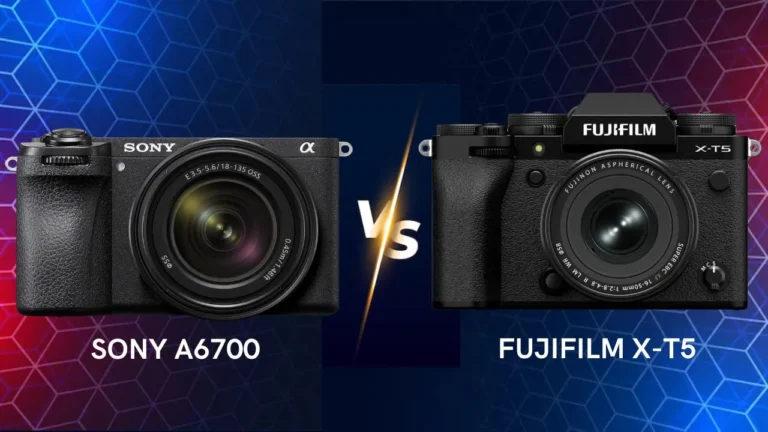
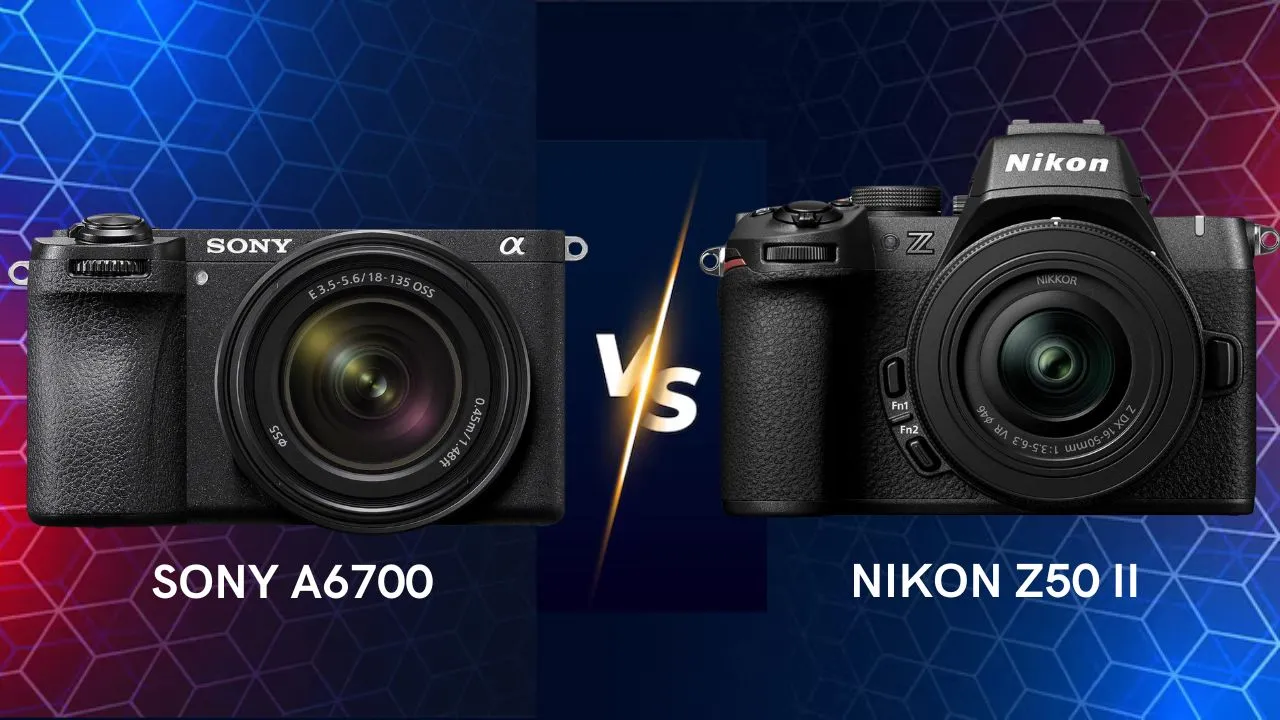
Comparing the Sony A6700 and Nikon Z50 II brings us to two strong mirrorless cameras in the APS-C category, but with different emphases.
The A6700 is a performance-focused APS-C model designed for creators who demand hybrid capabilities, while the Z50 II is a beginner-friendly APS-C hybrid from Nikon offering ease of use, good value, and a simple upgrade path.
This article will walk through how they compare and which might be the better pick for you.
⚙️ Overview – High-Spec APS-C Hybrid vs Entry-/Mid-Level APS-C Hybrid
Sony A6700:
A modern APS-C mirrorless camera built for creators who want excellent autofocus, strong stills + video performance, hybrid flexibility, and a system that supports future expansion.
Nikon Z50 II:
An APS-C mirrorless camera from Nikon that is aimed at enthusiasts and hybrid shooters looking for a capable, user-friendly system. It balances stills and video well and is appealing if you already use Nikon or want a smooth entry into mirrorless.
In short:
-
A6700 = Best for creators who prioritise speed, hybrid workflow, future system flexibility.
-
Z50 II = Best for users who want strong all-round performance in APS-C, ease of use, good value and a simpler path.
📸 Detailed Specifications Comparison
| Specification | Sony A6700 | Nikon Z50 II |
|---|---|---|
| Release date | July 2023 | October 2024 |
| Camera type | Mirrorless | Mirrorless |
| Sensor format | APS-C (23.3 × 15.5 mm) | APS-C (23.5 × 15.7 mm) |
| Sensor type | BSI-CMOS | CMOS |
| Resolution | 26.0 MP | 20.9 MP |
| Image processor | BIONZ XR + AI Processing Unit | EXPEED 7 |
| ISO range | 100–32,000 (expandable to 102,400) | 100–51,200 (expandable to 204,800) |
| Autofocus system | 759-point phase-detection AF with AI subject recognition | Hybrid AF with subject detection (209 points) |
| Continuous shooting | Up to 11 fps | Up to 11 fps |
| Video recording | 4K up to 120p (10-bit, 4:2:2 internal) | 4K up to 60p (10-bit via HDMI, 8-bit internal) |
| Viewfinder | 2.36M-dot OLED EVF | 2.36M-dot OLED EVF |
| LCD screen | 3.0″ fully articulating touchscreen, 1.03M dots | 3.2″ vari-angle touchscreen, 1.62M dots |
| In-body image stabilization (IBIS) | Yes, 5-axis | No |
| Memory card slots | 1× SD (UHS-II) | 1× SD (UHS-II) |
| Battery life (CIPA) | Approx. 570 shots | Approx. 450 shots |
| Weight (with battery & card) | Approx. 493 g | Approx. 525 g |
| Launch price (body only) | Approx. USD 1,400 (check on Amazon) | Approx. USD 1,100 (check on Amazon) |
🧱 Build & Handling
The Sony A6700 offers a compact yet performance-oriented APS-C body. It feels capable for hybrid work and creators who want advanced features. Because of its emphasis on performance, gear size may climb with high-end lenses or accessories.
The Nikon Z50 II has a user-friendly body, good ergonomics, lighter/lower cost lens options, and is a comfortable entry or upgrade for photographers who may not need every high-end feature. Its simplicity and value are appealing.
👉 Verdict:
-
Choose A6700 if you want advanced features and may expand systems.
-
Choose Z50 II if you want a simpler, reliable hybrid body at good value without needing every performance head-room.
🎯 Autofocus & Performance
Autofocus is a strong point of the A6700: modern hybrid AF with excellent tracking, good for both stills and video. The Z50 II provides very good autofocus for its class—solid for most use cases—but may lack some of the advanced hybrid tracking and speed of the Sony.
👉 Verdict:
-
For fast action, hybrid creators or demanding AF conditions → A6700 wins.
-
For everyday shooting, travel, stills/hybrid where ultimate AF is less critical → Z50 II is more than sufficient.
🎥 Video Capabilities
If video is part of your workflow:
-
The A6700 offers stronger hybrid video specs: advanced codecs, robust AF in video, and flexibility for creators who shoot both stills and video.
-
The Z50 II offers good video performance, making it a strong all-round choice for stills + video, though perhaps with fewer advanced video-first features.
👉 Verdict:
-
If you shoot video seriously or hybrid work is common → A6700 is better.
-
If your video needs are moderate and you value simplicity or stills more → Z50 II is a great fit.
🧠 Image Quality (Stills)
Both cameras deliver very good still image quality thanks to APS-C sensors. The difference in image quality may be subtle in many real-world situations. The A6700’s advanced features may help in low-light, tracking, or challenging conditions; the Z50 II delivers strong performance, particularly for stills.
👉 Verdict:
-
For high-end image quality + flexibility → A6700 has the edge.
-
For everyday photography, great quality and value → Z50 II wins.
🔋 Ecosystem, Lenses & Future-Proofing
-
Sony E-Mount (A6700) gives access to a huge range of lenses (APS-C and full-frame), making it highly future-proof and flexible for creators who invest in system gear.
-
Nikon Z-Mount (Z50 II) is growing and solid, but historically fewer APS-C-specific lenses or third-party options compared to Sony, though Nikon continues to expand.
👉 Verdict:
-
If you plan to grow your gear or may upgrade to full-frame later → A6700 offers more flexibility.
-
If you want a performant APS-C system now and lens options are sufficient → Z50 II is a very rational choice.
💰 Price & Value
The Z50 II offers strong value for those who want hybrid stills + video in APS-C without paying for the highest tier features. The A6700 costs more (or will at least command attention) but delivers more performance and future-potential.
👉 Verdict:
-
If budget is a constraint and you want excellent APS-C hybrid capability → Z50 II.
-
If you’re willing to invest for advanced features and system flexibility → A6700.
Check availability and price on Amazon 🛒
📷 Sony A6700 — Amazon USA / Amazon Canada / Amazon UK / Amazon Australia
📷 Nikon Z50 II — Amazon USA / Amazon Canada / Amazon UK / Amazon Australia
Note: camerafight.com participates in the Amazon Associates Program. As an Amazon Associate, we earn from qualifying purchases.
🏁 Final Verdict — Sony A6700 vs Nikon Z50 II
| Type of User | Recommended Camera |
|---|---|
| Creator who shoots stills + video, values hybrid features and future flexibility | Sony A6700 |
| Enthusiast or travel photographer wanting good hybrid performance at value | Nikon Z50 II |
| Sizable video work, hybrid content creation | A6700 |
| Mostly stills, entry/upgrading system, value-oriented | Z50 II |
✅ In Short:
Choose Sony A6700 if you want high-performance APS-C, strong autofocus/video, and flexible system options.
Choose Nikon Z50 II if you want a solid hybrid camera, excellent value, good ergonomics and a simpler upgrade path.
🧠 Final Thoughts
Both cameras are excellent for their respective niches—what matters is how you shoot, what gear you carry, and what features you truly need.
-
If you carry a camera often, shoot both video and stills, and plan to grow your system → go A6700.
-
If you shoot mainly stills, want something dependable and lightweight, or are upgrading from beginner gear → go Z50 II.
Reflect on your workflow, gear habits and priorities—and then pick the camera that best aligns with you.