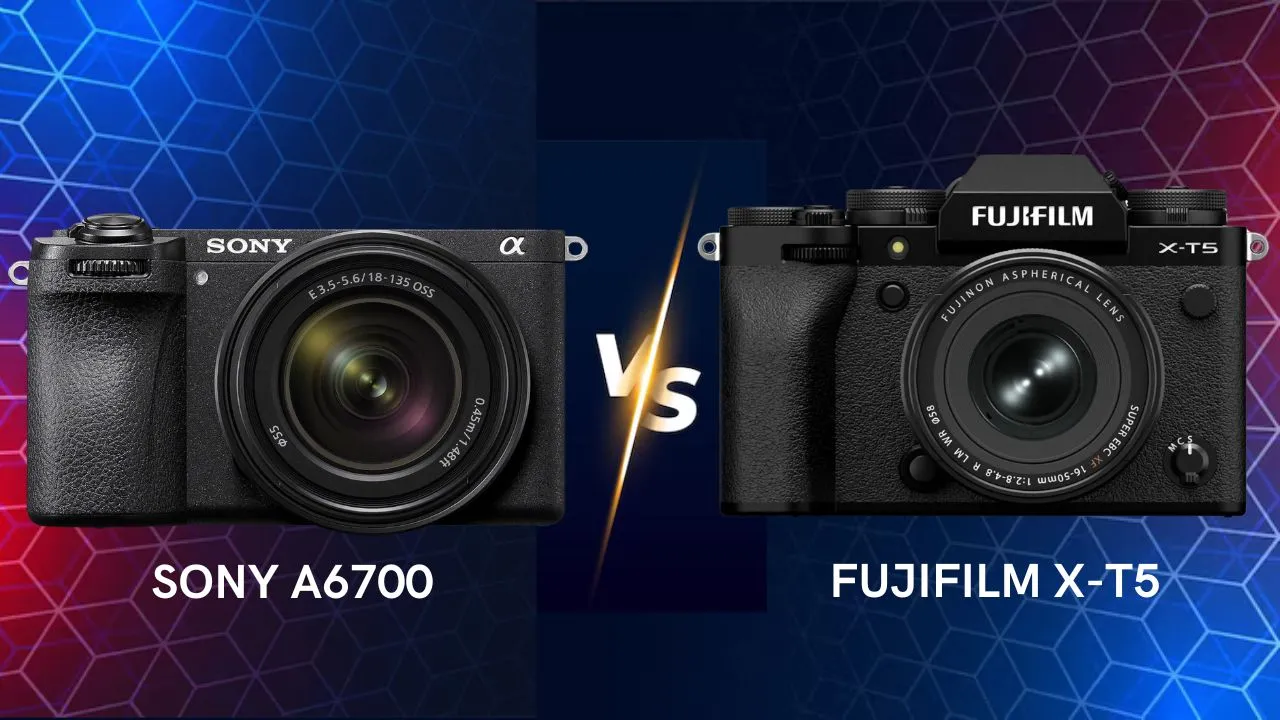
Sony A6700 vs Fujifilm X-T5 – Which one is better?
Sony A6700 vs Fujifilm X-T5 – Which One Is Better?
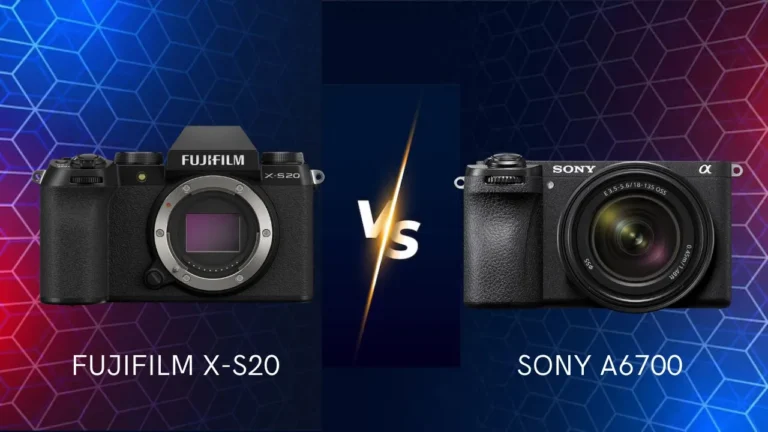
The Sony A6700 and Fujifilm X-T5 are both outstanding mirrorless cameras, but they serve slightly different priorities. The A6700 is a high-performance APS-C model focused on hybrid workflows, portability, and modern features.
The X-T5 is also APS-C, but emphasizes top-tier still photography, tactile controls, and Fujifilm’s acclaimed color science.
Let’s dive into how they compare to determine which one fits you best.
⚙️ Overview – High-Spec APS-C Hybrid vs Premium APS-C Stills Specialist
Sony A6700:
An APS-C mirrorless camera designed for creators who want great performance in a compact body—strong autofocus, rich video features, and flexibility for stills + video.
Fujifilm X-T5:
A premium APS-C mirrorless camera targeting photographers who care deeply about image quality, color bracketing, film simulation, and the “feel” of the camera. While capable for video, its strengths lie in photography.
In short:
-
A6700 = Best for speed, hybrid use (video + stills), modern specs and portability.
-
X-T5 = Best for photographers who prioritize stills, style, experience, color science, and build quality.
📸 Detailed Specifications Comparison
| Feature | Sony A6700 | Fujifilm X-T5 |
|---|---|---|
| Release Date | July 2023 | November 2022 |
| Camera Type | Mirrorless (Hybrid APS-C) | Mirrorless (Photo-oriented APS-C) |
| Sensor | APS-C 26.0 MP BSI-CMOS | APS-C 40.2 MP X-Trans CMOS 5 HR |
| Image Processor | BIONZ XR + AI Processing Unit | X-Processor 5 |
| Lens Mount | Sony E-mount | Fujifilm X-mount |
| ISO Range | 100–32,000 (expandable to 102,400) | 125–12,800 (expandable to 64–51,200) |
| In-Body Image Stabilization (IBIS) | Yes, 5-axis | Yes, 5-axis (up to 7 stops) |
| Autofocus System | Hybrid phase-detection AF (759 points) | Hybrid phase-detection AF (425 points) |
| AF Subject Recognition | Humans, animals, birds, insects, vehicles, aircraft | Humans, animals, birds, vehicles |
| Continuous Shooting Speed | Up to 11 fps | 15 fps (mechanical), 20 fps (electronic) |
| Video Recording | Up to 4K 120p | Up to 6.2K 30p, 4K 60p |
| Video Bit Depth / Color | 10-bit 4:2:2 internal | 10-bit 4:2:2 internal |
| Color Profiles | S-Log3, S-Cinetone, HLG | F-Log2, Film Simulations |
| RAW Video Output | Yes, 16-bit via HDMI | Yes, 12-bit via HDMI |
| Recording Limit | No recording limit (thermal dependent) | No recording limit (thermal dependent) |
| Viewfinder | 2.36M-dot OLED EVF | 3.69M-dot OLED EVF |
| LCD Screen | 3.0″ fully articulating touchscreen (1.03M dots) | 3.0″ tilting touchscreen (1.62M dots) |
| Touch Functions | Yes (AF, tracking, menus) | Yes (AF, menus) |
| Product Showcase Mode | No | No |
| Background Defocus Button | No | No |
| Body Material | Magnesium alloy | Magnesium alloy |
| Weather Sealing | Yes (basic sealing) | Yes (advanced sealing) |
| Audio Options | Mic input, headphone out, digital MI shoe | Mic input, headphone via USB-C |
| Connectivity | Wi-Fi, Bluetooth, USB-C, HDMI | Wi-Fi, Bluetooth, USB-C, HDMI |
| Battery Type | NP-FZ100 | NP-W235 |
| Battery Life (CIPA) | Approx. 570 shots | Approx. 580 shots |
| Dimensions (W × H × D) | 122 × 69 × 75.1 mm | 129.5 × 91 × 63.8 mm |
| Weight (Body Only) | Approx. 409 g | Approx. 476 g |
| Price (Body Only) | Approx. USD 1,399 (check on Amazon) | Approx. USD 1,699 |
🧱 Build, Handling & Portability
The Sony A6700 appeals to creators who prioritize portability and modern performance: you’ll carry it longer, move quickly, and benefit from hybrid control. The lighter size makes it ideal for travel, run-and-gun video, and hybrid content creation.
The Fujifilm X-T5 offers a premium form factor with tactile dials, classic styling, and photography-centric ergonomics. It may be slightly bigger or heavier than the lightest APS-C models, but the build quality, feel and photographic experience are elevated.
👉 Verdict:
-
Choose A6700 if you want the most compact high-performance APS-C hybrid.
-
Choose X-T5 if you prefer camera feel, premium build, and photography-first ergonomics.
🎯 Autofocus & Performance
The A6700 brings high-density phase-detect AF, excellent tracking for video and hybrid use, and is optimised for creators who shoot motion and stills. The X-T5, while featuring strong autofocus for stills, shines more in photography contexts—especially when paired with the right lenses and still-oriented workflows.
👉 Verdict:
-
For fast action, video work, or creators who need flexible AF in mixed scenarios: A6700 has the edge.
-
For stills-driven work, portraits, travel, and photographers focused on image quality and camera experience: X-T5 is the better choice.
🎥 Video Capabilities
For video creators:
-
Sony A6700 offers a compact rig, excellent autofocus in video, and flexibility for hybrid shooting.
-
Fujifilm X-T5 supports strong video too (especially for a stills-focused body), but if video is a major part of your workflow, it may not match the sheer hybrid focus of the A6700.
👉 Verdict:
-
If video and hybrid shooting are important, choose A6700.
-
If stills are primary and video is secondary, X-T5 is more than capable.
🧠 Image Quality (Stills)
Since the X-T5 has a higher resolution APS-C sensor (~40 MP), it offers more detail, cropping flexibility and large print potential. The A6700, with ~26 MP, still delivers excellent quality—but the resolution difference gives the X-T5 an advantage for photographers demanding maximum detail.
👉 Verdict:
-
For highest still image quality, cropping flexibility, and large prints → X-T5.
-
For excellent stills + hybrid workflows + portability → A6700.
🔋 Ecosystem, Lenses & Future-Proofing
-
Sony E-Mount (A6700) gives access to a vast range of lenses—APS-C and full-frame, including many third-party options.
-
Fujifilm X-Mount (X-T5) offers a strong APS-C lens lineup, many compact primes and excellent optical quality, built around photography.
👉 Verdict:
-
If system flexibility and future upgrade path matter, A6700 has the edge.
-
If you focus on APS-C, photography and premium primes, X-T5 is a superb system.
💰 Price & Value
The A6700 offers high performance in a compact APS-C body—great value for creators. The X-T5 has a higher resolution sensor and premium build, which may cost more—but for stills-first photographers, the extra value is justified.
👉 Verdict:
-
For budget-conscious creators looking for performance: A6700.
-
For photographers who prioritize resolution, primes, and camera experience: X-T5.
Check availability and price on Amazon 🛒
📷 Fuji X-T5 — Amazon USA / Amazon Canada / Amazon UK / Amazon Australia
📷 Sony A6700 — Amazon USA / Amazon Canada / Amazon UK / Amazon Australia
(As an Amazon Associate, I earn from qualifying purchases — at no extra cost to you.)
🏁 Final Verdict — Sony A6700 vs Fujifilm X-T5
| Type of User | Recommended Camera |
|---|---|
| Hybrid creator (still + video) prioritizing portability | Sony A6700 |
| Photographer focused on stills, camera feel and resolution | Fujifilm X-T5 |
| Travel/street creator wanting good video + stills in compact body | A6700 |
| Portrait, fine art, detailed stills shooter wanting premium experience | X-T5 |
✅ In Short:
-
Choose Sony A6700 if you want a high-performance APS-C hybrid body with modern features, excellent autofocus, and portability.
-
Choose Fujifilm X-T5 if you prioritize still image quality, camera feel, style, resolution, and a fun photograph-centric system.
🧠 Final Thoughts
Both cameras are excellent—and the “better” one depends on how you shoot, what you carry, and what features you prioritize.
-
If you value carrying light, shooting both stills and video, and want flexibility → go A6700.
-
If you focus on still photography, enjoy the camera-handling experience, want high resolution and great primes → go X-T5.
Reflect on your gear habits, shooting style and future plans—then select the camera that aligns with you.