Sony A6400 vs A6600 – Which one is better?
Sony A6400 vs Sony A6600 – Which One Is Better?
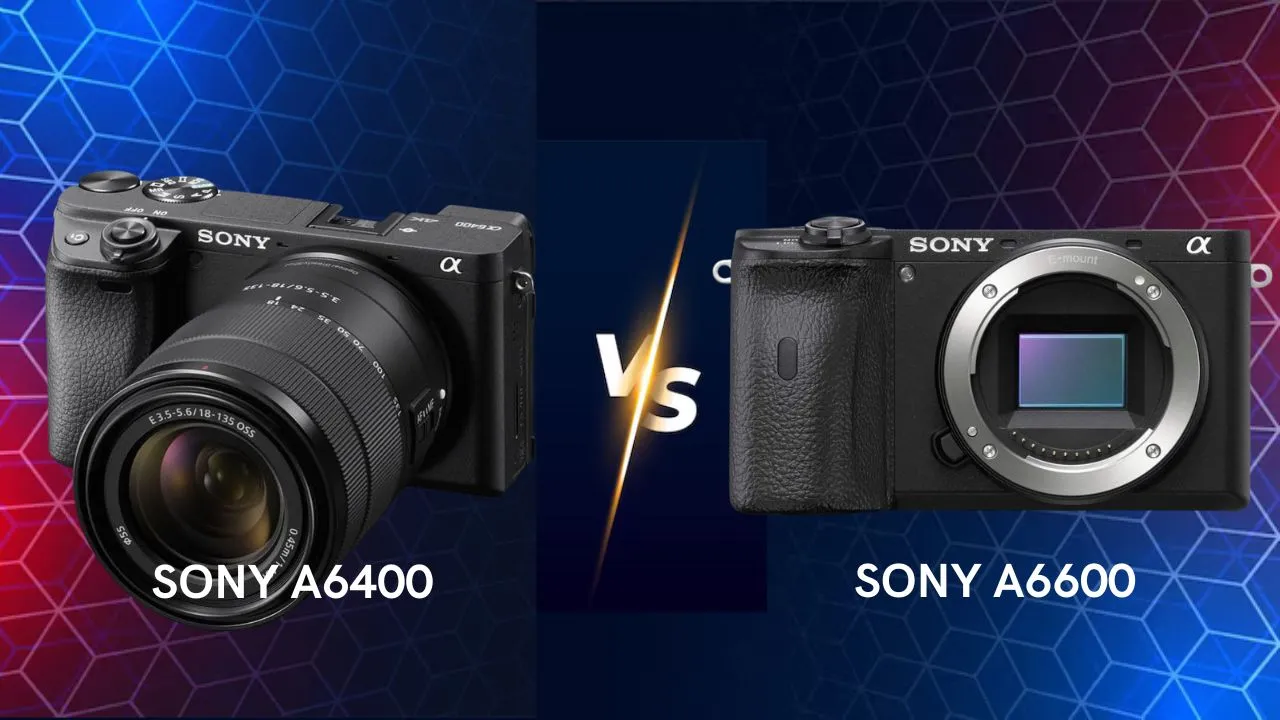
The Sony A6400 and Sony A6600 are both excellent APS-C mirrorless cameras from Sony’s Alpha line. They share many core features but differ in key aspects—most notably stabilization (IBIS), battery life, and overall build.
This comparison will help you decide which one fits your workflow best.
⚙️ Overview – Hybrid Value vs Premium APS-C Workhorse
Sony A6400:
A lightweight, high-performance APS-C mirrorless camera with excellent autofocus (including Real-Time Eye AF), strong stills + video performance, and very good value. Ideal for creators who want high performance at a more accessible price.
Sony A6600:
A more feature-rich APS-C mirrorless camera—adding built-in image stabilization (IBIS), a larger battery, improved grip and build quality. Designed for enthusiasts and hybrid creators who need durability, longer sessions and extra flexibility.
In short:
-
A6400 = Great all-round APS-C body for stills + video, excellent autofocus.
-
A6600 = Adds IBIS, longer battery life, more premium build—great if those features matter.
📸 Detailed Specifications Comparison
| Feature | Sony A6400 | Sony A6600 |
|---|---|---|
| Release Date | January 2019 | August 2019 |
| Camera Type | Mirrorless (APS-C) | Mirrorless (APS-C, Hybrid) |
| Sensor | APS-C 24.2 MP CMOS | APS-C 24.2 MP CMOS |
| Image Processor | BIONZ X | BIONZ X |
| Lens Mount | Sony E-mount | Sony E-mount |
| ISO Range | 100–32,000 (expandable to 102,400) | 100–32,000 (expandable to 102,400) |
| In-Body Image Stabilization (IBIS) | No | Yes, 5-axis |
| Autofocus System | Hybrid phase-detection AF (425 points) | Hybrid phase-detection AF (425 points) |
| AF Subject Recognition | Humans, animals (Eye AF) | Humans, animals (Eye AF) |
| Continuous Shooting Speed | Up to 11 fps | Up to 11 fps |
| Video Recording | Up to 4K 30p | Up to 4K 30p |
| Video Bit Depth / Color | 8-bit 4:2:0 internal | 8-bit 4:2:0 internal |
| Color Profiles | S-Log2, S-Log3, HLG | S-Log2, S-Log3, HLG |
| RAW Video Output | No | No |
| Recording Limit | No recording limit | No recording limit |
| Viewfinder | 2.36M-dot OLED EVF | 2.36M-dot OLED EVF |
| LCD Screen | 3.0″ flip-up touchscreen (921k dots) | 3.0″ flip-up touchscreen (921k dots) |
| Touch Functions | Limited (AF only) | Limited (AF only) |
| Product Showcase Mode | No | No |
| Background Defocus Button | No | No |
| Body Material | Magnesium alloy | Magnesium alloy |
| Weather Sealing | Yes (basic sealing) | Yes (basic sealing) |
| Audio Options | Mic input only | Mic input, headphone out |
| Connectivity | Wi-Fi, Bluetooth, Micro-USB, HDMI | Wi-Fi, Bluetooth, Micro-USB, HDMI |
| Battery Type | NP-FW50 | NP-FZ100 |
| Battery Life (CIPA) | Approx. 410 shots | Approx. 810 shots |
| Dimensions (W × H × D) | 120 × 66.9 × 59.7 mm | 120 × 66.9 × 69.3 mm |
| Weight (Body Only) | Approx. 403 g | Approx. 453 g |
| Price (Body Only) | Approx. USD 900 (check on Amazon) | Approx. USD 1,200 (check on Amazon) |
🧱 Build, Handling & Portability
The A6400 is lighter and more compact, making it excellent for travel, street, daily carry, hybrid creators who move around a lot and want minimal gear.
The A6600 brings a more premium feel: deeper grip, improved ergonomics, IBIS for handheld flexibility, and a battery that lasts longer. For creators who shoot more intensively, especially handheld or video, these features matter.
Verdict:
-
Choose A6400 if portability and lighter gear are priorities.
-
Choose A6600 if you value build quality, grip, stabilisation and endurance.
🎯 Autofocus & Performance
Both cameras inherit Sony’s advanced autofocus systems with real-time eye/face detection and excellent tracking. The A6600 gains IBIS which helps in low-light handheld situations or with unstabilised lenses, making the performance even more robust.
Verdict:
-
If fast autofocus is your main priority and you mostly shoot stills or use stabilised lenses, the A6400 is superb.
-
If you often shoot handheld, deeper sessions, video or unstabilised lenses — the A6600 has the edge.
🎥 Video Capabilities
For creators doing video (or hybrid work):
-
The A6600’s IBIS and larger battery make it a better choice for handheld, longer shooting, or run-and-gun setups.
-
The A6400 remains very capable for video and hybrid workflows and is more than enough if handheld rigging or long endurance aren’t your top concerns.
Verdict:
-
Choose A6600 if video ends up being a large part of your work and you need maximal flexibility.
-
Choose A6400 if video is part of your workflow but portability, cost and stills remain important.
🧠 Image Quality (Stills)
Both cameras use the same 24.2 MP APS-C sensor, so still image quality—resolution, dynamic range, color—will be very similar. Differences will come down to how you shoot (handheld vs tripod), lens choice, stabilisation, and workflow rather than raw sensor performance.
Verdict:
-
For stills only or occasional video: both will deliver excellent image quality.
-
If you shoot handheld often, low-light, or need more keepers under challenging conditions, A6600 might give you a slight practical edge due to IBIS.
🔋 Ecosystem & Lens Flexibility
Both cameras use Sony’s E-Mount, meaning a wide choice of lenses (native and third-party). From a system-upgradability standpoint, either is a solid investment.
Verdict:
-
Lens options are virtually the same — choose based on body features.
-
If you’ll invest a lot in lenses and upgrade gear later, both stand up well.
💰 Price & Value
Typically, the A6400 offers better value for creators who don’t require IBIS or extended endurance. The A6600 comes at a higher cost, but the premium may be worth it if you’ll use the extra features.
Verdict:
-
Go A6400 if your budget is tighter or IBIS isn’t critical.
-
Go A6600 if you’re willing to pay more for added stabilisation, battery life and build.
Check availability and price on Amazon 🛒
📷 Sony A6400 — Amazon USA / Amazon Canada / Amazon UK / Amazon Australia
📷 Sony A6600 — Amazon USA / Amazon Canada / Amazon UK / Amazon Australia
Note: camerafight.com participates in the Amazon Associates Program. As an Amazon Associate, we earn from qualifying purchases.
🏁 Final Verdict — Sony A6400 vs Sony A6600
| Type of User | Recommended Camera |
|---|---|
| Creator seeking hybrid performance at best value | Sony A6400 |
| Enthusiast/hybrid shooter needing IBIS and longer sessions | Sony A6600 |
| Travel/street photographer prioritising light gear | A6400 |
| Video or handheld shooter working long hours | A6600 |
✅ In Short:
Choose Sony A6400 if you want a capable APS-C body with excellent autofocus, good hybrid performance and minimal gear size/cost.
Choose Sony A6600 if you value built-in stabilisation (IBIS), longer battery life and build quality, especially for handheld or intensive work.
🧠 Final Thoughts
Both cameras are excellent; the difference comes down to how you shoot, what gear you carry and what features you value most.
-
If you carry your camera all day, travel frequently, shoot stills/hybrids and want lightweight gear → go A6400.
-
If you shoot longer sessions, handheld video or use unstabilised lenses and want the extra robustness → go A6600.
Think about what you shoot, how you shoot, and what you plan for the future — then choose the camera that aligns best with you.