Panasonic Lumix S9 vs Nikon Zf – Which one is better?
Panasonic Lumix S9 vs Nikon Zf : Which One Is Better?
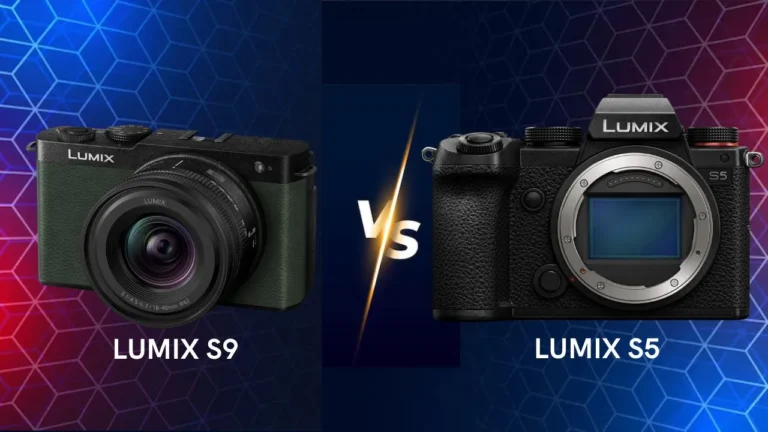
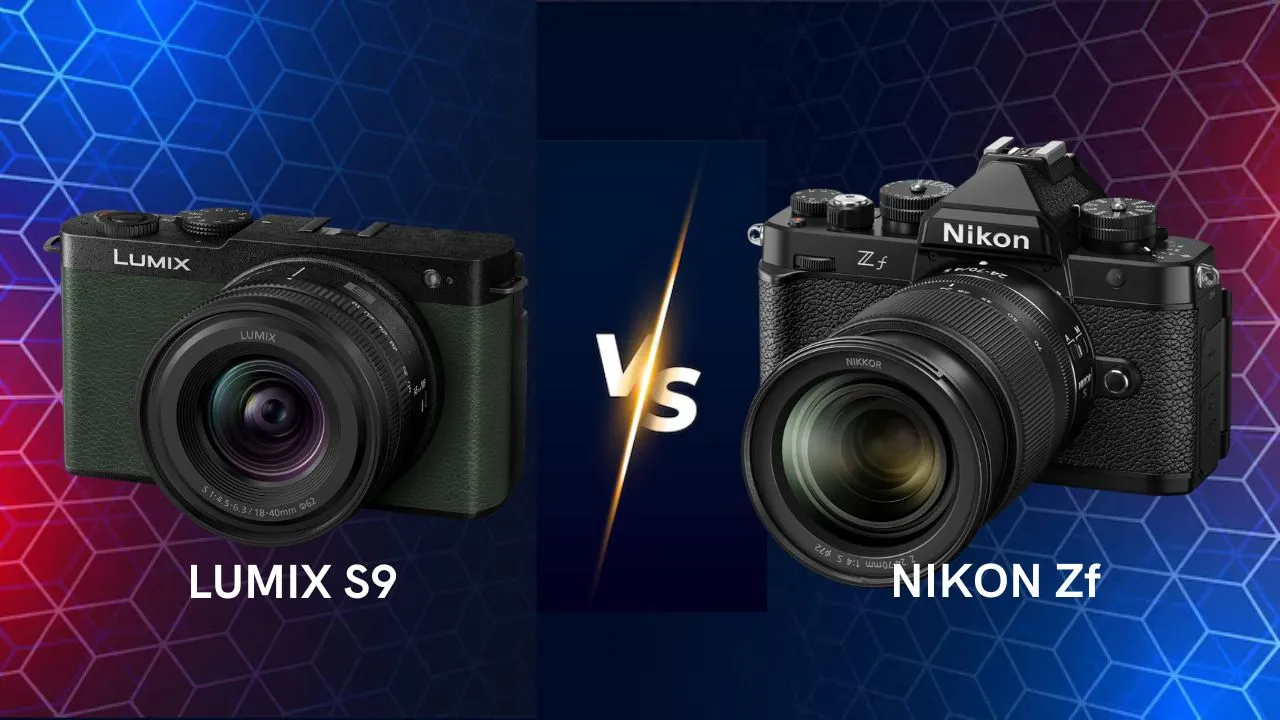
The Panasonic Lumix S9 and the Nikon Zf are two full-frame mirrorless cameras targeting image-makers, but they have different design philosophies.
The S9 prioritizes portability, hybrid photo + video versatility, and modern features; the Zf leans strongly toward photography with a retro look, tactile controls, and a focus on stills.
Which one is better depends on your priorities. Let’s compare them in detail.
⚙️ Overview – Compact Hybrid vs Retro Photography First
Panasonic Lumix S9
-
Full-frame sensor, designed for creators and hybrid shooters who do both stills and video.
-
Compact, travel-friendly body, modern connectivity, full-frame IBIS.
Nikon Zf
-
Full-frame sensor, but built with photographers in mind: retro design, dedicated dials, tactile experience, and stills-focused performance.
-
Video capable, but video features are not the standout compared to hybrid-centric models.
In short:
-
S9 = Better for hybrid creators (photo + video), & for those who value portability.
-
Zf = Better for still-photographers who want full-frame image quality, retro styling, and intuitive controls.
📸 Specifications Comparison
| Specification | Panasonic Lumix S9 | Nikon Zf |
|---|---|---|
| Release Date | May 2024 | September 2023 |
| Camera Type | Full-frame mirrorless | Full-frame mirrorless |
| Sensor | 24.2 MP full-frame CMOS | 24.5 MP full-frame BSI-CMOS |
| Image Processor | Panasonic Venus Engine (latest) | Nikon EXPEED (likely same as Z6II series) |
| Lens Mount | L-Mount | Nikon Z-Mount |
| ISO Range | 100–51,200 (expandable 50–204,800) | 100–64,000 (expanded) |
| In-Body Image Stabilization (IBIS) | Yes, 5-axis sensor-shift | Yes, 5-axis with up to ~8 stops |
| Autofocus System | Hybrid AF (phase + contrast, many points) | Phase-detect AF with 273 points |
| AF Subject Recognition | Humans & animals | Humans, animals, vehicles (modern Z system) |
| Continuous Shooting Speed | ~9 fps | Up to ~10–14 fps (varies by mode) |
| Video Recording | Up to 6K / 30p (open-gate), 4K up to 60p | 4K up to 30/60p (photo-centric) |
| Video Bit Depth / Color | 10-bit internal options | 8-bit internal standard |
| Color Profiles | V-Log, LUT support | Nikon picture controls |
| RAW Video Output | Yes (external) | No (standard) |
| Recording Limit | Varies by codec & firmware | ~30 min per clip typical |
| Viewfinder | None (screen-only) | Built-in EVF (~3.69M dots) |
| LCD Screen | 3.0″ articulating touchscreen (no EVF) | 3.2″ fully articulating touchscreen |
| Touch Functions | Full touchscreen | Full touchscreen |
| Product Showcase Mode | Panasonic LUT/creative features | No dedicated showcase mode |
| Background Defocus Button | No dedicated button | No dedicated button |
| Body Material | Composite / lightweight body | Metal, retro classic design |
| Weather Sealing | Yes (dust/splash-resistant) | Yes (professional sealing) |
| Audio Options | Mic input (no headphone) | Mic & headphone jacks |
| Connectivity | Wi-Fi, Bluetooth, USB-C, micro-HDMI | Wi-Fi, Bluetooth, USB-C, HDMI |
| Battery Type | Panasonic DMW-BLK22 | Nikon EN-EL15c/b |
| Battery Life (CIPA) | ~470 shots (approx) | ~380–490 shots |
| Dimensions (W × H × D) | ~126 × 74 × 47 mm | ~144 × 103 × 49 mm |
| Weight (Body Only) | ~486 g (with battery) | ~710 g |
| Approx. Price (Body Only) | ~€1,089–€1,599 (check on Amazon) | ~€1,539–€1,869+ (check on Amazon) |
🧱 Build and Handling
-
The S9 offers a sleek, compact full-frame design that’s easier to carry for extended periods, ideal for travel, run-and-gun, hybrid content.
-
The Zf features a retro-style body with dedicated analogue dials (shutter speed, ISO, exposure compensation) that appeal to hands-on photographers. It may be larger/heavier than ultra-compact bodies, but its build emphasizes stills ergonomics.
👉 Verdict:
-
Choose S9 if you prioritize portability and hybrid work.
-
Choose Zf if you prioritize a photographic experience and traditional controls.
🎯 Autofocus and Performance
-
The Zf benefits from Nikon’s proven autofocus system with eye/face/animal tracking, phase-detect across the frame, and excellent stills subject handling.
-
The S9 has modern AF too and handles hybrid use well, but its hybrid video/stills design may mean some compromises compared to a stills-dedicated body.
👉 Verdict:
-
For stills-heavy work, especially portraits, moving subjects, the Zf has an edge.
-
For mixed video & stills and flexibility, S9 is very strong.
🎥 Video Capabilities
-
S9 offers strong video features: full-frame sensor, IBIS, good codec support, creator-friendly features (articulating screen, connectivity).
-
Zf supports video well for a stills-centric camera (4K, 10-bit in some modes), but video is not its primary focus.
👉 Verdict:
-
If you shoot a lot of video or hybrid content, go S9.
-
If video is occasional and stills are your main focus, Zf is more than sufficient.
🧠 Image Quality (Stills)
Both cameras use full-frame sensors with comparable resolutions, meaning both will deliver excellent image quality—rich depth, strong dynamic range, subtle colors. The differences will come down to lens choice, processor, color science, and the user’s workflow.
👉 Verdict:
-
Both deliver excellent still image quality.
-
If you value lens options and future system growth especially for still photography, the Zf may have advantage.
-
If you value full-frame in a smaller body, S9 wins for portability.
🔋 Ecosystem, Lenses & Future-Proofing
-
Nikon Z-Mount (for the Zf) is very mature: many native full-frame lenses, many third-party choices, proven system longevity.
-
L-Mount (for S9) is growing fast with Panasonic, Leica & Sigma backing, but still has fewer niche lenses compared to the major legacy systems.
👉 Verdict:
-
Zf offers stronger ecosystem for long-term photography investment.
-
S9 is still solid, especially for those starting or investing in full-frame, but lens selection may be smaller in some specialised areas.
💰 Price & Value
-
The S9 may cost less (depending on region/deals) given its creator-leaning branding and newer full-frame portability focus.
-
The Zf may carry a premium for the Nikon brand, full-frame heritage, and mature system—but will hold value well for users primarily focused on stills.
👉 Verdict:
-
If budget and weight are key, S9 offers excellent value.
-
If you prioritize lens options and brand system support, Zf provides strong investment value.
Check availability and price on Amazon 🛒
📷 Nikon Zf — Amazon USA / Amazon Canada / Amazon UK / Amazon Australia
📷 Panasonic Lumix S9 — Amazon USA / Amazon Canada / Amazon UK / Amazon Australia
Note: camerafight.com participates in the Amazon Associates Program. As an Amazon Associate, we earn from qualifying purchases.
🏁 Final Verdict — Panasonic Lumix S9 vs Nikon Zf
| Type of User | Recommended Camera |
|---|---|
| Travel/Everyday creator who shoots photo + video | Panasonic Lumix S9 |
| Photographer who prioritizes stills, lenses, tactile controls | Nikon Zf |
| Hybrid shooter doing vlogging, social content, run-and-gun | S9 |
| Portrait, landscape, street photographer wanting analog feel | Zf |
| Budget-conscious full-frame seeker | S9 |
| System builder for full-frame still photography | Zf |
✅ In short:
Choose Panasonic Lumix S9 if you want a portable full-frame hybrid that handles both stills and video and you value compactness.
Choose Nikon Zf if you prioritize a photographic experience, stills performance, large lens ecosystem and a life-style build.
🧠 Final Thoughts
Both the Lumix S9 and Nikon Zf are excellent cameras—but your best pick depends on how you shoot, what you carry, and what your priorities are.
-
If you carry your camera everywhere, shoot videos, need flexibility and full-frame depth in a lighter body → go S9.
-
If you value the experience of photography, change lenses, invest in a system, and shoot mainly stills → go Zf.
Decide based on your workflow, what you shoot most, and what you plan to grow into — then pick the camera that aligns best with you.