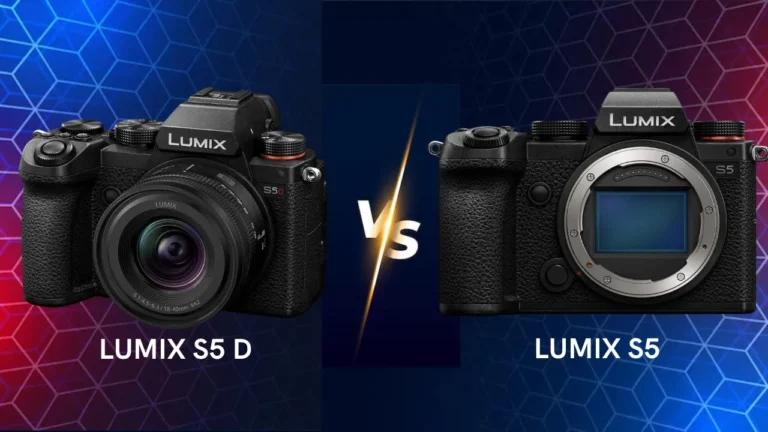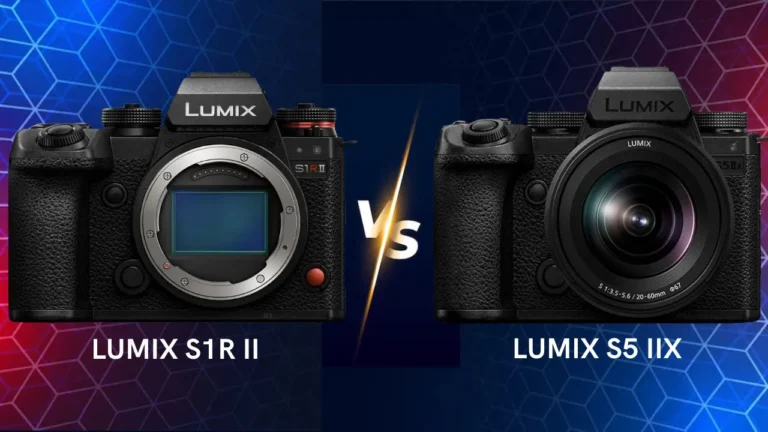
Panasonic Lumix S5D vs S5 IIX – Which one is better?
Panasonic Lumix S5D vs Panasonic Lumix S5 IIX – Which One Is Better?
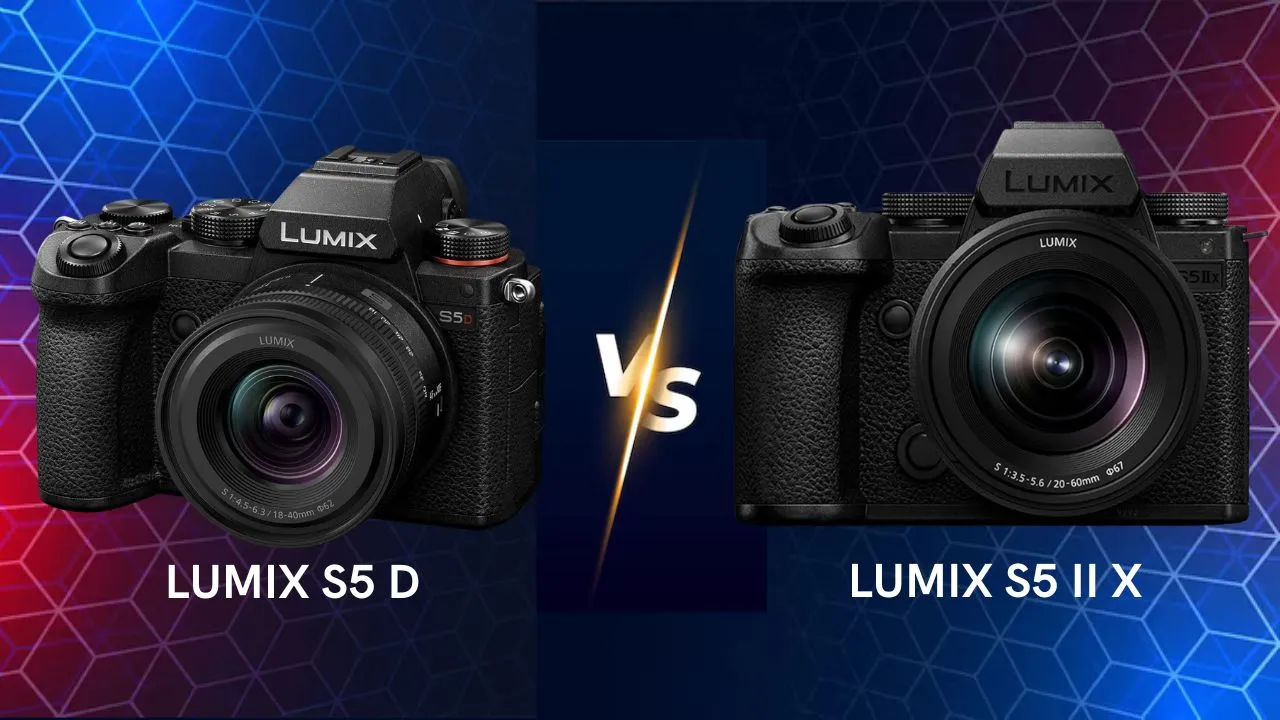
The Panasonic Lumix S5D and Panasonic Lumix S5 IIX are full-frame L-Mount cameras aimed at hybrid creators, but they serve different priorities.
The S5D is a refreshed take on the original S5 with stronger codecs and outputs for video on a budget; the S5 IIX is the pro-video sibling of the S5 II, adding phase-detect AF and advanced recording/workflow tools for serious filmmakers.
Below is an in-depth, SEO-optimized comparison to help you choose the best body for your needs.
⚙️ Overview — “Video-Centric Refresh” vs “Pro-Video Hybrid”
Panasonic Lumix S5D
A value-focused refresh of the S5 designed for creators who need better internal 10-bit options and flexible HDMI/RAW output, while keeping the familiar form factor and 24.2 MP full-frame sensor.
Panasonic Lumix S5 IIX
A premium hybrid/video body (based on the S5 II) with phase-detect autofocus (PDAF), advanced codecs (including ProRes via USB-SSD), enhanced streaming options, and a stealthy all-black finish. Built for filmmakers who want pro features without jumping to a cinema body.
In short:
-
S5D = Affordable hybrid with stronger video than the original S5.
-
S5 IIX = Pro-grade hybrid with PDAF and next-level recording/streaming tools.
📸 Specifications Comparison
| Specification | Panasonic Lumix S5D | Panasonic Lumix S5 IIX |
|---|---|---|
| Release Date | 2024 (refreshed S5 variant) | 2023 (enhanced S5 II video variant) |
| Camera Type | Full-frame mirrorless (hybrid) | Full-frame mirrorless (video-focused hybrid) |
| Sensor | 24.2 MP full-frame CMOS (same as original S5) | 24.2 MP full-frame CMOS |
| Image Processor | Venus Engine (same generation as S5) | Updated Venus Engine (from S5 II/X series) |
| Lens Mount | Leica L-Mount | Leica L-Mount |
| ISO Range | 100–51 200 (expandable) | 100–51 200 (expandable) |
| In-Body Image Stabilization (IBIS) | Yes, 5-axis | Yes, 5-axis |
| Autofocus System | Contrast/DFD AF (like original S5) | Hybrid phase-detect AF (improved) |
| AF Subject Recognition | Standard (basic) | Humans & animals (better tracking) |
| Continuous Shooting Speed | ~7 fps (like S5) | Up to ~9 fps (improved from gen III engine) |
| Video Recording | 4K up to 60p (10-bit internal) | 6K up to 30p / 4K up to 60p (10-bit) |
| Video Bit Depth / Color | 10-bit 4:2:0/4:2:2 options | 10-bit 4:2:2 internal, higher bitrates |
| Color Profiles | V-Log & creative profiles (as S5) | V-Log, creative profiles (enhanced) |
| RAW Video Output | Yes via HDMI (with external recorder) | Yes via HDMI (with external recorder) |
| Recording Limit | ~30 min caps (typical) | ~Unlimited 4K video and extended limits via cooling/fan |
| Viewfinder | Built-in EVF (~2.36 M dots) | Built-in EVF (~3.68 M dots) |
| LCD Screen | 3.0″ articulating touchscreen | 3.0″ articulating touchscreen |
| Touch Functions | Full touchscreen | Full touchscreen |
| Product Showcase Mode | No | No |
| Background Defocus Button | No | No |
| Body Material | Magnesium-alloy frame / weather-sealed | Magnesium-alloy / weather-sealed |
| Weather Sealing | Yes (dust/splash resistant) | Yes (dust/splash resistant) |
| Audio Options | Mic input & headphone output | Mic input & headphone jack |
| Connectivity | Wi-Fi, Bluetooth, USB-C, HDMI | Wi-Fi, Bluetooth, USB-C, HDMI |
| Battery Type | Panasonic DMW-BLK22 | Panasonic DMW-BLK22 |
| Battery Life (CIPA) | ~430–450 shots (approx.) | ~370–470 shots (approx.) |
| Dimensions (W × H × D) | ~134 × 97 × 82 mm (S5 body) | ~134 × 102 × 90 mm |
| Weight (Body Only) | ~714 g | ~740 g |
| Approx. Price (Body Only) | Lower (value S5 variant) | Higher (advanced video hybrid) (check on Amazon) |
🧱 Build and Handling
Both cameras share the compact S-series ergonomics, deep grip, weather-sealing, and dual card slots that make them easy to rig or carry. The S5 IIX adds the stealth finish (no logos, matte black) and extra pro touches (e.g., SSD recording over USB), which matter on set. The S5D keeps the classic S5 look and controls.
Verdict:
-
S5D: Familiar, light, and capable for run-and-gun.
-
S5 IIX: Same ergonomics but more “production-ready” with SSD recording and a stealth body.
🎯 Autofocus and Reliability
This is the biggest fork in the road. The S5 IIX uses phase-detect AF, a major upgrade for continuous-AF in video, subject tracking, and backlit scenes. The S5D relies on Panasonic’s contrast-based DFD AF; accurate for stills and planned shots, but less sticky on moving subjects—especially in video and face-to-camera work.
Verdict:
-
S5 IIX: Clear winner for AF consistency in hybrid/video use.
-
S5D: Fine for controlled setups or manual focus; less ideal for dynamic AF needs.
🎥 Video Capabilities
Panasonic Lumix S5D
-
4K 60p 10-bit internal in select profiles; 4K 30p 10-bit 4:2:2.
-
RAW over HDMI and robust 10-bit external workflows.
-
Great value for interviews, corporate, weddings, and YouTube.
Panasonic Lumix S5 IIX
-
ProRes recording direct to USB-SSD, ALL-Intra options, richer codec menu.
-
6K/Open-Gate capture modes ideal for reframing (vertical/1:1 social crops).
-
Wired/Wireless IP streaming, SRT, and USB-tethered streaming built in.
-
Best choice if you deliver in multiple aspect ratios or need on-set, edit-friendly files.
Verdict:
-
S5D: Excellent video for the money; perfect step-up from the original S5.
-
S5 IIX: A mini-cinema workflow in a hybrid body—fewer compromises.
🧠 Image Quality (Stills)
Both use the same 24.2 MP sensor and deliver comparable RAW/JPEG stills quality: strong dynamic range, color, and low-light performance. The difference in real life comes from AF and workflow rather than the sensor.
Verdict:
-
Tie on pure IQ.
-
S5 IIX gives more keepers in action/people work thanks to PDAF.
🔌 Connectivity, Streaming & Workflow
The S5 IIX is designed for connected production: USB-SSD recording, wired/wireless IP streaming, SRT transport, and tethered streaming. That means faster turnaround and fewer accessories. The S5D can absolutely work in a professional setup, but it leans more on external recorders/encoders and post time.
Verdict:
-
S5 IIX: Wins for connected shoots, live jobs, agencies, and teams.
-
S5D: Solid for solo creators who don’t need end-to-end broadcast features.
💰 Price & Value
-
S5D: Lower cost; delivers 10-bit internal, RAW over HDMI, and great stabilization—fantastic bang for buck.
-
S5 IIX: Pricier, but the cost is justified if you’ll use PDAF, ProRes/SSD, and streaming. These can save hours in post and reduce accessories—paying themselves back quickly in production environments.
Check availability and price on Amazon 🛒
📷 Lumix S5D — Amazon USA / Amazon Canada / Amazon UK / Amazon Australia
📷 Lumix S5 II X — Amazon USA / Amazon Canada / Amazon UK / Amazon Australia
Note: camerafight.com participates in the Amazon Associates Program. As an Amazon Associate, we earn from qualifying purchases.
🏁 Final Verdict — Panasonic Lumix S5D vs S5 IIX
| Type of User | Recommended Camera |
|---|---|
| Beginner-to-intermediate hybrid creator on a budget | S5D |
| YouTuber/interview/corporate shooter (mostly locked-off or manual focus) | S5D |
| Event, wedding, people-focused hybrid creator who needs reliable AF | S5 IIX |
| Filmmaker needing ProRes/SSD and fast turnaround | S5 IIX |
| Social/video teams delivering multiple aspect ratios (6K/open-gate) | S5 IIX |
| Live streaming / remote production | S5 IIX |
| Travel/content creator who edits lightly | S5D |
✅ In short
Choose Panasonic Lumix S5D if you want maximum value and strong 10-bit video with flexible HDMI/RAW output, and you can live without phase-detect AF or built-in streaming.
Choose Panasonic Lumix S5 IIX if you need PDAF, ProRes to USB-SSD, IP/USB streaming, and a connected, production-grade workflow that minimizes accessories and speeds up delivery.
🧠 Final Thoughts
Both cameras share the same imaging DNA, but the S5 IIX is the definitive tool for modern, connected video production—especially where autofocus reliability, codec choice, and turnaround speed matter.
The S5D remains a superb choice for creators who want top-tier image quality and robust 10-bit recording at a friendlier price, and who are comfortable handling AF and streaming needs with a simpler setup.