Panasonic Lumix S5D vs S5 – Which one is better?
Panasonic Lumix S5D vs Panasonic Lumix S5 — Which One Is Better?
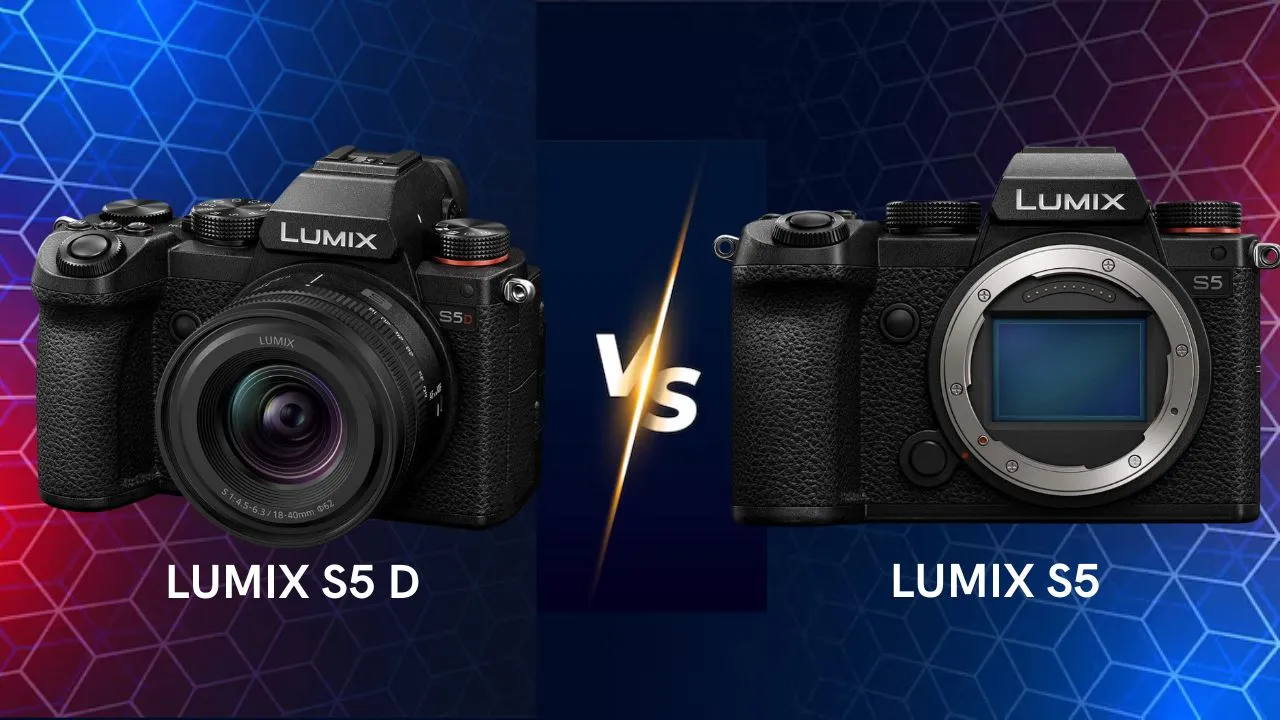
The Panasonic Lumix S5D and Panasonic Lumix S5 are two full-frame mirrorless cameras from Panasonic’s L-Mount lineup.
While they share nearly identical designs and sensors, the S5D is a refreshed version aimed more at hybrid creators who prioritize video performance. Let’s compare them side by side to see which model fits your needs best.
⚙️ Overview — Video-Focused Refresh vs Proven All-Rounder
Panasonic Lumix S5D:
A refreshed model based on the original S5, optimized for hybrid creators. It features the same 24.2 MP full-frame sensor but offers improved video recording formats, better HDMI output, and refined workflow options for content creators.
Panasonic Lumix S5:
A versatile and compact full-frame camera known for its excellent image quality, in-body stabilization, and balanced stills/video performance. It was one of Panasonic’s most popular hybrid cameras thanks to its affordability and reliability.
In short:
-
S5D = More advanced video features and improved connectivity.
-
S5 = Balanced, reliable hybrid camera for stills and casual video.
📸 Specifications Comparison
| Feature | Panasonic Lumix S5D | Panasonic Lumix S5 |
|---|---|---|
| Release Year | 2024 | 2020 |
| Sensor | 24.2 MP Full-Frame CMOS | 24.2 MP Full-Frame CMOS |
| Processor | Venus Engine (Updated) | Venus Engine |
| Lens Mount | L-Mount | L-Mount |
| In-Body Stabilization (IBIS) | ✅ Yes (up to 6.5 stops) | ✅ Yes (up to 6.5 stops) |
| Autofocus System | Contrast + Phase Hybrid AF | Contrast-Detect AF |
| Continuous Shooting | 9 fps (mechanical) | 9 fps (mechanical) |
| Video Recording | 4K 60p 10-bit (internal), 4:2:2 HDMI output, RAW video support | 4K 60p 8-bit (internal), 4:2:2 via HDMI |
| Log & Color Profiles | V-Log / LUT preview | V-Log |
| Dual Native ISO | Yes | Yes |
| Screen | 3.0” Fully Articulating LCD | 3.0” Fully Articulating LCD |
| Viewfinder | 2.36M-dot OLED EVF | 2.36M-dot OLED EVF |
| Battery Life | ~440 shots | ~440 shots |
| Weight (Body Only) | 714 g | 714 g |
| Price (Body Only) | ~$1,799 | ~$1,499 |
🧱 Build and Handling
Both the S5D and S5 share identical dimensions, button layouts, and build quality. They’re both weather-sealed, durable, and compact for full-frame cameras.
The difference lies primarily in internal features — the S5D feels more refined for hybrid creators, offering improved video codecs and HDMI options, while the S5 focuses on all-around simplicity and efficiency.
👉 Verdict:
-
S5D: Best for creators who frequently switch between photo and video.
-
S5: Ideal for photographers and hybrid users wanting reliability and value.
🎯 Autofocus and Performance
Autofocus is a major improvement on the S5D, which now integrates a hybrid phase-detection system — a significant upgrade over the contrast-only AF of the original S5. This makes the S5D faster, more accurate, and much better for tracking moving subjects, particularly in video.
👉 Verdict:
-
S5D: Clear winner — better and faster AF for both stills and video.
-
S5: Reliable for photography, but less responsive for continuous AF or vlogging.
🎥 Video Capabilities
This is where the S5D clearly stands out.
Panasonic Lumix S5D
-
Records 4K 60p internally at 10-bit 4:2:0.
-
Outputs 4K 60p 10-bit 4:2:2 via HDMI.
-
Supports RAW video output to external recorders.
-
Enhanced color depth and flexibility for post-production.
-
Ideal for filmmakers, vloggers, and hybrid creators.
Panasonic Lumix S5
-
Records 4K up to 60p, 8-bit internally.
-
Supports 10-bit 4:2:2 externally via HDMI.
-
Still great for hybrid shooters, but less flexible for professional video editing.
👉 Verdict:
-
S5D: Superior video quality, modern codecs, and better dynamic range.
-
S5: Great for occasional video but limited compared to the S5D’s capabilities.
🧠 Image Quality
Both cameras use the same 24.2 MP full-frame sensor and deliver nearly identical image quality. The color science, dynamic range, and tonal reproduction are equally impressive, with Panasonic’s signature natural tones and excellent low-light performance.
However, the S5D benefits slightly from improved processing and newer codecs that preserve more detail in high-contrast video scenes.
👉 Verdict:
-
S5: Excellent for stills.
-
S5D: Slightly better for hybrid workflows and post-production flexibility.
🔋 Connectivity and Workflow
The S5D offers improved connectivity options, including better HDMI output, faster data transfer, and compatibility with newer external recorders. Both models feature dual SD card slots, Wi-Fi, and Bluetooth for remote control and file transfer.
👉 Verdict:
-
S5D: Better for professionals using external gear and modern workflows.
-
S5: Perfectly fine for solo creators or stills-focused photographers.
💰 Price and Value
| Model | Approx. Price | Ideal For |
|---|---|---|
| Panasonic Lumix S5D | ~$1,799 | Hybrid creators, videographers, professionals |
| Panasonic Lumix S5 | ~$1,499 | Photographers, hybrid beginners, travel shooters |
The S5D costs more but provides long-term value through its improved video features and autofocus system. The S5 remains an excellent affordable entry into full-frame hybrid shooting.
👉 Verdict:
-
S5D: Best for creators who need cutting-edge hybrid tools.
-
S5: Best for budget-conscious photographers and part-time video creators.
🏁 Final Verdict — Panasonic Lumix S5D vs S5
| Type of User | Recommended Camera |
|---|---|
| Professional hybrid creator | S5D |
| Vlogger / Filmmaker | S5D |
| Photographer / Hobbyist | S5 |
| Travel Photographer | S5 |
| Content Creator (Photo + Video) | S5D |
| Budget Buyer | S5 |
✅ In short:
Choose the Panasonic Lumix S5D if you prioritize video performance, faster autofocus, and future-proof workflow features.
Choose the Panasonic Lumix S5 if you mainly shoot photos, record video occasionally, and want excellent value.
🧠 Final Thoughts
Both cameras are fantastic tools in Panasonic’s full-frame lineup. They share the same DNA, but the S5D represents the evolution of the original — refining what creators loved while addressing its main weaknesses (autofocus and video workflow).
If your work leans toward filmmaking, content creation, or hybrid production, go for the S5D.
If your focus is on photography, travel, or budget-friendly full-frame shooting, the S5 remains one of the best values on the market.