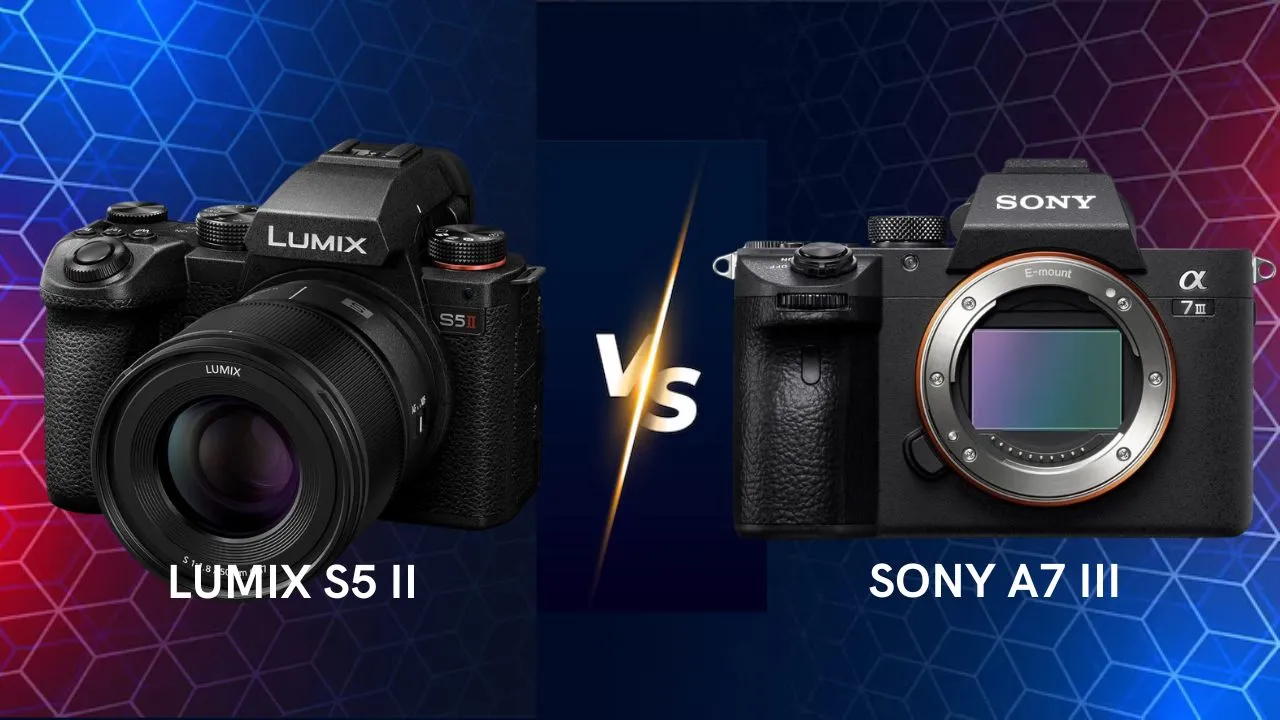
Panasonic Lumix S5 II vs Sony A7 III – Which one is better?
Panasonic Lumix S5 II vs Sony A7 III – Which One Is Better?
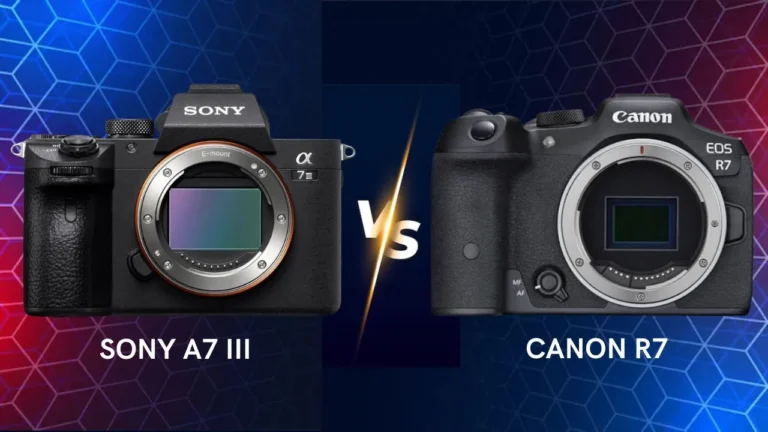
The Panasonic Lumix S5 II and Sony Alpha A7 III are both excellent full-frame mirrorless cameras aimed at hybrid creators who shoot both stills and video.
While they share many similarities, they also cater to somewhat different priorities. This comparison is designed to help you decide which one is better for your needs.
⚙️ Overview – Modern Hybrid vs Proven All-Rounder
Panasonic Lumix S5 II: A modern full-frame mirrorless camera designed with both photo and video in mind. It features a 24-megapixel sensor, built-in stabilization, solid video specs, and modern autofocus enhancements.
Sony Alpha A7 III: A very well-established full-frame camera known for its excellent all-round performance in stills, strong video capability, a giant lens ecosystem, and proven reliability.
In short:
-
S5 II = a newer hybrid tool with video and stills performance in mind.
-
A7 III = a mature system, strong stills credentials, excellent value.
📸 Specifications Comparison
| Specification | Panasonic Lumix S5 II | Sony A7 III |
|---|---|---|
| Release date | January 2023 | April 2018 |
| Camera type | Mirrorless | Mirrorless |
| Sensor format | Full Frame (35.6 × 23.8 mm) | Full Frame (35.6 × 23.8 mm) |
| Sensor type | CMOS | BSI-CMOS |
| Resolution | 24.2 MP | 24.2 MP |
| Image processor | Venus Engine | BIONZ X |
| ISO range | 100–51,200 (expandable to 204,800) | 100–51,200 (expandable to 204,800) |
| Autofocus system | Phase Hybrid AF (779-point) | 693-point phase-detection AF |
| Continuous shooting | Up to 9 fps (mechanical), 30 fps (electronic) | Up to 10 fps |
| Video recording | 6K up to 30p, 4K up to 60p (10-bit, 4:2:2 internal) | 4K up to 30p (8-bit, 4:2:0 internal) |
| Viewfinder | 3.68M-dot OLED EVF | 2.36M-dot OLED EVF |
| LCD screen | 3.0″ fully articulating touchscreen, 1.84M dots | 3.0″ tilting screen, 922k dots |
| In-body image stabilization (IBIS) | Yes, 5-axis (up to 6.5 stops with Dual I.S. 2) | Yes, 5-axis |
| Memory card slots | 2× SD (UHS-II) | 2× SD (1× UHS-II, 1× UHS-I) |
| Battery life (CIPA) | Approx. 370 shots | Approx. 710 shots |
| Weight (with battery & card) | Approx. 740 g | Approx. 650 g |
| Launch price (body only) | Approx. USD 2,000 (check on Amazon) | Approx. USD 2,000 (check on Amazon) |
🧱 Build and Handling
The S5 II offers a modern body tailored for hybrid creators: full-frame sensor, solid build, modern specifications, and features aimed at creators who shoot both photo and video.
The A7 III, though older, still delivers excellent ergonomics, strong build quality, a huge lens ecosystem and reliable performance.
👉 Verdict:
-
If you value modern features, especially for video/hybrid workflows — the S5 II has the edge.
-
If you preference is for proven reliability, broad lens support and stills performance — the A7 III is highly compelling.
🎯 Autofocus and Performance
Autofocus is a key area of difference.
-
The S5 II’s newer system (in many reports) brings phase-detect AF and many focus points, which improves hybrid shooting (both stills & video).
-
The A7 III’s autofocus is very good, though being an older generation, it may not match the latest AF tracking capabilities of newer models — however, its real-world reliability and system maturity are strong.
👉 Verdict: -
S5 II: Slight edge in modern AF for hybrid creators.
-
A7 III: Still very strong AF, especially for stills and standard use, with proven track record.
🎥 Video Capabilities
For video creators:
-
The S5 II brings modern specs: good 6K/4K modes, improved AF for video, and full-frame stabilization. This makes it very attractive for creators who shoot both stills and video and want decent video features without going to ultra-high cinema prices.
-
The A7 III, while offering 4K video and good hybrid features, is older and lacks some of the newer video-centric features seen in more recent models. It will still deliver very solid results, especially if your video needs are less extreme.
👉 Verdict: -
S5 II: Best for creators who frequently do video + stills and want newer tech.
-
A7 III: Best for stills-oriented creators, or those who shoot video but don’t need the latest specs.
🧠 Image Quality and Sensor Considerations
Both cameras feature full-frame sensors around 24 MP, which is a sweet-spot for many professionals: sufficient resolution, manageable file sizes, strong low-light performance.
If you shoot in conditions demanding the latest processing, newer sensor tech or perhaps slightly better video workflows, the S5 II has an advantage simply by being newer. The A7 III still offers excellent image quality and color, and for many uses the difference will be minimal.
👉 Verdict:
-
A7 III: Excellent stills performance, very reliable.
-
S5 II: Slight advantage in newer technology, good for hybrid workflows and future-proofing.
🔋 Ecosystem, Lenses & Future Proofing
One of the most important considerations is the lens ecosystem and future upgrade path.
-
The Sony E-Mount system (for the A7 III) is vast: many native lenses, many third-party options, strong future support — this is a major strength.
-
The L-Mount (for S5 II) is growing and offers excellent lenses (especially high quality ones from Panasonic/Leica/Sigma) but doesn’t yet match the sheer breadth of options of Sony’s system.
👉 Verdict: -
A7 III: Better lens choice, stronger upgrade path and system flexibility.
-
S5 II: Very capable system, but slightly less lens-diversity especially in some niche areas.
💰 Price and Value
The S5 II, being a newer model, may cost more (or command higher price) and brings newer tech. The A7 III, despite its age, remains excellent value thanks to its strong performance and lower price point in many markets.
👉 Verdict:
S5 II: Best value if you will utilize the newer features (video/hybrid, modern AF).
A7 III: Best value for primarily stills photographers or those who don’t need cutting-edge video specs, especially when found at a discounted price.
Check availability and price on Amazon 🛒
📷 Panasonic Lumix S5 II — Amazon USA / Amazon Canada / Amazon UK / Amazon Australia
📷 Sony A7 III — Amazon USA / Amazon Canada / Amazon UK / Amazon Australia
🏁 Final Verdict – Panasonic Lumix S5 II vs Sony Alpha A7 III
| Type of User | Recommended Camera |
|---|---|
| Hybrid creator (photo + video) | S5 II |
| Stills-first photographer | A7 III |
| Video-forward creator wanting modern features | S5 II |
| Creator with broad lens needs and system growth path | A7 III |
| Value-conscious enthusiast | A7 III |
| Creator who wants newer AF and video tech | S5 II |
–
✅ In short:
Choose the Panasonic Lumix S5 II if you want a modern full-frame hybrid camera with strong video features, updated autofocus, and you shoot both stills and video.
Choose the Sony Alpha A7 III if you want a versatile, proven full-frame camera with excellent stills performance, a huge lens ecosystem, and strong value for money.
🧠 Final Thoughts
Both cameras are excellent — there is no “bad” choice here. The key is matching the camera to how you shoot, what you shoot, and how much ecosystem/lens investment you already have or plan to make.
-
If your workflow involves a lot of video, hybrid use or you want newer features, the S5 II leans toward the future.
-
If your focus is stills, if you already own Sony lenses or want a wide selection of lenses, the A7 III offers a mature and versatile system.
Choose based on your priority: still image quality vs hybrid/video features, lens system, and future growth — and you’ll pick the one that’s truly better for you.