Panasonic Lumix S1R II vs Sony A7 IV – Which one is better?
Panasonic Lumix S1R II vs Sony A7 IV – Which One Is Better?
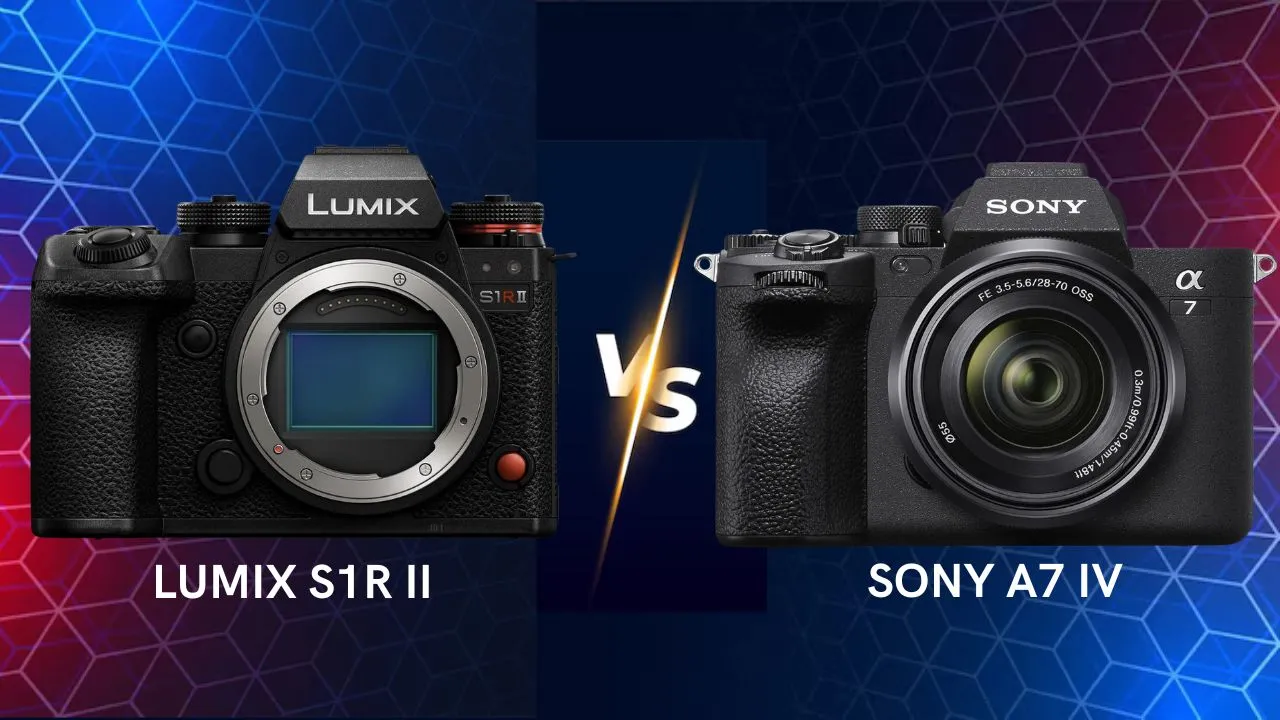
The Panasonic Lumix S1R II and Sony A7 IV are two powerful full-frame mirrorless cameras targeting advanced photographers and hybrid creators.
Both are highly capable, but they serve slightly different purposes: the S1R II focuses on maximum resolution and color fidelity, while the A7 IV aims to deliver balance, versatility, and top-tier autofocus performance.
Let’s see how they compare in every major category.
⚙️ Overview — Resolution Master vs Hybrid All-Rounder
Panasonic Lumix S1R II:
A professional-grade, high-resolution camera designed for photographers who demand top detail, accurate colors, and hybrid video functionality. Ideal for studio, landscape, and commercial photography.
Sony A7 IV:
A hybrid full-frame camera made for creators who need an excellent balance of stills and video performance, advanced autofocus, and access to a massive lens ecosystem. Perfect for portrait, event, and hybrid shooters.
In short:
-
S1R II = Ultra-high resolution, professional build, and advanced hybrid features.
-
A7 IV = Balanced hybrid performance with world-class autofocus.
📸 Specifications Comparison
| Feature | Panasonic Lumix S1R II | Sony A7 IV |
|---|---|---|
| Release Date | 2025 | 2021 |
| Sensor | 44.3 MP Full-Frame BSI CMOS | 33 MP Full-Frame BSI CMOS |
| Processor | Venus Engine | BIONZ XR |
| Lens Mount | L-Mount | Sony E-Mount |
| In-Body Stabilization (IBIS) | ✅ Yes (up to 8 stops) | ✅ Yes (up to 5.5 stops) |
| Autofocus System | Phase Hybrid AF (779 points) | Hybrid AF (759 phase points + Real-Time Eye/Subject Tracking) |
| Continuous Shooting | 15 fps mechanical / 60 fps electronic | 10 fps |
| Video Recording | 8.1K / 6K / 4K 120p 10-bit | 4K 60p 10-bit 4:2:2 |
| Log & Color Profiles | V-Log / LUT preview | S-Log3 / HLG / CineTone |
| Screen | 3.2” Fully Articulating Touch LCD | 3.0” Vari-Angle Touch LCD |
| Viewfinder | 9.44M-dot OLED EVF | 3.69M-dot OLED EVF |
| Storage | Dual CFexpress Type B + SD | Dual SD (1 UHS-II + 1 UHS-I) |
| Weight (Body Only) | 820 g | 658 g |
| Price (Body Only) | ~$3,999 (check on Amazon) | ~$2,499 (check on Amazon) |
🧱 Build and Handling
The S1R II features a professional, rugged build designed for heavy-duty use — perfect for studio, landscape, and commercial photography. It’s larger and heavier, but also more stable and ergonomic for long sessions.
The A7 IV, on the other hand, is lighter and more compact, with a deep grip and intuitive control layout. It’s not as tank-like as the S1R II but offers excellent usability for travel, events, and everyday shooting.
👉 Verdict:
-
S1R II: Best for professionals who need a durable, high-end body.
-
A7 IV: Best for portability and general hybrid shooting.
🎯 Autofocus and Performance
Autofocus is a major differentiator.
The Sony A7 IV leads with its Real-Time Tracking AF system, powered by AI-based subject recognition for humans, animals, and birds. It’s among the most reliable autofocus systems in the industry.
The Panasonic S1R II introduces Panasonic’s latest Phase Hybrid AF system, which is a huge improvement over previous generations. It’s accurate and fast, but not as instantly responsive as Sony’s class-leading system, especially for moving subjects.
👉 Verdict:
-
A7 IV: Superior autofocus and tracking performance.
-
S1R II: Improved and accurate, but slightly slower for dynamic action.
🎥 Video Capabilities
Both cameras offer strong hybrid video performance but with different strengths.
Panasonic Lumix S1R II
-
8.1K and 6K internal recording
-
10-bit 4:2:2 color depth
-
V-Log recording and LUT preview
-
No recording time limit
-
In-body stabilization ideal for handheld video
Sony A7 IV
-
4K up to 60p (10-bit 4:2:2)
-
7K oversampling in 4K 30p mode
-
S-Cinetone, S-Log3, and HLG profiles
-
Advanced heat management for long recording times
The S1R II provides more resolution and cinematic depth for serious filmmakers, while the A7 IV delivers beautiful, ready-to-grade footage with outstanding autofocus and a smoother workflow.
👉 Verdict:
-
S1R II: Best for high-end video production.
-
A7 IV: Best for hybrid creators and videographers needing reliability and simplicity.
🧠 Image Quality
The S1R II’s 44.3 MP sensor offers superior detail and dynamic range, making it ideal for large prints, commercial photography, and any work demanding maximum resolution.
The A7 IV’s 33 MP sensor, while smaller in resolution, still provides excellent color, detail, and low-light performance. For most creators, it strikes the ideal balance between file size, quality, and flexibility.
👉 Verdict:
-
S1R II: Best for resolution, studio, and print work.
-
A7 IV: Best for balanced quality and everyday versatility.
🔋 Ecosystem and Connectivity
The Sony A7 IV benefits from Sony’s massive E-Mount lens ecosystem, offering dozens of native and third-party lens options. Its ecosystem is one of the most developed in the mirrorless world.
The Panasonic S1R II uses the L-Mount system (shared with Leica and Sigma), which has grown significantly and offers excellent lenses, especially for professional video. However, the variety isn’t as extensive as Sony’s system yet.
👉 Verdict:
-
A7 IV: Best for lens selection and system flexibility.
-
S1R II: Great ecosystem, but narrower in affordable lens options.
💰 Price and Value
| Model | Approx. Price | Ideal For |
|---|---|---|
| Lumix S1R II | ~$3,999 | Professional photographers, hybrid video creators |
| Sony A7 IV | ~$2,499 | Hybrid creators, portrait & event photographers |
_
The S1R II costs more but offers unmatched detail and advanced video options. The A7 IV delivers near-pro performance at a more accessible price — ideal for most creators and professionals who value versatility.
👉 Verdict:
-
S1R II: Best for professionals who need ultimate image quality.
-
A7 IV: Best value for most photographers and hybrid creators.
Check availability and price on Amazon 🛒
📷 Lumix S1R II — Amazon USA / Amazon Canada / Amazon UK / Amazon Australia
📷 Sony A7 IV — Amazon USA / Amazon Canada / Amazon UK / Amazon Australia
Note: camerafight.com participates in the Amazon Associates Program. As an Amazon Associate, we earn from qualifying purchases.
🏁 Final Verdict — Panasonic Lumix S1R II vs Sony A7 IV
| Type of User | Recommended Camera |
|---|---|
| Studio Photographer | S1R II |
| Landscape Photographer | S1R II |
| Portrait / Wedding Photographer | A7 IV |
| Hybrid Photo + Video Creator | A7 IV |
| Filmmaker / Commercial Videographer | S1R II |
| Travel / Event Photographer | A7 IV |
| Fine Art / Print Photographer | S1R II |
| Content Creator / YouTuber | A7 IV |
_
✅ In short:
Choose the Panasonic Lumix S1R II if you want the ultimate image detail, top-tier color science, and professional-grade hybrid performance.
Choose the Sony A7 IV if you want outstanding autofocus, balanced hybrid capabilities, and the best value in a full-frame system.
🧠 Final Thoughts
Both the Panasonic Lumix S1R II and Sony A7 IV are incredible full-frame cameras, but they cater to different creative needs.
If your work revolves around maximum image detail, studio, or commercial production, the S1R II is unbeatable.
If you’re a hybrid creator, portrait photographer, or filmmaker seeking reliability, autofocus excellence, and value — the Sony A7 IV is the smarter, more versatile choice.