Panasonic Lumix G97 vs Nikon Z50 II – Which one is better?
Panasonic Lumix G97 vs Nikon Z50 II – Which One Is Better?
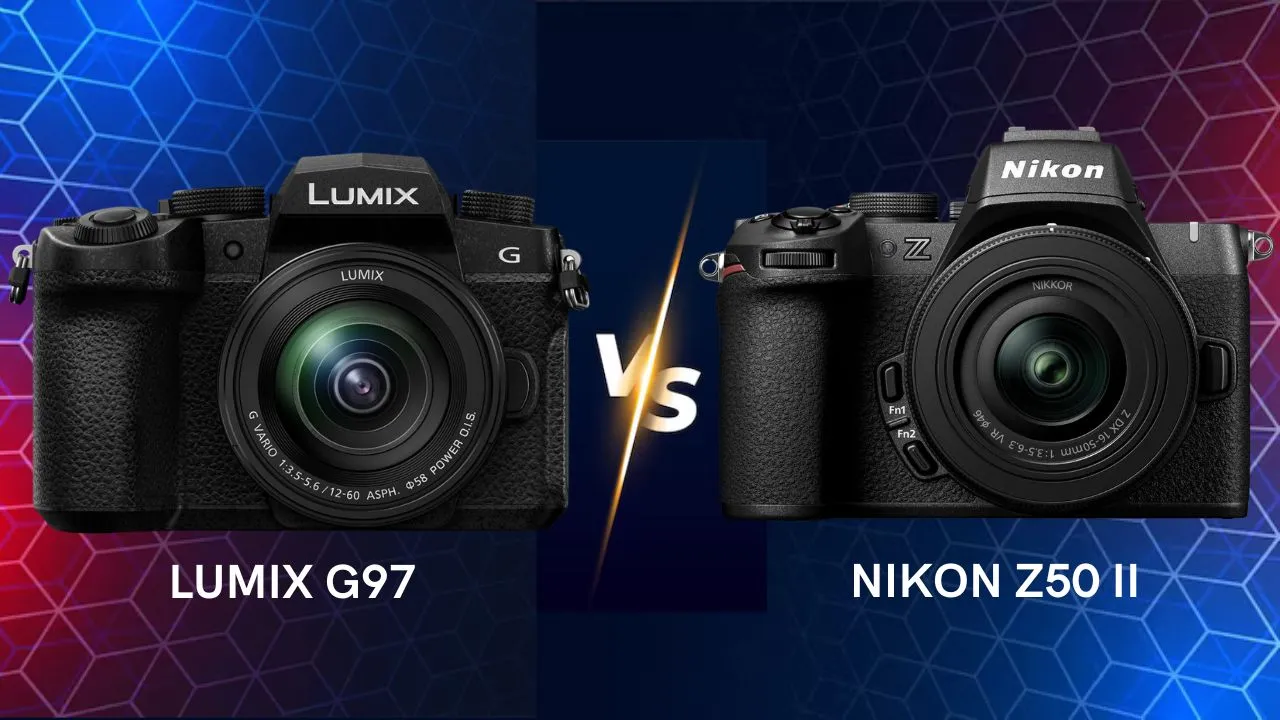
The Panasonic Lumix G97 and Nikon Z50 II are two mirrorless cameras aimed at creators, photographers, and hybrid shooters.
While both deliver excellent image quality and 4K video, they differ in sensor size, stabilization, and overall system approach.
The G97 represents Panasonic’s Micro Four Thirds line with strong video features and built-in stabilization, while the Z50 II continues Nikon’s APS-C Z-mount evolution with superior autofocus and image depth.
Here’s a detailed comparison to help you choose the right one for your needs.
⚙️ Overview – Hybrid Portability vs Sensor Power
Panasonic Lumix G97:
A Micro Four Thirds (MFT) hybrid camera built for creators who want portability, in-body stabilization, and excellent 4K capabilities. It uses a 20.3 MP sensor and Panasonic’s reliable Dual I.S.2 system, making it ideal for travel and handheld video.
Nikon Z50 II:
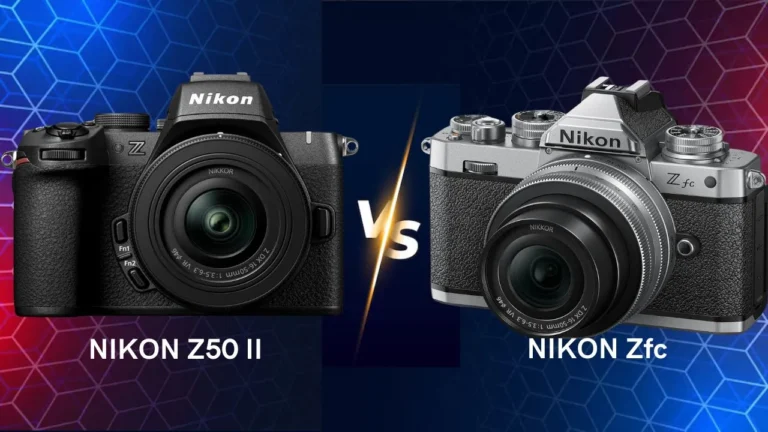
A rumored refresh of Nikon’s popular Z50 APS-C camera, expected to bring better autofocus, improved processor, and enhanced video features. With a larger 24.2 MP sensor, flip screen, and access to Nikon’s Z-mount lenses, it’s designed for hybrid shooters who prioritize image quality and system flexibility.
In short:
-
Lumix G97 = Lightweight, stabilized hybrid for creators.
-
Z50 II = Larger sensor, better autofocus, and stronger low-light performance.
📸 Specifications Comparison
| Specification | Panasonic Lumix G97 | Nikon Z50 II |
|---|---|---|
| Release date | April 2024 | October 2024 |
| Camera type | Mirrorless | Mirrorless |
| Sensor format | Micro Four Thirds (17.3 × 13.0 mm) | APS-C (23.5 × 15.7 mm) |
| Sensor type | CMOS | CMOS |
| Resolution | 20.3 MP | 20.9 MP |
| Image processor | Venus Engine | EXPEED 7 |
| ISO range | 200–25,600 (expandable to 100) | 100–51,200 (expandable to 204,800) |
| Autofocus system | Contrast-detect DFD AF (225 areas) | Hybrid phase-detection AF with subject detection (209 points) |
| Continuous shooting | Up to 9 fps (AF-S), 6 fps (AF-C) | Up to 11 fps |
| Video recording | 4K up to 30p (8-bit internal) | 4K up to 60p (10-bit via HDMI, 8-bit internal) |
| Viewfinder | 2.36M-dot OLED EVF | 2.36M-dot OLED EVF |
| LCD screen | 3.0″ fully articulating touchscreen, 1.84M dots | 3.2″ vari-angle touchscreen, 1.62M dots |
| In-body image stabilization (IBIS) | Yes, 5-axis (up to 5 stops) | No |
| Memory card slots | 1× SD (UHS-II) | 1× SD (UHS-II) |
| Battery life (CIPA) | Approx. 280 shots | Approx. 450 shots |
| Weight (with battery & card) | Approx. 530 g | Approx. 525 g |
| Launch price (body only) | Approx. USD 800 (check on Amazon) | Approx. USD 1,100 (check on Amazon) |
🧱 Build and Handling
The Lumix G97 offers a compact and lightweight design that’s ideal for travel or handheld shooting. The grip is comfortable, and the articulating touchscreen makes it great for vlogging, selfies, or low-angle shots. Its in-body stabilization ensures smoother results even without a gimbal.
The Nikon Z50 II feels slightly more premium and modern, following Nikon’s ergonomic DSLR heritage. Its grip is deeper, and button placement is intuitive. The build is solid with good weather sealing, making it a comfortable camera for long shoots.
👉 Verdict:
-
G97: Best for travel and handheld content creation.
-
Z50 II: Best for ergonomics and professional control.
🎯 Autofocus and Performance
The Nikon Z50 II clearly leads in autofocus. Its hybrid AF system with phase detection offers real-time eye and subject tracking, making it perfect for portraits, moving subjects, and hybrid shooting. It’s also expected to perform better in low-light conditions thanks to the larger APS-C sensor and EXPEED 7 processor.
The Lumix G97 uses Panasonic’s contrast-based Depth-from-Defocus (DFD) system. While accurate for stills and controlled environments, it’s not as quick or reliable for fast action or tracking moving subjects in video.
👉 Verdict:
-
Z50 II: Superior autofocus and real-time tracking.
-
G97: Accurate and consistent, but slower in continuous AF.
🎥 Video Capabilities
Both cameras are capable of 4K recording, but they approach video differently.
Panasonic Lumix G97
-
4K 30p / Full HD 60p
-
In-body 5-axis stabilization
-
Fully articulating screen for vlogging
-
No recording limit in most modes
-
Great color profiles and compact form factor
Nikon Z50 II
-
4K 60p (likely oversampled from 6K)
-
Full HD 120p slow motion
-
Eye-detect AF during video
-
Flip-down screen (less ideal for tripod vlogging)
-
Requires lens IS for stabilization
👉 Verdict:
-
G97: Best for handheld video and travel creators.
-
Z50 II: Better for advanced video shooters who want higher frame rates and improved autofocus.
🧠 Image Quality
The Nikon Z50 II’s APS-C sensor offers better low-light performance, higher dynamic range, and shallower depth of field than the G97’s Micro Four Thirds sensor. It delivers sharper details and less noise at higher ISO values.
The Lumix G97 still produces excellent image quality, with vibrant colors and sharp results — especially when paired with Panasonic or Olympus prime lenses. Its stabilization also allows slower shutter speeds without blur, helping to offset the smaller sensor in many cases.
👉 Verdict:
-
Z50 II: Better low-light and overall image quality.
-
G97: Great color science and stabilized results for travel and creative use.
🔋 Battery and Connectivity
Both cameras use USB-C charging and offer Wi-Fi and Bluetooth connectivity for remote control and file transfer. The Z50 II offers slightly longer battery life and faster wireless connections. The G97 adds a headphone/mic combo port and better in-body stabilization for creators on the go.
👉 Verdict:
-
Z50 II: Longer battery life and faster connection speeds.
-
G97: Better creator features and stabilized operation.
💰 Price and Value
| Model | Approx. Price | Ideal For |
|---|---|---|
| Panasonic Lumix G97 | ~$899 | Hybrid creators, vloggers, and travelers |
| Nikon Z50 II | ~$1,099 | Enthusiasts and hybrid photographers wanting better image quality |
_
The Lumix G97 offers incredible value for creators who need a stabilized, easy-to-use camera for both photo and video. The Z50 II, while more expensive, offers better autofocus, low-light performance, and long-term system potential.
👉 Verdict:
-
G97: Best value for creators who need stabilization and compactness.
-
Z50 II: Best long-term choice for enthusiasts and pros.
Check availability and price on Amazon 🛒
📷 Nikon Z50 II — Amazon USA / Amazon Canada / Amazon UK / Amazon Australia
📷 Panasonic Lumix G97 — Amazon USA / Amazon Canada / Amazon UK / Amazon Australia
Note: camerafight.com participates in the Amazon Associates Program. As an Amazon Associate, we earn from qualifying purchases.
🏁 Final Verdict — Panasonic Lumix G97 vs Nikon Z50 II
| Type of User | Recommended Camera |
|---|---|
| Beginner Photographer | Lumix G97 |
| Enthusiast Photographer | Z50 II |
| Travel Photographer | Lumix G97 |
| Portrait Shooter | Z50 II |
| Vlogger / YouTuber | Lumix G97 |
| Wildlife / Action Shooter | Z50 II |
| Studio Photographer | Z50 II |
| Hybrid Creator | Both (tie) |
| Budget Buyer | Lumix G97 |
_
✅ In short:
Choose the Panasonic Lumix G97 if you want portability, in-body stabilization, and an affordable hybrid camera for content creation.
Choose the Nikon Z50 II if you want faster autofocus, better low-light performance, and room to grow within the Nikon Z system.
Check availability and price on Amazon 🛒
📷 Panasonic Lumix G97 — Amazon USA / Amazon Canada / Amazon UK / Amazon Australia
📷 Nikon Z50 II — Amazon USA / Amazon Canada / Amazon UK / Amazon Australia
Note: camerafight.com participates in the Amazon Associates Program. As an Amazon Associate, we earn from qualifying purchases.
🧠 Final Thoughts
The Panasonic Lumix G97 is perfect for creators and travelers who want a compact, stabilized, and easy-to-use camera for both photos and videos.
The Nikon Z50 II, meanwhile, delivers superior image quality, autofocus, and low-light performance — making it the better choice for photographers looking to step up their craft.
If video and portability matter most, choose the G97.
If stills performance and future system growth are your priorities, go with the Z50 II.