Olympus OM-D E-M10 Mark IV vs Sony A6400 | Which One Is Best For You?
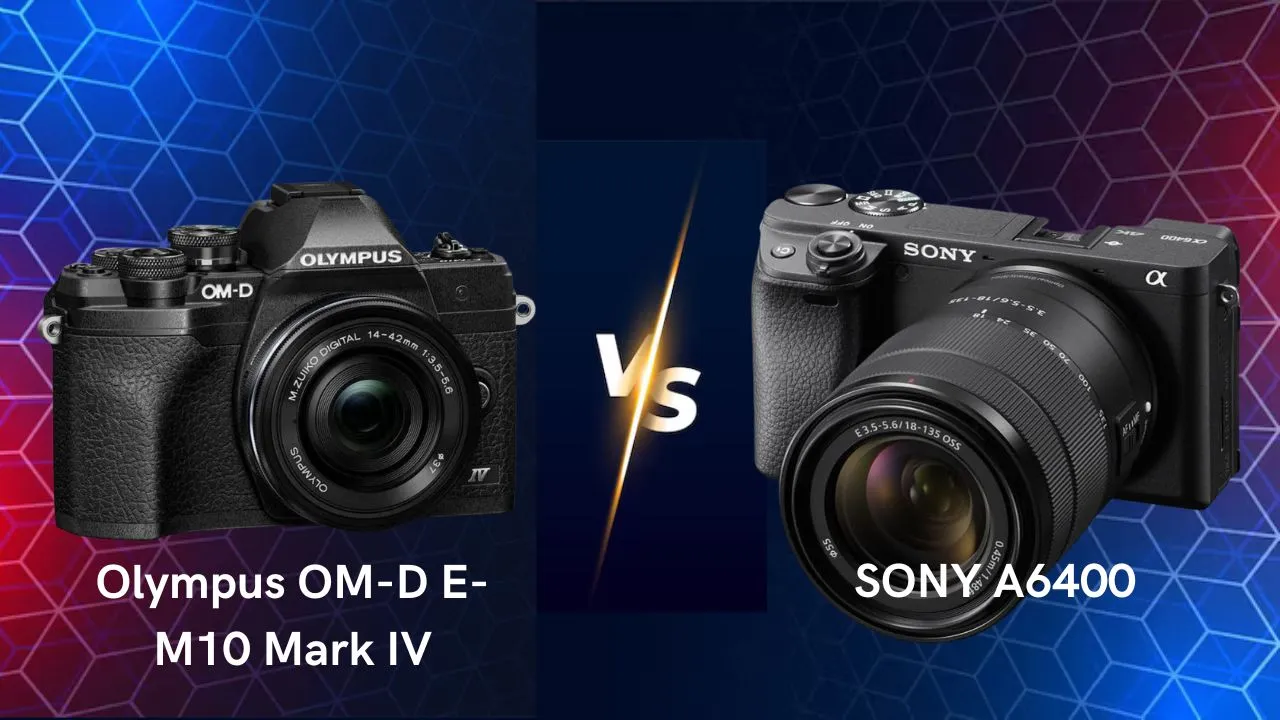
Olympus OM-D E-M10 Mark IV vs Sony A6400 — Which One Is Best for You?
The Olympus OM-D E-M10 Mark IV and Sony A6400 are two of the most popular mid-range mirrorless cameras for photographers who want great image quality in a compact form.
Both are small, stylish, and capable, but they cater to slightly different needs: Olympus focuses on portability and in-body stabilization, while Sony offers class-leading autofocus and image quality.
So which camera gives you the best value for your money? Let’s find out.
⚙️ Overview — Travel-Friendly vs Tech-Driven
Olympus OM-D E-M10 Mark IV: A compact, retro-style Micro Four Thirds camera that emphasizes ease of use, portability, and in-body image stabilization (IBIS).
Sony A6400: A fast, high-performance APS-C camera with outstanding autofocus and video options, ideal for hybrid creators and enthusiasts.
In short:
-
E-M10 Mark IV = Compact, stabilized, and perfect for travel.
-
A6400 = Powerful, fast, and focused on performance.
📸 Specifications Comparison
| Feature | Olympus OM-D E-M10 Mark IV | Sony A6400 |
|---|---|---|
| Sensor | 20.3MP Micro Four Thirds CMOS | 24.2MP APS-C CMOS |
| Processor | TruePic VIII | BIONZ X |
| Lens Mount | Micro Four Thirds | Sony E-Mount |
| In-Body Stabilization (IBIS) | ✅ Yes (Up to 4.5 stops) | ❌ No (Lens IS only) |
| Autofocus System | 121-point Contrast AF | 425-point Phase + Contrast AF with Real-Time Tracking |
| Continuous Shooting | 8.7 fps | 11 fps |
| Video Recording | 4K 30p / Full HD 60p | 4K 30p / Full HD 120p |
| Log / 10-bit Output | ❌ No | ✅ S-Log2 / S-Log3 / HLG (8-bit internal) |
| Viewfinder | 2.36M-dot OLED EVF | 2.36M-dot OLED EVF |
| Screen | 3.0” Tilting Touch LCD (Flip-down) | 3.0” Tilting LCD (180° flip-up) |
| Battery Life (CIPA) | ~360 shots | ~410 shots |
| Connectivity | Wi-Fi + Bluetooth | Wi-Fi + Bluetooth |
| Weight | 383 g | 403 g |
| Price (Body Only) | ~$699 (check on Amazon) | ~$899 (check on Amazon) |
🧱 Build and Handling
The E-M10 Mark IV offers a beautiful retro design, perfect for photographers who love a tactile shooting experience. It’s lighter and smaller than the A6400, making it ideal for travel or street photography.
The Sony A6400, on the other hand, has a more modern, minimalist design with a robust magnesium alloy body. It’s not weather-sealed but feels solid and well-built.
👉 Verdict:
-
E-M10 IV: Best for portability and style.
-
A6400: Best for robust, ergonomic handling.
🎯 Autofocus and Performance
This is where the Sony A6400 shines.
Sony’s Real-Time Eye AF and Real-Time Tracking system is one of the fastest and most reliable autofocus systems in any APS-C camera. It locks onto subjects instantly and follows them with incredible precision — perfect for portraits, sports, or wildlife.
The E-M10 Mark IV uses an older contrast-detect system, which is accurate but slower, especially for moving subjects.
👉 Verdict:
-
A6400: Far superior autofocus and subject tracking.
-
E-M10 IV: Reliable but slower, better for casual shooting.
🎥 Video Capabilities
Both cameras offer 4K video, but the Sony A6400 is much more capable for content creators.
Olympus OM-D E-M10 Mark IV
-
4K 30p recording (8-bit)
-
IBIS for stable handheld shots
-
No mic input or log profile
Sony A6400
-
4K 30p (oversampled from 6K)
-
Full HD 120p slow motion
-
S-Log2, S-Log3, and HLG profiles
-
Microphone input
-
No recording time limit
👉 Verdict:
-
A6400: Best for vloggers, filmmakers, and hybrid creators.
-
E-M10 IV: Best for stabilized travel clips.
🧠 Image Quality
The Sony A6400’s larger APS-C sensor gives it the edge in sharpness, detail, and low-light performance.
The E-M10 Mark IV, though smaller in sensor size, produces beautiful colors and pleasing tones straight out of the camera — a signature Olympus strength.
If you often shoot RAW or edit your images heavily, the Sony files give you more flexibility.
👉 Verdict:
-
A6400: Better dynamic range and detail.
-
E-M10 IV: Great colors and JPEG rendering.
🔋 Battery and Connectivity
The Sony A6400 has slightly better endurance (around 410 shots vs. 360 on the Olympus) and supports faster SD cards (UHS-I).
Both have Wi-Fi and Bluetooth, but only the Sony supports remote control via its Imaging Edge app with live view.
👉 Verdict:
-
A6400: Better battery and app integration.
-
E-M10 IV: Still fine for travel and casual use.
💰 Price and Value
-
Olympus E-M10 Mark IV: ~$699
-
Sony A6400: ~$899
The E-M10 Mark IV is an excellent entry-level option that’s compact, stylish, and stabilized.
The A6400 costs more, but it delivers professional-grade autofocus and video features that can last you years.
👉 Verdict:
-
E-M10 IV: Best budget travel and lifestyle camera.
-
A6400: Best hybrid camera under $1,000.
Check availability and price on Amazon 🛒
📷 Sony A6400 — Amazon USA / Amazon Canada / Amazon UK / Amazon Australia
📷 Olympus E-M10 Mark IV — Amazon USA / Amazon Canada / Amazon UK / Amazon Australia
Note: camerafight.com participates in the Amazon Associates Program. As an Amazon Associate, we earn from qualifying purchases.
🏁 Final Verdict — Olympus E-M10 Mark IV vs Sony A6400
| Type of User | Recommended Camera |
|---|---|
| Beginner Photographer | E-M10 Mark IV |
| Enthusiast Photographer | A6400 |
| Portrait Photographer | A6400 |
| Landscape Photographer | Both (tie) |
| Street Photographer | E-M10 Mark IV |
| Travel Photographer | E-M10 Mark IV |
| Sports / Wildlife Shooter | A6400 |
| Vlogger / YouTuber | A6400 |
| Hybrid Creator | A6400 |
| Budget Buyer | E-M10 Mark IV |
✅ In short:
Choose the Olympus E-M10 Mark IV if you want a lightweight, stabilized camera for travel and everyday shooting.
Choose the Sony A6400 if you want faster autofocus, better image quality, and stronger video tools.
🧠 Final Thoughts
The Olympus E-M10 Mark IV remains one of the most stylish, travel-ready mirrorless cameras available — perfect for photographers who value simplicity, compactness, and beautiful colors.
The Sony A6400, meanwhile, is a workhorse hybrid camera that punches far above its price. It’s faster, sharper, and far more capable for professional-level photography and video creation.
If portability and design matter most, go with Olympus.
If performance and longevity matter more, go with Sony — it’s a camera that grows with you.