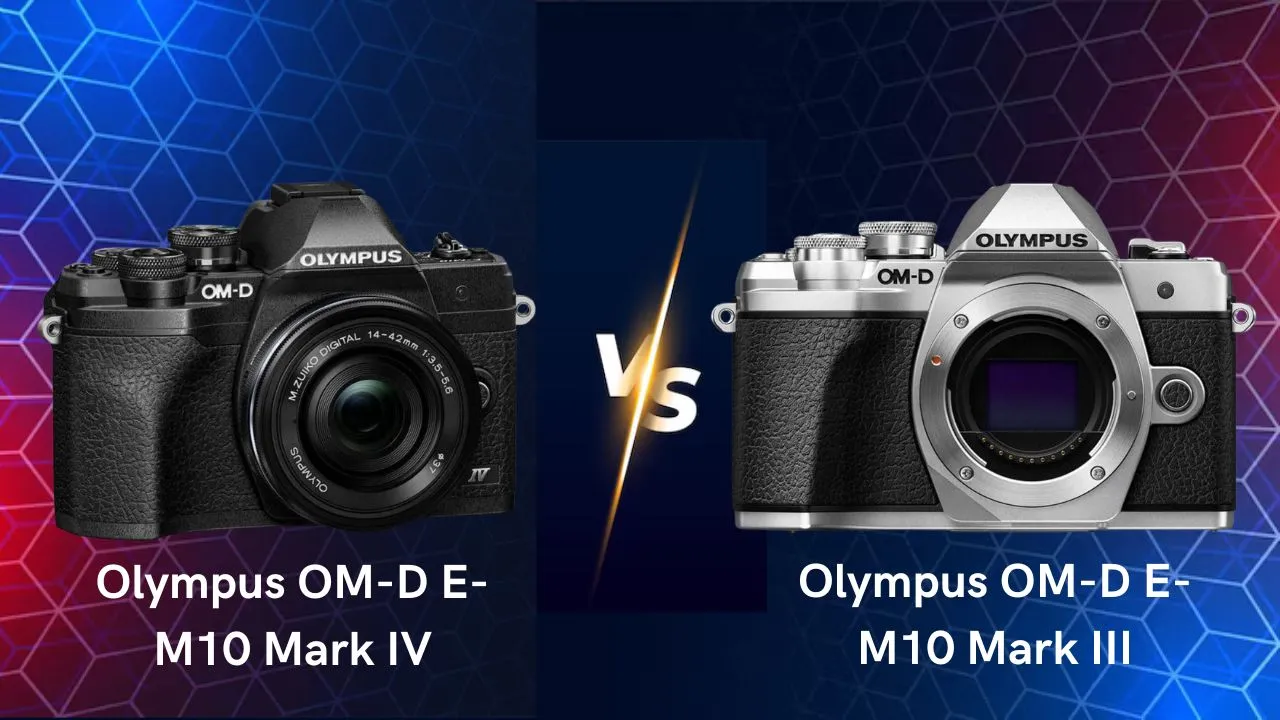
Olympus OM-D E-M10 Mark IV vs Mark III | Which One Is Best For You?
Olympus OM-D E-M10 Mark IV vs Mark III — Which One Is Best for You?
The Olympus OM-D E-M10 Mark III was one of the most popular compact mirrorless cameras of its time — small, elegant, and easy to use.
Then came the OM-D E-M10 Mark IV, bringing new features, better performance, and modern convenience while keeping the same charming retro look.
But is the upgrade worth it? Or does the older Mark III still hold up today?
Let’s break it down.
⚙️ Overview — Evolution, Not Revolution
E-M10 Mark III: A compact, beginner-friendly Micro Four Thirds camera that delivers great image quality and classic Olympus handling.
E-M10 Mark IV: The same concept refined — lighter, faster, with a higher-resolution sensor and better connectivity.
In short:
-
Mark III = Affordable and reliable classic.
-
Mark IV = More resolution, faster performance, and better for modern creators.
📸 Specifications Comparison
| Feature | Olympus OM-D E-M10 Mark IV | Olympus OM-D E-M10 Mark III |
|---|---|---|
| Sensor | 20.3MP Micro Four Thirds CMOS | 16.1MP Micro Four Thirds CMOS |
| Processor | TruePic VIII | TruePic VIII |
| In-Body Stabilization (IBIS) | ✅ Yes (Up to 4.5 stops) | ✅ Yes (Up to 4 stops) |
| Autofocus System | 121-point Contrast AF | 121-point Contrast AF |
| Continuous Shooting | 8.7 fps | 8.6 fps |
| Video Recording | 4K 30p / Full HD 60p | 4K 30p / Full HD 60p |
| Viewfinder | 2.36M-dot OLED EVF | 2.36M-dot OLED EVF |
| Screen | 3.0” Tilting Touch LCD (Flip-down) | 3.0” Tilting Touch LCD (Upward tilt only) |
| Connectivity | Wi-Fi + Bluetooth | Wi-Fi only |
| Battery Life (CIPA) | ~360 shots | ~330 shots |
| Weight | 383 g | 410 g |
| Price (Body Only) | ~$699 (check on Amazon) | ~$499 (discontinued, available used) |
🧱 Build and Handling
Olympus kept the same retro design and metal construction between generations, so both cameras feel equally premium.
The difference is in the details: the Mark IV is slightly lighter and adds a deeper grip, making it more comfortable to hold for long periods.
The flip-down screen on the Mark IV is also better suited for selfies and vlogging — something the Mark III lacks.
👉 Verdict:
-
Mark III: Classic build, slightly heavier.
-
Mark IV: Lighter, more ergonomic, better for creators.
🎯 Autofocus and Performance
Both models use a 121-point contrast-detect autofocus system — reliable but not as fast as modern phase-detect systems.
However, the Mark IV’s newer 20MP sensor gives it slightly improved readout and focusing performance, especially in live view.
Both handle single-shot AF beautifully, but the Mark IV is just a bit more responsive overall.
👉 Verdict:
-
Mark IV: Slightly faster and more accurate.
-
Mark III: Still perfectly usable for stills and casual photography.
🎥 Video Capabilities
Video performance hasn’t changed drastically — both cameras shoot 4K 30p and Full HD 60p.
However, the Mark IV benefits from:
-
Improved image stabilization for smoother handheld video
-
Flip-down touchscreen (great for self-recording)
-
Bluetooth connectivity for remote shooting and file transfers
The Mark III still delivers great image quality but lacks the convenience features that content creators now expect.
👉 Verdict:
-
Mark IV: Better for vloggers and handheld video.
-
Mark III: Still solid for occasional clips.
🧠 Image Quality
This is where the upgrade really matters.
The Mark IV’s 20.3MP sensor offers noticeably better detail, dynamic range, and low-light performance compared to the 16MP sensor in the Mark III.
Both produce Olympus’s signature rich colors and sharp JPEGs, but if you crop, print, or shoot RAW, the Mark IV clearly wins.
👉 Verdict:
-
Mark IV: Sharper, cleaner, and more flexible.
-
Mark III: Great colors, but lower resolution.
🔋 Battery and Connectivity
Battery life is almost identical — roughly 350 shots per charge.
The big difference? Bluetooth.
The Mark IV adds Bluetooth alongside Wi-Fi, so you can keep the camera connected to your phone for faster image sharing and GPS tagging — a big usability improvement for modern workflows.
👉 Verdict:
-
Mark IV: Better wireless connectivity.
-
Mark III: Limited to Wi-Fi only.
💰 Price and Value
-
Olympus E-M10 Mark IV: ~$699 (new)
-
Olympus E-M10 Mark III: ~$499 (used or refurbished)
If you find a good deal on the Mark III, it’s still a capable camera that shares the same lens system and handling.
But if you want a camera that will last longer, perform better, and offer more convenience features — the Mark IV is worth the upgrade.
👉 Verdict:
-
Mark III: Best for tight budgets.
-
Mark IV: Best for long-term investment.
Check availability and price on Amazon 🛒
📷 Olympus E-M10 Mark III — Amazon USA / Amazon Canada / Amazon UK / Amazon Australia
📷 Olympus E-M10 Mark IV — Amazon USA / Amazon Canada / Amazon UK / Amazon Australia
Note: camerafight.com participates in the Amazon Associates Program. As an Amazon Associate, we earn from qualifying purchases.
🏁 Final Verdict — Olympus E-M10 Mark IV vs Mark III
| Type of User | Recommended Camera |
|---|---|
| Beginner Photographer | Mark IV |
| Enthusiast Photographer | Mark IV |
| Portrait Photographer | Mark IV |
| Landscape Photographer | Both (tie) |
| Street Photographer | Both (tie) |
| Travel Photographer | Mark IV |
| Vlogger / YouTuber | Mark IV |
| Budget Buyer | Mark III (used) |
✅ In short:
Choose the Olympus E-M10 Mark IV if you want better image quality, more resolution, Bluetooth, and a modern screen design.
Choose the E-M10 Mark III if you find it at a great price and mainly shoot photos in good light.
🧠 Final Thoughts
The Olympus OM-D E-M10 Mark IV is a refined version of a beloved classic — faster, lighter, and smarter while keeping everything people love about Olympus design.
If you’re buying your first mirrorless camera or upgrading from the Mark III, it’s a worthy step forward.
The Mark III still holds up remarkably well and is a bargain on the used market, but for future-proof features and connectivity, the Mark IV easily takes the win.