Nikon Z7 II vs Z6 III | Which One Is Best For You?
Nikon Z7 II vs Nikon Z6 III – Which One Is Best for You?
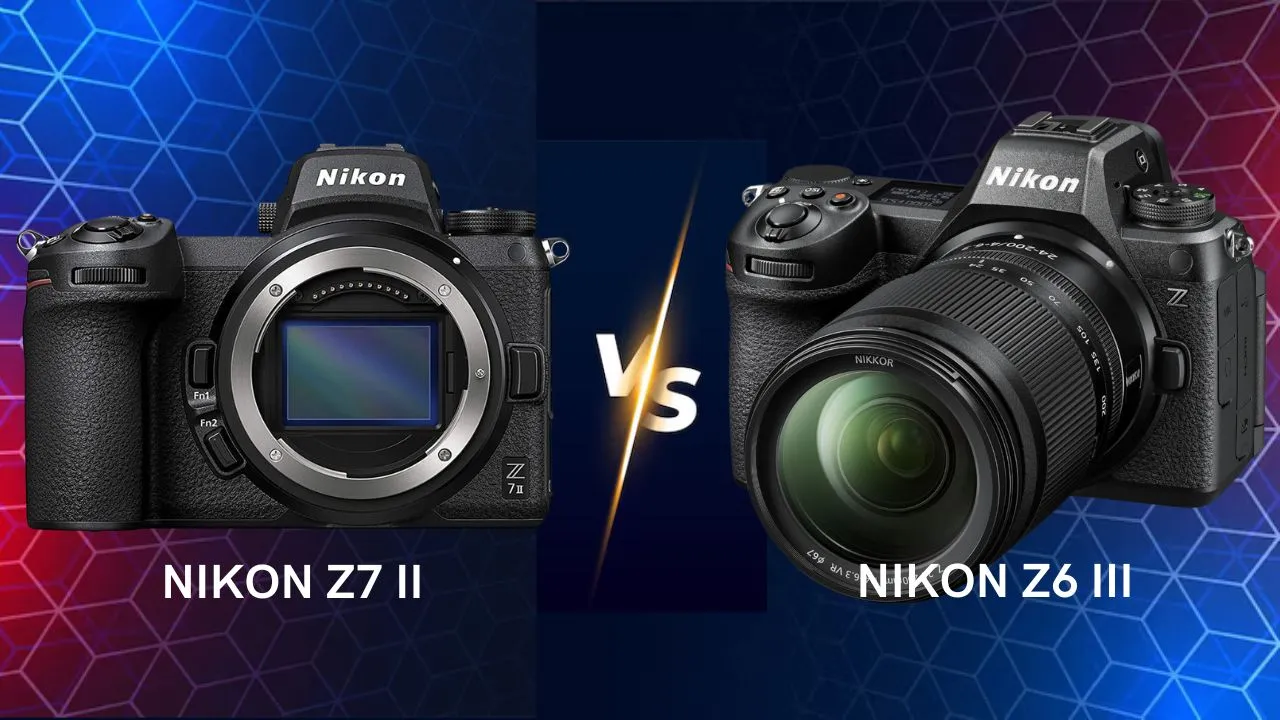
Nikon’s full-frame mirrorless lineup offers two incredibly capable options for professionals and enthusiasts alike: the Nikon Z7 II and the Nikon Z6 III.
Both cameras look similar, share the same mount, and deliver exceptional image quality — but they’re built for very different purposes.
So, which one should you choose? Let’s dive into the details.
⚙️ Overview — Resolution vs Speed
-
Nikon Z7 II: A high-resolution workhorse built for photographers who want the best possible image quality. It’s ideal for landscapes, portraits, and studio work.
-
Nikon Z6 III: Nikon’s latest hybrid camera, featuring a new partially stacked sensor, advanced autofocus, and 6K video recording — built for creators who need speed and versatility.
In short:
-
Z7 II = Maximum detail and professional stills performance.
-
Z6 III = Next-gen speed, hybrid power, and cutting-edge autofocus.
📸 Specifications Comparison
| Feature | Nikon Z7 II | Nikon Z6 III |
|---|---|---|
| Sensor | 45.7MP Full-Frame BSI CMOS | 24.5MP Full-Frame Partially Stacked BSI CMOS |
| Processor | Dual EXPEED 6 | EXPEED 7 |
| Autofocus System | 493-point Hybrid AF | 299-point Hybrid AF with AI Subject Detection |
| Continuous Shooting | 10 fps | 20 fps RAW / 60 fps JPEG |
| In-Body Stabilization (IBIS) | ✅ Yes (up to 5 stops) | ✅ Yes (up to 8 stops) |
| Video Recording | 4K 60p (1.08x crop) / 10-bit N-Log | 6K 60p (N-RAW / ProRes RAW) / 4K 120p / 10-bit internal |
| Log / 10-bit Output | ✅ N-Log / HLG via HDMI | ✅ N-Log / HLG / N-RAW / ProRes RAW internal |
| ISO Range | 64–25,600 | 100–204,800 |
| Viewfinder | 3.69M-dot OLED EVF | 5.76M-dot OLED EVF (120Hz) |
| Screen | 3.2” Tilting Touch LCD | 3.2” Fully Articulating 2.1M-dot LCD |
| Card Slots | 1 × CFexpress Type B + 1 × SD UHS-II | 1 × CFexpress Type B + 1 × SD UHS-II |
| Battery Life (CIPA) | ~420 shots | ~440 shots |
| Body Build | Magnesium Alloy (Weather-Sealed) | Magnesium Alloy (Weather-Sealed) |
| Weight | 705 g | 740 g |
| Price (Body Only) | ~$2,999 (check on Amazon) | ~$2,499 (check on Amazon) |
🧱 Build and Handling
Both cameras feature Nikon’s excellent design and ergonomics — robust, comfortable, and professional.
The Z7 II feels slightly more compact and traditional, with a clean layout and dual function buttons. It’s built like a true photographic tool.
The Z6 III is slightly heavier but adds modern touches — a fully articulating screen, a higher-resolution EVF, and improved heat management for extended video recording.
👉 Verdict:
-
Z7 II: Classic Nikon design for stills photographers.
-
Z6 III: More versatile build for hybrid creators.
🎯 Autofocus and Performance
The Z6 III is a clear leap forward in autofocus technology.
Powered by the EXPEED 7 processor and a partially stacked sensor, it offers lightning-fast subject detection and tracking — for people, animals, vehicles, and even insects.
The Z7 II, while excellent, uses an older system with 493 points that’s more accurate for still subjects but slower for fast-moving action.
In real-world shooting:
-
The Z7 II excels in landscapes, portraits, and controlled environments.
-
The Z6 III dominates in sports, wildlife, and real-time shooting.
👉 Verdict:
-
Z7 II: Best for precise, static shooting.
-
Z6 III: Best for speed and dynamic subjects.
🎥 Video Capabilities
This is where the Z6 III really pulls ahead.
Nikon Z7 II
-
4K 60p (1.08x crop)
-
10-bit N-Log / HLG via HDMI
-
External RAW support
-
Great for occasional video work
Nikon Z6 III
-
6K 60p (N-RAW / ProRes RAW internal)
-
4K 120p oversampled from 6K
-
10-bit 4:2:2 internal
-
Waveform, zebras, and false color tools
The Z6 III is one of the best hybrid cameras Nikon has ever made, offering professional-grade video options in a compact body.
👉 Verdict:
-
Z7 II: Suitable for light video work.
-
Z6 III: Ideal for hybrid shooters and filmmakers.
🧠 Image Quality
The Z7 II is the clear winner for resolution — its 45.7MP sensor captures extraordinary detail and dynamic range, making it perfect for large prints, product photography, or retouching.
The Z6 III, however, offers faster readout, cleaner high ISO performance, and improved shadow recovery — so while it’s lower in megapixels, it produces cleaner files in challenging lighting conditions.
👉 Verdict:
-
Z7 II: Best for maximum detail and resolution.
-
Z6 III: Best for speed, low light, and workflow flexibility.
🔋 Battery and Storage
Both cameras use the same EN-EL15c battery and offer similar endurance, though the Z6 III is slightly more efficient.
Each supports CFexpress Type B + SD UHS-II, providing flexibility for fast recording or affordable storage.
👉 Verdict:
-
Both: Reliable battery life and storage versatility.
💰 Price and Value
The Z6 III offers remarkable value for the performance it delivers — faster autofocus, better video, and a newer sensor for $500 less.
The Z7 II, however, justifies its price for professionals who need ultra-high resolution and precise detail.
👉 Verdict:
-
Z7 II: Best for professionals who prioritize image quality.
-
Z6 III: Best for hybrid creators and value seekers.
Check availability and price on Amazon 🛒
📷 Nikon Z7 II — Amazon USA / Amazon Canada / Amazon UK / Amazon Australia
📷 Nikon Z6 III — Amazon USA / Amazon Canada / Amazon UK / Amazon Australia
Note: camerafight.com participates in the Amazon Associates Program. As an Amazon Associate, we earn from qualifying purchases.
🏁 Final Verdict — Nikon Z7 II vs Nikon Z6 III
| Type of User | Recommended Camera |
|---|---|
| Beginner Full-Frame Photographer | Nikon Z6 III |
| Enthusiast Photographer | Nikon Z6 III |
| Professional Photographer | Both (tie) |
| Portrait Photographer | Nikon Z7 II |
| Landscape Photographer | Nikon Z7 II |
| Sports / Wildlife Shooter | Nikon Z6 III |
| Studio Photographer | Nikon Z7 II |
| Hybrid Creator (Photo + Video) | Nikon Z6 III |
| Travel Photographer | Nikon Z6 III |
| Budget-Conscious Buyer | Nikon Z6 III |
✅ In short:
-
Choose the Nikon Z7 II if you want maximum resolution, perfect detail, and professional image quality for stills work.
-
Choose the Nikon Z6 III if you want cutting-edge autofocus, faster performance, and professional-grade 6K video.
🧠 Final Thoughts
The Nikon Z7 II and Nikon Z6 III share the same Nikon DNA — robust build quality, excellent color science, and a reliable full-frame sensor.
But they’re built for two different photographers.
If you’re a professional still photographer, the Z7 II offers unmatched resolution and detail.
If you’re a hybrid creator, videographer, or fast-action shooter, the Z6 III provides better value, speed, and flexibility.
Either way, both cameras represent Nikon’s best innovations in full-frame mirrorless design — refined, powerful, and ready for any creative challenge.