Nikon Z50 vs Canon R10 | Which One Is Best For You?
Nikon Z50 vs Canon R10: Which One Is Best for You?
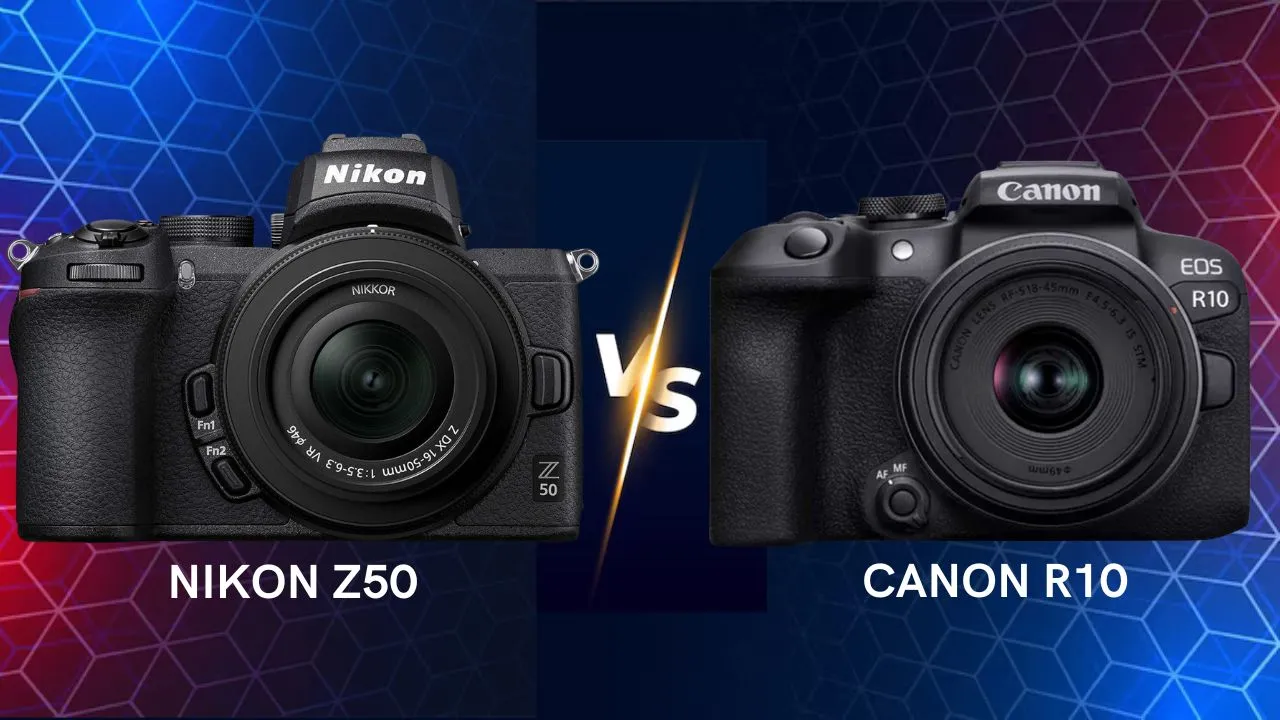
The Nikon Z50 and Canon EOS R10 are two of the most popular mid-range APS-C mirrorless cameras on the market.
Both are compact, versatile, and packed with advanced features for photographers and creators — but they come from two very different design philosophies.
The Nikon Z50 leans toward simplicity and ergonomics, while the Canon R10 focuses on cutting-edge autofocus and hybrid performance.
So, which one should you choose? Let’s dive in.
⚙️ Overview — Ergonomic Simplicity vs Hybrid Power
-
Nikon Z50: Compact, comfortable, and built for creators who want a straightforward shooting experience with excellent image quality.
-
Canon R10: Fast, intelligent, and designed for hybrid photographers and videographers who want top-tier autofocus and burst performance.
In short:
-
Z50 = Great ergonomics and value for stills.
-
R10 = Faster, smarter, and better for hybrid use.
📸 Specifications Comparison
| Feature | Nikon Z50 | Canon EOS R10 |
|---|---|---|
| Sensor | 20.9MP APS-C CMOS | 24.2MP APS-C CMOS (Dual Pixel AF II) |
| Processor | EXPEED 6 | DIGIC X |
| Autofocus System | Hybrid AF (209 points, Eye/Face detection) | Dual Pixel CMOS AF II (651 zones, Eye/Animal/Vehicle tracking) |
| Continuous Shooting | 11 fps | 15 fps mechanical / 23 fps electronic |
| In-Body Stabilization (IBIS) | ❌ No | ❌ No |
| Video Recording | 4K 30p (no crop) / Full HD 120p | 4K 60p (slight crop) / 4K 30p (no crop) / Full HD 120p |
| Log / 10-bit | ❌ No | ✅ C-Log 3, HDR PQ |
| ISO Range | 100–51,200 | 100–32,000 (expandable 51,200) |
| Viewfinder | 2.36M-dot OLED EVF | 2.36M-dot OLED EVF |
| Screen | 3.2” Tilting Touch LCD | 3.0” Fully Articulating Touch LCD |
| Card Slots | 1 × SD UHS-I | 1 × SD UHS-II |
| Battery Life (CIPA) | ~320 shots | ~430 shots |
| Connectivity | Wi-Fi, Bluetooth | Wi-Fi, Bluetooth, USB-C |
| Body Build | Magnesium Alloy (Weather-Sealed) | Polycarbonate + Metal Frame |
| Weight | 450 g | 429 g |
| Price (Body Only) | ~$999 | ~$979 (Check on Amazon) |
🧱 Build and Handling
The Nikon Z50 is known for its excellent ergonomics.
It features a deep, comfortable grip and a sturdy magnesium-alloy body that feels solid despite its compact size.
The Canon R10 is slightly lighter and smaller, with a modern design that includes a fully articulating screen, perfect for vloggers and hybrid creators.
While it’s less rugged than the Z50, its control layout is intuitive and beginner-friendly.
👉 Verdict:
-
Z50: Best ergonomics and build quality.
-
R10: Best portability and flexibility for video creators.
🎯 Autofocus and Performance
The Canon R10 easily wins when it comes to autofocus performance.
Powered by Dual Pixel CMOS AF II (the same system used in Canon’s R6 Mark II and R7), it offers advanced subject detection for people, animals, and vehicles, all with fast, precise eye-tracking.
The Nikon Z50, while solid, uses an older 209-point hybrid AF system that’s reliable for stills but slower in continuous tracking or fast-moving subjects.
👉 Verdict:
-
Z50: Reliable for general photography.
-
R10: Faster, smarter, and more accurate autofocus.
🎥 Video Capabilities
Both cameras are strong for creators, but the Canon R10 offers more power and flexibility.
Nikon Z50
-
4K 30p (no crop)
-
Full HD 120p
-
Clean HDMI output
-
20-minute 4K recording limit
Canon R10
-
4K 60p (with slight crop)
-
4K 30p (oversampled from 6K)
-
Full HD 120p
-
C-Log 3 and HDR PQ profiles
-
No recording limit (except by heat or card size)
The R10’s oversampled 4K footage delivers superior sharpness and color flexibility in post-production.
The Z50 still offers excellent 4K for casual video, but lacks Canon’s color profiles and extended bitrate options.
👉 Verdict:
-
Z50: Perfect for casual video and travel vlogs.
-
R10: Best for hybrid creators and filmmakers.
🧠 Image Quality
The Canon R10’s 24.2MP sensor provides slightly more resolution and dynamic range compared to the Z50’s 20.9MP sensor.
In practice, both cameras deliver excellent image quality, but Canon’s color science and newer sensor architecture give it a small edge, especially for portraits and high-contrast scenes.
👉 Verdict:
-
Z50: Warm, natural Nikon colors.
-
R10: Sharper detail and slightly better dynamic range.
🔋 Battery and Storage
Battery life is another area where Canon leads slightly, with around 430 shots per charge compared to 320 on the Z50.
The R10 also benefits from UHS-II card support, which speeds up burst shooting and 4K recording.
The Z50 uses slower UHS-I cards but has slightly better power efficiency.
👉 Verdict:
-
Z50: Slightly better endurance.
-
R10: Faster performance and card support.
💰 Price and Value
Prices are nearly identical, but their value depends on your priorities.
The Z50 excels in comfort, ergonomics, and simplicity.
The R10 offers next-gen autofocus, oversampled 4K, and better hybrid performance for creators.
👉 Verdict:
-
Z50: Best for photographers and travelers.
-
R10: Best for hybrid creators and vloggers.
Check availability and price on Amazon 🛒
📷 Canon R10 — Amazon USA / Amazon Canada / Amazon UK / Amazon Australia
📷 Nikon Z50 — Amazon USA / Amazon Canada / Amazon UK / Amazon Australia
Note: camerafight.com participates in the Amazon Associates Program. As an Amazon Associate, we earn from qualifying purchases.
🏁 Final Verdict — Nikon Z50 vs Canon R10
| Type of User | Recommended Camera |
|---|---|
| Beginner Photographer | Nikon Z50 |
| Travel / Street Photographer | Nikon Z50 |
| Portrait / Lifestyle Shooter | Canon R10 |
| Action / Sports Photographer | Canon R10 |
| Hybrid Creator (Photo + Video) | Canon R10 |
| YouTuber / Vlogger | Canon R10 |
| Budget-Conscious Buyer | Both (tie) |
✅ In short:
-
Choose the Nikon Z50 if you want a comfortable, compact, and reliable camera for everyday photography.
-
Choose the Canon R10 if you want faster autofocus, better video options, and hybrid performance.
🛒 Check the Nikon Z50 price on Amazon
🛒 Check the Canon R10 price on Amazon
🧠 Final Thoughts
The Nikon Z50 and Canon R10 are both excellent APS-C mirrorless cameras, but they serve slightly different audiences.
The Z50 offers great ergonomics, strong image quality, and Nikon’s signature handling — perfect for photographers who want a simple, enjoyable shooting experience.
The R10, however, is the better all-rounder, offering industry-leading autofocus, faster shooting speeds, and excellent oversampled 4K video.
If your focus is photography, the Z50 is a dependable and satisfying camera.
If you’re a hybrid creator or YouTuber, the Canon R10 is clearly the smarter choice — and one of the best APS-C cameras available today.