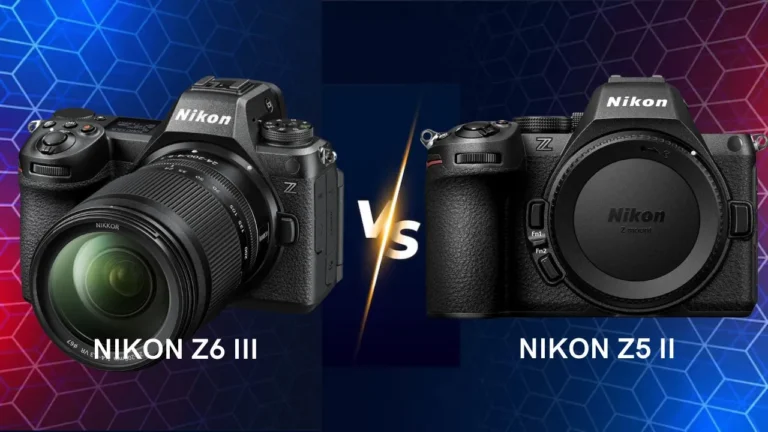
Nikon Z5 vs Z6 | Which One Is Best For You?
Nikon Z5 vs Nikon Z6: Which One Is Best for You?
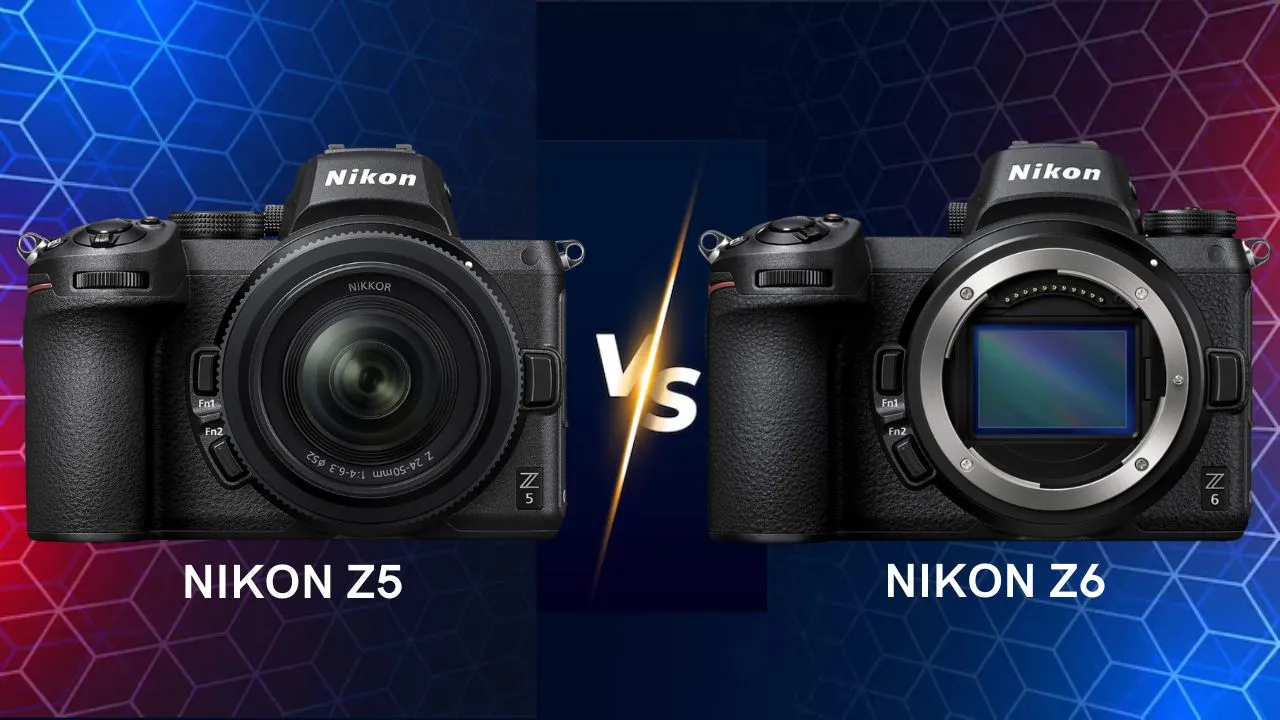
The Nikon Z5 and Nikon Z6 are two of Nikon’s most popular full-frame mirrorless cameras, sitting side by side in the company’s lineup.
At first glance, they look almost identical — both feature compact bodies, in-body stabilization, and excellent ergonomics.
But there are key differences in sensor design, speed, and video performance that make one better suited for still photographers and the other for hybrid creators.
So which one is right for you? Let’s find out.
⚙️ Overview — Entry-Level Value vs Performance Power
-
Nikon Z5: Nikon’s most affordable full-frame camera, built for photographers who prioritize image quality and simplicity.
-
Nikon Z6: A faster, more advanced hybrid camera designed for creators who want high-end performance in both photo and video.
In short:
-
Z5 = Best for still photographers and beginners.
-
Z6 = Best for hybrid users who shoot both photos and video.
📸 Specifications Comparison
| Feature | Nikon Z5 | Nikon Z6 |
|---|---|---|
| Sensor | 24.3MP Full-Frame CMOS | 24.5MP BSI Full-Frame CMOS |
| Processor | EXPEED 6 | EXPEED 6 |
| Autofocus System | 273-point Hybrid AF (Eye/Face Detection) | 273-point Hybrid AF (faster readout, phase-detect) |
| Continuous Shooting | 4.5 fps | 12 fps |
| In-Body Stabilization (IBIS) | ✅ Yes (up to 5 stops) | ✅ Yes (up to 5 stops) |
| Video Recording | 4K 30p (1.7x crop) | 4K 30p (no crop) / Full HD 120p |
| Log / 10-bit Output | ❌ None | ✅ N-Log / 10-bit via HDMI |
| ISO Range | 100–51,200 | 100–51,200 (expandable to 204,800) |
| Viewfinder | 3.69M-dot OLED EVF | 3.69M-dot OLED EVF |
| Screen | 3.2” Tilting Touch LCD | 3.2” Tilting Touch LCD |
| Card Slots | 2 × SD UHS-II | 1 × XQD / CFexpress |
| Battery Life (CIPA) | ~470 shots | ~380 shots |
| Body Build | Magnesium Alloy (Weather-Sealed) | Magnesium Alloy (Weather-Sealed) |
| Weight | 675 g | 675 g |
| Price (Body Only) | ~$1,199 (check on Amazon) | ~$1,499 (check on Amazon) |
🧱 Build and Handling
Both the Z5 and Z6 share almost identical bodies — sturdy, weather-sealed, and comfortable to hold with Nikon’s signature deep grip.
The Z5 has dual SD card slots, which are easier and cheaper to work with, while the Z6 uses a single XQD / CFexpress slot that’s faster but more expensive.
👉 Verdict:
-
Z5: Best for convenience and affordability (dual SD cards).
-
Z6: Slightly more professional build and faster file handling.
🎯 Autofocus and Performance
The Nikon Z6 outperforms the Z5 when it comes to autofocus speed and accuracy.
Although both use a 273-point hybrid AF system, the Z6’s back-illuminated sensor allows faster data readout, resulting in smoother continuous tracking and better low-light focusing.
The Z5 performs very well for portraits, landscapes, and general photography, but it’s not ideal for sports or fast action.
👉 Verdict:
-
Z5: Great for static subjects and travel.
-
Z6: Better for moving subjects, events, and low light.
🎥 Video Capabilities
This is where the Z6 clearly takes the lead.
Nikon Z5
-
4K 30p with a 1.7x crop
-
Full HD 60p
-
No Log profile or 10-bit recording
-
Ideal for casual video shooters
Nikon Z6
-
4K 30p no crop
-
Full HD 120p slow motion
-
N-Log and 10-bit output via HDMI
-
Optional ProRes RAW support (external recorder)
For hybrid creators or videographers, the Z6 is the obvious choice — it produces cleaner, more detailed 4K and supports professional workflows.
The Z5 is fine for occasional clips, vlogs, or behind-the-scenes footage.
👉 Verdict:
-
Z5: For simple video and everyday use.
-
Z6: For professional or hybrid creators.
🧠 Image Quality
Both cameras deliver stunning full-frame image quality, but the Z6’s back-illuminated sensor (BSI) gives it a slight edge in dynamic range and noise control.
At high ISO levels, the Z6 retains more detail and color accuracy.
That said, in normal lighting conditions, the Z5’s 24MP sensor produces nearly identical results — especially for landscape, portrait, and studio work.
👉 Verdict:
-
Z5: Excellent image quality for most photographers.
-
Z6: Slightly better in low light and high ISO shooting.
🔋 Battery and Storage
Battery life favors the Z5, averaging around 470 shots per charge, compared to 380 on the Z6.
Both can be powered via USB-C and support external power banks — a great advantage for long shoots.
Storage-wise, the Z5’s dual SD slots are cheaper and more practical, while the Z6’s XQD/CFexpress slot is faster and more reliable for video.
👉 Verdict:
-
Z5: Better endurance and convenience.
-
Z6: Faster storage for professionals.
💰 Price and Value
The Z5 remains one of the best deals in full-frame photography — offering outstanding still image quality and a solid build at a very approachable price.
The Z6 costs more, but it delivers faster performance, uncropped 4K video, and pro-level flexibility.
👉 Verdict:
-
Z5: Best value for still photographers.
-
Z6: Best choice for hybrid creators and professionals.
Check availability and price on Amazon 🛒
📷 Nikon Z5 — Amazon USA / Amazon Canada / Amazon UK / Amazon Australia
📷 Nikon Z6 — Amazon USA / Amazon Canada / Amazon UK / Amazon Australia
Note: camerafight.com participates in the Amazon Associates Program. As an Amazon Associate, we earn from qualifying purchases.
🏁 Final Verdict — Nikon Z5 vs Nikon Z6
| Type of User | Recommended Camera |
|---|---|
| Beginner / Hobbyist Photographer | Nikon Z5 |
| Travel / Landscape Photographer | Nikon Z5 |
| Portrait / Studio Photographer | Both (tie) |
| Action / Sports Shooter | Nikon Z6 |
| Hybrid Creator (Photo + Video) | Nikon Z6 |
| Filmmaker / YouTuber | Nikon Z6 |
| Budget-Conscious Buyer | Nikon Z5 |
✅ In short:
-
Choose the Nikon Z5 if you want an affordable, reliable, and beautifully built full-frame camera for still photography.
-
Choose the Nikon Z6 if you want faster autofocus, no video crop, and better performance for hybrid shooting.
🧠 Final Thoughts
The Nikon Z5 and Z6 are closer than they appear — both deliver incredible full-frame performance and Nikon’s renowned image quality.
The Z5 is the ideal entry point for photographers upgrading from APS-C or DSLR systems. It’s simple, reliable, and offers unbeatable value.
The Z6, however, caters to users who need more — faster shooting, better autofocus, and professional video capabilities.
If your priority is photography, the Z5 will serve you perfectly.
If you want a hybrid camera built for both stills and serious video, the Z6 is absolutely worth the extra cost.