Nikon Z5 vs Sony A7 III | Which One Is Best For You?
Nikon Z5 vs Sony A7 III : Which One Is Best for You?
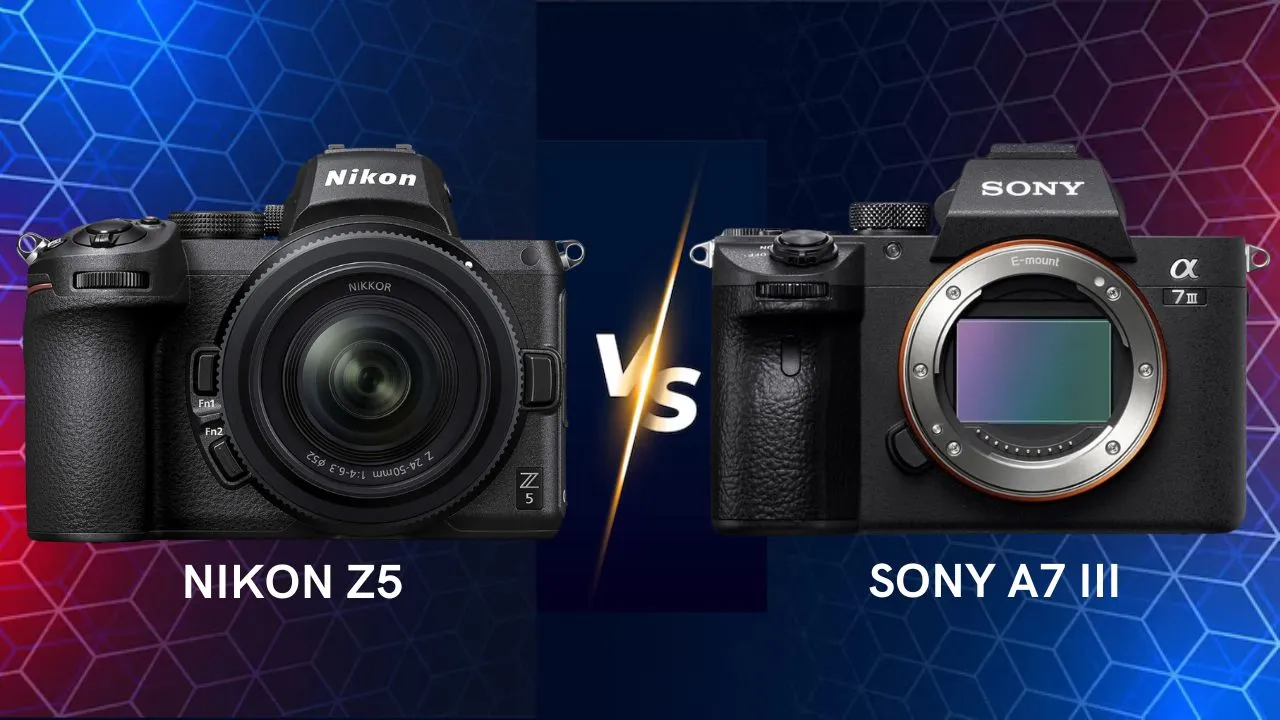
The Nikon Z5 and Sony A7 III are two affordable full-frame mirrorless cameras that continue to attract photographers looking for outstanding image quality without breaking the bank.
Both deliver beautiful full-frame performance, strong dynamic range, and great ergonomics — but they’re aimed at slightly different users.
The Nikon Z5 is a true entry-level full-frame camera focused on simplicity and value, while the Sony A7 III remains a well-rounded hybrid machine with stronger autofocus and video capabilities.
Let’s break down how they compare.
⚙️ Overview — Affordable Full-Frame vs Hybrid Workhorse
-
Nikon Z5: Compact, affordable, and perfect for photographers stepping into full-frame mirrorless systems.
-
Sony A7 III: A proven hybrid camera offering fast autofocus, great low-light performance, and excellent video features.
In short:
-
Z5 = Best for still photographers and beginners.
-
A7 III = Best for hybrid creators and action shooters.
📸 Specifications Comparison
| Feature | Nikon Z5 | Sony A7 III |
|---|---|---|
| Sensor | 24.3MP Full-Frame CMOS | 24.2MP Full-Frame BSI CMOS |
| Processor | EXPEED 6 | BIONZ X |
| Autofocus System | Hybrid AF (273 points, Eye/Face Detection) | 693-point Phase-Detect AF + Real-Time Eye AF |
| Continuous Shooting | 4.5 fps | 10 fps |
| In-Body Stabilization (IBIS) | ✅ Yes (up to 5 stops) | ✅ Yes (up to 5 stops) |
| Video Recording | 4K 30p (1.7x crop) / Full HD 60p | 4K 30p (no crop) / Full HD 120p |
| Log Profile | ❌ None | ✅ S-Log2, S-Log3, HLG |
| ISO Range | 100–51,200 | 100–51,200 (expandable to 204,800) |
| Viewfinder | 3.69M-dot OLED EVF | 2.36M-dot OLED EVF |
| Screen | 3.2” Tilting Touch LCD | 3.0” Tilting LCD (limited touch control) |
| Card Slots | 2 × SD UHS-II | 2 × SD (1 UHS-II + 1 UHS-I) |
| Battery Life (CIPA) | ~470 shots | ~710 shots |
| Body Build | Magnesium Alloy (Weather-Sealed) | Magnesium Alloy (Weather-Sealed) |
| Weight | 675 g | 650 g |
| Price (Body Only) | ~$1,199 (check on Amazon) | ~$1,499 (check on Amazon) |
🧱 Build and Handling
Both cameras are solidly built and weather-sealed, giving them a premium feel and durability for professional use.
The Nikon Z5 has a deep, comfortable grip and intuitive controls, making it ideal for photographers coming from Nikon DSLRs.
The Sony A7 III, while slightly smaller, feels denser and more customizable, with more programmable buttons for hybrid workflows.
👉 Verdict:
-
Z5: Best grip and user-friendly ergonomics.
-
A7 III: Best control customization and hybrid handling.
🎯 Autofocus and Performance
This is where the Sony A7 III pulls ahead.
It features a 693-point phase-detect AF system covering 93% of the frame, along with Real-Time Eye AF for both humans and animals. The autofocus is fast, sticky, and accurate, even in low light or high-speed situations.
The Nikon Z5 uses a solid 273-point hybrid AF system with Eye and Face Detection, but it’s not as responsive or wide-covering as Sony’s. For still portraits and landscapes, it’s great — but for sports or wildlife, the A7 III performs much better.
👉 Verdict:
-
A7 III: Clearly superior autofocus performance.
-
Z5: Reliable for portraits, slower for fast action.
🎥 Video Capabilities
Both cameras shoot beautiful 4K video, but they approach it differently.
Nikon Z5
-
4K 30p with a 1.7x crop
-
Full HD 60p
-
Clean HDMI output
-
No Log or 10-bit options
-
Excellent color straight out of camera
Sony A7 III
-
4K 30p (no crop, oversampled from 6K)
-
Full HD 120p slow motion
-
S-Log2, S-Log3, and HLG profiles
-
Clean HDMI output
-
Better rolling shutter control
The Z5 is capable of nice 4K footage but limited by its crop and lack of Log profiles.
The A7 III, on the other hand, is far more versatile for hybrid shooters, offering uncropped 4K, flat color profiles, and more control for post-production.
👉 Verdict:
-
A7 III: Best for filmmakers and hybrid creators.
-
Z5: Best for simple video and occasional clips.
🧠 Image Quality
Both cameras deliver exceptional stills quality — clean, detailed, and with beautiful full-frame depth.
The Sony A7 III’s back-illuminated sensor gives it a slight edge in low light, with better noise performance at high ISOs.
The Nikon Z5, however, produces classic Nikon color science with warmer tones and slightly better JPEG rendering straight out of the camera.
👉 Verdict:
-
Z5: Best color and JPEG output.
-
A7 III: Best low-light and RAW flexibility.
🔋 Battery and Storage
Battery life is another area where Sony leads.
The A7 III’s large NP-FZ100 battery can deliver over 700 shots, while the Z5 averages around 470.
Both cameras feature dual card slots, but the Z5 supports two UHS-II cards, while the A7 III has one UHS-II and one slower UHS-I slot.
👉 Verdict:
-
A7 III: Best endurance and reliability.
-
Z5: Slightly faster card performance overall.
💰 Price and Value
The Z5 offers tremendous value for those focused on photography — especially portrait, landscape, and travel shooters.
The A7 III, though more expensive, gives you faster autofocus, better video features, and a more balanced hybrid experience.
👉 Verdict:
-
Z5: Best budget full-frame choice for photographers.
-
A7 III: Best investment for hybrid users.
Check availability and price on Amazon 🛒
📷 Nikon Z5 — Amazon USA / Amazon Canada / Amazon UK / Amazon Australia
📷 Sony A7 III — Amazon USA / Amazon Canada / Amazon UK / Amazon Australia
🏁 Final Verdict — Nikon Z5 vs Sony A7 III
| Type of User | Recommended Camera |
|---|---|
| Beginner / Enthusiast Photographer | Nikon Z5 |
| Hybrid Creator | Sony A7 III |
| Filmmaker / YouTuber | Sony A7 III |
| Travel / Landscape Photographer | Nikon Z5 |
| Event / Wedding Shooter | Sony A7 III |
| Portrait Photographer | Both (tie) |
| Budget-Conscious Buyer | Nikon Z5 |
✅ In short:
-
Choose the Nikon Z5 if you want a reliable, affordable, full-frame camera focused on still photography.
-
Choose the Sony A7 III if you want a hybrid all-rounder with superior autofocus, battery life, and video performance.
🛒 Check the Nikon Z5 price on Amazon
🛒 Check the Sony A7 III price on Amazon
🧠 Final Thoughts
The Nikon Z5 and Sony A7 III represent two different generations of full-frame excellence — both affordable, capable, and built to deliver outstanding image quality.
The Z5 is Nikon’s most accessible path into full-frame photography — simple, dependable, and beautifully built. It’s the perfect camera for still shooters, travelers, and beginners stepping into pro-quality results.
The A7 III, meanwhile, remains one of the best all-round full-frame cameras ever made — fast, flexible, and powerful enough for professionals, even years after its release.
If you’re primarily a photographer, get the Nikon Z5.
If you’re a hybrid shooter who values autofocus speed and video versatility, the Sony A7 III is still the better long-term investment.