Nikon Z5 II vs Sony A7 III | Which One Is Best For You?
Nikon Z5 II vs Sony A7 III : Which One Is Best for You?
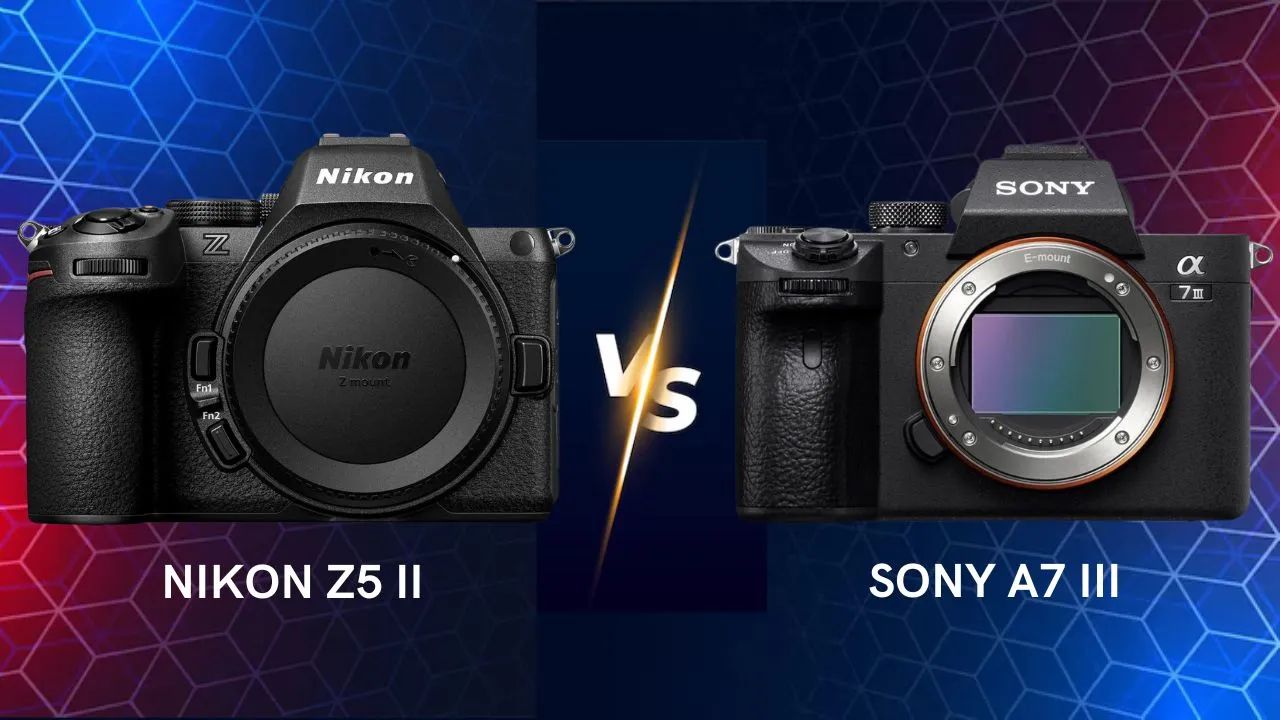
If you’re looking for an affordable full-frame mirrorless camera, two names stand out: the Nikon Z5 II and the Sony A7 III.
Both offer professional image quality, hybrid shooting capabilities, and strong autofocus systems — but they approach photography in very different ways.
So which one should you buy? Let’s take a closer look at how Nikon’s latest affordable full-frame camera stacks up against Sony’s proven performer.
⚙️ Overview — New Generation vs Proven Legend
-
Nikon Z5 II: The successor to Nikon’s entry-level full-frame mirrorless camera, featuring the EXPEED 7 processor, faster autofocus, improved burst shooting, and 4K 60p video. It’s compact, dependable, and built for hybrid creators.
-
Sony A7 III: One of the most popular full-frame cameras ever made, known for its excellent image quality, strong autofocus, and long battery life. Even years after release, it remains a top choice for photographers transitioning to full-frame.
In short:
-
Z5 II = Modern Nikon color science and advanced hybrid performance.
-
A7 III = Proven Sony reliability and unbeatable autofocus system.
📸 Specifications Comparison
| Specification | Nikon Z5 II | Sony A7 III |
|---|---|---|
| Release date | October 2024 | April 2018 |
| Camera type | Mirrorless | Mirrorless |
| Sensor format | Full Frame (35.9 × 23.9 mm) | Full Frame (35.6 × 23.8 mm) |
| Sensor type | CMOS | BSI-CMOS |
| Resolution | 24.5 MP | 24.2 MP |
| Image processor | EXPEED 7 | BIONZ X |
| ISO range | 100–64,000 (expandable to 204,800) | 100–51,200 (expandable to 204,800) |
| Autofocus system | Hybrid AF with subject detection (approx. 299 points) | 693-point phase-detection AF |
| Continuous shooting | Up to 7.5 fps | Up to 10 fps |
| Video recording | 4K up to 60p (cropped, 10-bit via HDMI) | 4K up to 30p (8-bit, 4:2:0 internal) |
| Viewfinder | 3.69M-dot OLED EVF | 2.36M-dot OLED EVF |
| LCD screen | 3.2″ tilting touchscreen, 2.1M dots | 3.0″ tilting screen, 922k dots |
| In-body image stabilization (IBIS) | Yes, 5-axis | Yes, 5-axis |
| Memory card slots | 2× SD (UHS-II) | 2× SD (1× UHS-II, 1× UHS-I) |
| Battery life (CIPA) | Approx. 470 shots | Approx. 710 shots |
| Weight (with battery & card) | Approx. 700 g | Approx. 650 g |
| Launch price (body only) | Approx. USD 1,700 (check on Amazon) | Approx. USD 2,000 (check on Amazon) |
🧱 Build and Handling
Both cameras are well-built, with magnesium alloy bodies and full weather sealing.
The Nikon Z5 II feels slightly more modern, with a deep, comfortable grip and intuitive button layout — typical of Nikon’s excellent ergonomics.
The Sony A7 III is smaller and lighter, but its older design feels less refined, with smaller buttons and a more utilitarian feel.
That said, the A7 III’s menu system, once considered complex, has become familiar to most users, and it’s extremely customizable.
👉 Verdict:
-
Z5 II: Modern ergonomics and user-friendly interface.
-
A7 III: Compact, durable, and customizable — though slightly dated in feel.
🎯 Autofocus and Performance
This is where the Sony A7 III still shines.
Its 693-point phase-detect AF system covers over 90% of the frame and remains one of the fastest and most reliable in its class. Eye AF and subject tracking are exceptional, even in challenging light.
The Nikon Z5 II, with its EXPEED 7 processor and AI-based subject detection, brings Nikon’s autofocus much closer to Sony’s level. Expect smart face, eye, animal, and vehicle tracking, similar to the performance seen in higher-end Nikon Z6 III models.
However, the A7 III still has a slight edge in real-time tracking speed and burst rate (10 fps vs 7 fps).
👉 Verdict:
-
Z5 II: Great all-around AF performance with AI tracking.
-
A7 III: Faster, more mature autofocus system for sports and wildlife.
🎥 Video Capabilities
Both cameras cater to hybrid creators, but their video features differ slightly.
Nikon Z5 II
-
4K 60p (no crop)
-
Full HD 120p
-
10-bit N-Log / HLG via HDMI
-
Reliable hybrid performance for content creators
Sony A7 III
-
4K 30p (full sensor readout, no crop)
-
Full HD 120p
-
S-Log2, S-Log3, and HLG support
-
Exceptional autofocus tracking during video
The Z5 II wins for higher frame rate (4K 60p), but the A7 III still delivers cleaner rolling shutter and more consistent color options for grading.
👉 Verdict:
-
Z5 II: Better frame rate flexibility.
-
A7 III: Slightly better rolling shutter and real-time AF tracking for video.
🧠 Image Quality
Both cameras produce beautiful, detailed 24MP full-frame images with wide dynamic range and low noise.
The Z5 II benefits from Nikon’s natural color science — especially in skin tones and landscapes — and the EXPEED 7’s improved noise control.
The A7 III’s BSI sensor, however, remains a benchmark for full-frame image quality, offering excellent low-light performance and crisp detail.
👉 Verdict:
-
Z5 II: More refined color rendering and highlight recovery.
-
A7 III: Better low-light depth and fine detail.
🔋 Battery and Storage
The Sony A7 III dominates this category with its NP-FZ100 battery, delivering around 710 shots per charge — one of the best in any mirrorless camera.
The Z5 II offers respectable endurance at about 500 shots, and both cameras include dual SD card slots, though Nikon’s are both UHS-II compatible (a small but meaningful advantage).
👉 Verdict:
-
Z5 II: Dual UHS-II slots, efficient power use.
-
A7 III: Longer battery life.
💰 Price and Value
The Z5 II offers newer processing, improved video features, and great color output for a slightly lower price.
The A7 III, while older, still delivers professional performance and access to Sony’s massive E-mount lens ecosystem.
👉 Verdict:
-
Z5 II: Best value for hybrid shooters entering full-frame.
-
A7 III: Best long-term investment with extensive lens options.
Check availability and price on Amazon 🛒
📷 Sony A7 III — Amazon USA / Amazon Canada / Amazon UK / Amazon Australia
📷 Nikon Z5 II — Amazon USA / Amazon Canada / Amazon UK / Amazon Australia
Note: camerafight.com participates in the Amazon Associates Program. As an Amazon Associate, we earn from qualifying purchases.
🏁 Final Verdict — Nikon Z5 II vs Sony A7 III
| Type of User | Recommended Camera |
|---|---|
| Beginner Photographer | Nikon Z5 II |
| Travel / Street Photographer | Nikon Z5 II |
| Portrait Photographer | Both (tie) |
| Landscape Photographer | Nikon Z5 II |
| Sports / Wildlife Photographer | Sony A7 III |
| Hybrid Creator (Photo + Video) | Both (tie) |
| Low-Light Shooter | Sony A7 III |
| Budget-Conscious Buyer | Nikon Z5 II |
✅ In short:
-
Choose the Nikon Z5 II if you want a modern, compact, and affordable full-frame hybrid camera with beautiful color science and updated features.
-
Choose the Sony A7 III if you want fast, proven autofocus performance and industry-leading battery life.
🧠 Final Thoughts
The Nikon Z5 II and Sony A7 III both deliver stunning image quality and pro-level performance in a compact full-frame body — but they represent different philosophies.
The Z5 II focuses on ease of use, color accuracy, and hybrid versatility — it’s perfect for creators, travelers, and enthusiasts who want modern Nikon performance without the premium price.
The A7 III, meanwhile, remains a workhorse — rugged, responsive, and backed by one of the largest mirrorless lens ecosystems on the market.
If you value modern design, color depth, and workflow simplicity, go for the Nikon Z5 II.
If you prioritize speed, reliability, and long-term flexibility, the Sony A7 III is still one of the best full-frame cameras you can buy.