Fujifilm X-S10 vs X-T30 II | Which One Is Best For You?
Fujifilm X-S10 vs X-T30 II – Which One Is Best for You?
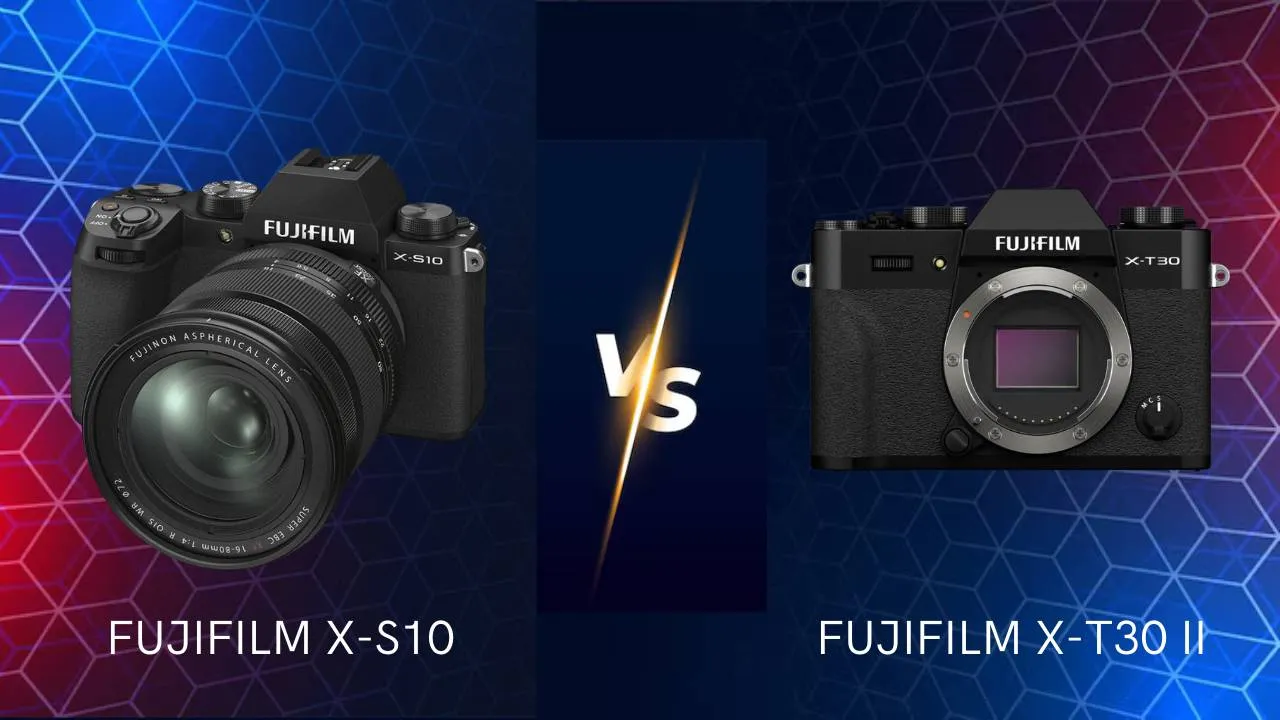
The Fujifilm X-S10 and X-T30 II share the same 26.1MP X-Trans CMOS 4 sensor and image processor, but they cater to very different photographers.
The X-S10 offers in-body image stabilization (IBIS), a deep grip, and a fully articulating screen — ideal for hybrid creators and vloggers.
The X-T30 II, meanwhile, keeps Fuji’s classic design and tactile controls, making it perfect for enthusiasts who value simplicity and portability.
So, which one is the smarter choice? Let’s find out.
⚙️ Overview – Modern Hybrid vs Classic Fuji Design
-
Fujifilm X-S10: Compact hybrid camera with IBIS, full flip screen, and great ergonomics — built for photo + video creators.
-
Fujifilm X-T30 II: Lightweight, retro-styled body with the same image quality and autofocus system, but no IBIS or full articulation.
In short:
-
X-S10 = Better for hybrid creators and vloggers.
-
X-T30 II = Better for photographers who love a classic, simple Fuji feel.
📸 Specifications Comparison
| Feature | Fujifilm X-S10 | Fujifilm X-T30 II |
|---|---|---|
| Sensor | 26.1MP APS-C X-Trans CMOS 4 | 26.1MP APS-C X-Trans CMOS 4 |
| Processor | X-Processor 4 | X-Processor 4 |
| Autofocus System | 425-point Hybrid AF (Face/Eye Detection) | 425-point Hybrid AF (Face/Eye Detection) |
| Continuous Shooting | 8 fps (mechanical) / 20 fps (electronic) | 8 fps (mechanical) / 20 fps (electronic) |
| In-Body Stabilization (IBIS) | ✅ Yes (up to 6 stops) | ❌ No |
| Video Recording | 4K 30p / Full HD 240p / 10-bit via HDMI | 4K 30p / Full HD 240p / 8-bit internal |
| ISO Range | 160–12,800 (expandable 80–51,200) | 160–12,800 (expandable 80–51,200) |
| Viewfinder | 2.36M-dot OLED EVF | 2.36M-dot OLED EVF |
| Screen | 3.0” Fully Articulating Touch LCD | 3.0” Tilting Touch LCD |
| Card Slots | 1 × SD UHS-I | 1 × SD UHS-I |
| Battery Life (CIPA) | ~325 shots | ~380 shots |
| Body Build | Magnesium Alloy | Magnesium Alloy |
| Weight | 465 g | 378 g |
| Price (Body Only) | ~$999 | ~$899 |
🧱 Build and Handling
The X-S10 looks and feels like a mini DSLR — a deeper grip, customizable buttons, and a modern control layout instead of Fuji’s traditional dials.
It’s designed for comfort and hybrid use, with a fully articulating touchscreen perfect for vlogging or vertical shooting.
The X-T30 II, on the other hand, sticks to Fuji’s retro DNA — compact, lightweight, and beautifully minimal. Its dedicated dials for shutter speed and exposure compensation make it feel like a true photographer’s tool.
👉 Verdict:
-
X-S10: Best for ergonomic comfort and video use.
-
X-T30 II: Best for traditional photographers and travel.
🎯 Autofocus and Performance
Both cameras use the same hybrid AF system with 425 detection points and excellent face/eye detection performance.
However, the X-S10 tends to perform slightly better in continuous autofocus and subject tracking thanks to better internal processing and IBIS support.
For still photography, both are equally fast and accurate.
For video or fast subjects, the X-S10 feels more confident.
👉 Verdict:
-
X-S10: More stable and reliable AF in video and hybrid use.
-
X-T30 II: Excellent AF for stills but less optimized for continuous tracking.
🎥 Video Capabilities
Here’s where the X-S10 clearly pulls ahead.
Fujifilm X-S10
-
4K 30p (no crop)
-
Full HD up to 240 fps
-
10-bit 4:2:2 output via HDMI
-
IBIS for handheld video
-
Fully articulating screen
Fujifilm X-T30 II
-
4K 30p (10-min clip limit)
-
Full HD 240 fps
-
No IBIS
-
Tilting screen only
-
8-bit internal recording
If you’re into vlogging, handheld video, or hybrid content, the X-S10 is the clear winner.
The X-T30 II can still shoot beautiful footage, but it’s better suited for photographers who only occasionally record clips.
👉 Verdict:
-
X-S10: Best for video creators.
-
X-T30 II: Good for occasional 4K shooters.
🧠 Image Quality
Since both share the same 26.1MP sensor and X-Processor 4, image quality is identical — stunning detail, dynamic range, and Fuji’s unmatched film simulations like Classic Chrome, Velvia, and Eterna.
The X-S10’s IBIS, however, gives it an edge for low-light handheld photography and longer shutter speeds.
👉 Verdict:
-
Both: Exceptional Fuji color and detail.
-
X-S10: Advantage for handheld low-light work.
🔋 Battery and Storage
Battery performance is nearly identical — around 325 shots for the X-S10 and 380 for the X-T30 II.
Both use the same NP-W126S battery and single UHS-I SD card slot.
👉 Verdict:
-
X-T30 II: Slightly longer battery life.
-
X-S10: Equal endurance, faster charging via USB-C.
💰 Price and Value
-
Fujifilm X-S10: ~$999
-
Fujifilm X-T30 II: ~$899
The X-T30 II is cheaper and delivers nearly identical still performance in a smaller body.
The X-S10, however, justifies its slightly higher price with IBIS, a flip screen, and better video options — making it the better hybrid investment.
👉 Verdict:
-
X-S10: Best all-rounder and hybrid camera.
-
X-T30 II: Best compact and budget choice.
Check availability and price on Amazon 🛒
📷 Fujifilm X-S10 — Amazon USA / Amazon Canada / Amazon UK / Amazon Australia
📷 Fujifilm X-T30 II — Amazon USA / Amazon Canada / Amazon UK / Amazon Australia
Note: camerafight.com participates in the Amazon Associates Program. As an Amazon Associate, we earn from qualifying purchases.
🏁 Final Verdict — Fujifilm X-S10 vs X-T30 II
| Type of User | Recommended Camera |
|---|---|
| Beginner / Enthusiast | Fujifilm X-T30 II |
| Hybrid Photo + Video Creator | Fujifilm X-S10 |
| YouTuber / Vlogger | Fujifilm X-S10 |
| Street / Travel Photographer | Fujifilm X-T30 II |
| Portrait / Landscape Photographer | Both (tie) |
| Filmmaker / Content Creator | Fujifilm X-S10 |
✅ In short:
-
Choose the Fujifilm X-S10 if you want in-body stabilization, a flip screen, and smoother hybrid shooting.
-
Choose the Fujifilm X-T30 II if you prefer a smaller, retro camera focused on still photography.
🧠 Final Thoughts
The Fujifilm X-S10 and X-T30 II are both fantastic mid-range cameras — sharing identical image quality and autofocus performance, yet designed for different creators.
The X-S10 is the modern hybrid workhorse: stabilized, ergonomic, and perfect for vlogs, travel, and handheld shooting.
The X-T30 II, meanwhile, embodies Fuji’s classic photography experience — lighter, simpler, and ideal for those who want creativity without complexity.
No matter which one you choose, both deliver the stunning color science and craftsmanship that make Fujifilm cameras so beloved among photographers worldwide.