Canon EOS R6 Mark II vs R7 📷 The BEST Camera
Canon EOS R6 Mark II vs Canon R7 : The BEST Camera
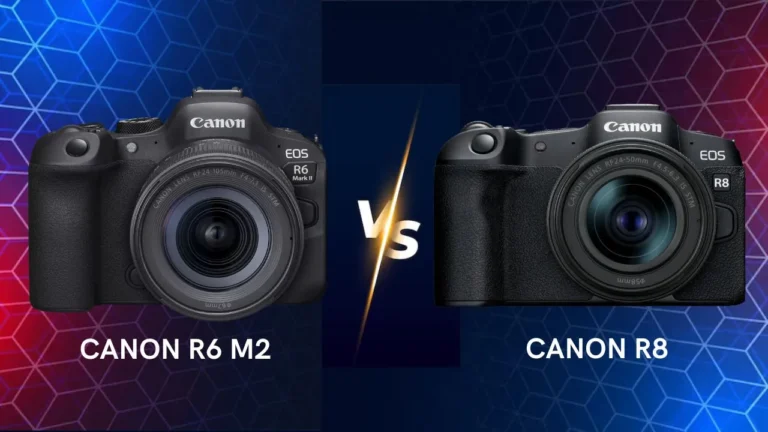
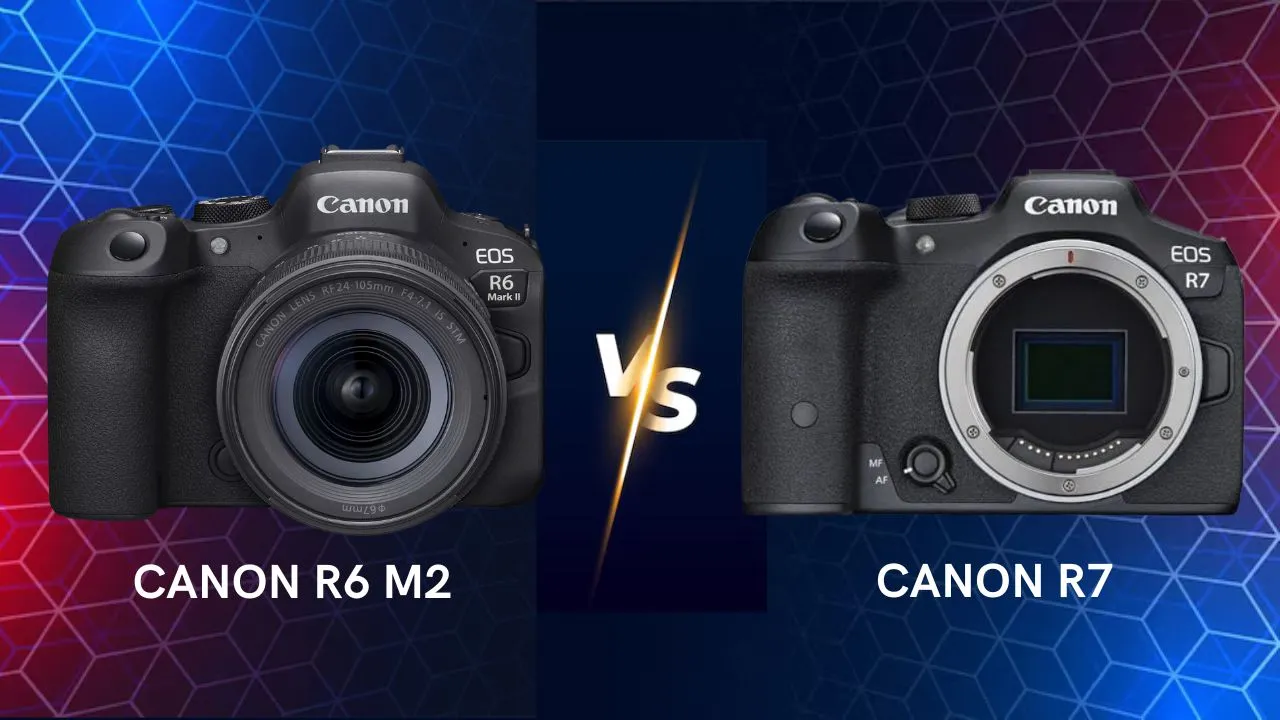
The Canon EOS R6 Mark II and the Canon EOS R7 are two of Canon’s best-performing mirrorless cameras — both offering speed, reliability, and professional-level features at very competitive prices.
While they share many technologies, they’re aimed at different types of creators: one is a full-frame powerhouse, and the other a high-speed APS-C performer.
So which camera should you buy — the full-frame R6 Mark II, or the crop-sensor R7? Let’s dive into the details.
⚙️ Overview: Full-Frame Power vs APS-C Speed
-
⚡ Canon EOS R6 Mark II → A full-frame hybrid camera made for professionals who want exceptional image quality, great low-light performance, and powerful video tools.
-
🎯 Canon EOS R7 → An APS-C camera built for speed and precision, ideal for wildlife, sports, and creators who want extra reach without the extra weight.
Both use Canon’s RF mount, DIGIC X processor, and Dual Pixel CMOS AF II system, meaning you’ll get top-tier autofocus and performance no matter which you choose.
📸 Specifications Comparison
| Feature | Canon EOS R6 Mark II | Canon EOS R7 |
|---|---|---|
| Sensor | 24.2MP Full-Frame CMOS | 32.5MP APS-C CMOS |
| Processor | DIGIC X | DIGIC X |
| Mount | Canon RF | Canon RF (APS-C) |
| Autofocus | Dual Pixel CMOS AF II (AI subject tracking) | Dual Pixel CMOS AF II (AI subject tracking) |
| Burst Shooting | 12 fps (mechanical), 40 fps (electronic) | 15 fps (mechanical), 30 fps (electronic) |
| In-Body Stabilization (IBIS) | Up to 8 stops | Up to 7 stops |
| Video | 4K 60p (no crop), Full HD 180p, 10-bit | 4K 60p (no crop), 4K 30p (oversampled), 10-bit |
| Viewfinder | 3.69M-dot OLED | 2.36M-dot OLED |
| Screen | 3.0” Fully Articulating Touchscreen | 3.0” Fully Articulating Touchscreen |
| Battery Life (CIPA) | ~580 shots | ~660 shots |
| Card Slots | 2x UHS-II SD | 2x UHS-II SD |
| Weight | 670g | 612g |
| Connectivity | Wi-Fi, Bluetooth, USB-C | Wi-Fi, Bluetooth, USB-C |
| Price (Body Only) | ~$2,499 (check on Amazon) | ~$1,499 (check on Amazon) |
🧱 Build and Design
Both cameras look and feel premium, with weather-sealed magnesium alloy bodies and Canon’s familiar ergonomic design.
However, there are some differences:
-
The R6 Mark II feels slightly more robust and has a larger, deeper grip, making it perfect for long shoots or use with heavy lenses.
-
The R7 is lighter and smaller, ideal for travel or wildlife photographers who want speed and reach.
Both feature dual SD card slots, custom buttons, and fully articulating touchscreens, making them equally versatile for video creators.
👉 Verdict:
-
R6 Mark II → Best for comfort, balance, and professional durability.
-
R7 → Best for portability and compact performance.
🎯 Autofocus and Performance
Canon’s Dual Pixel CMOS AF II system shines in both cameras — fast, accurate, and intelligent.
Both can detect people, animals, and vehicles with precise eye tracking.
The R6 Mark II focuses faster in very low light and performs more consistently with full-frame lenses.
The R7 has incredible tracking speed thanks to its smaller sensor area and higher pixel density — ideal for birds, wildlife, and sports.
👉 Verdict:
-
R6 Mark II → Best overall AF reliability, especially in low light.
-
R7 → Best for wildlife and fast-moving subjects.
🎥 Video Capabilities
Both cameras are hybrid powerhouses, but the R6 Mark II offers more advanced video specs:
-
Canon R6 Mark II:
-
4K 60p (no crop), oversampled from 6K
-
Full HD 180p slow motion
-
10-bit 4:2:2 internal recording
-
Canon Log 3, HDR PQ
-
No recording time limit
-
-
Canon R7:
-
4K 60p (no crop)
-
4K 30p oversampled from 7K for incredible detail
-
10-bit C-Log 3 recording
-
Excellent quality with slightly less flexibility than the R6 II
-
While both deliver stunning 4K footage, the R6 Mark II handles heat better and provides smoother color depth and dynamic range.
👉 Verdict:
-
R6 Mark II → Best for filmmakers and hybrid creators.
-
R7 → Excellent for YouTubers and wildlife videographers.
📷 Image Quality
The R6 Mark II’s 24.2MP full-frame sensor delivers superior low-light performance, dynamic range, and shallower depth of field.
Its images have a smoother tonal transition and more natural bokeh.
The R7’s 32.5MP APS-C sensor, on the other hand, provides more reach (1.6x crop factor), which is perfect for wildlife and sports photographers who need tighter framing without longer lenses.
It also offers more detail in good lighting conditions, though slightly noisier in dim light.
👉 Verdict:
-
R6 Mark II → Best for portraits, events, and general photography.
-
R7 → Best for wildlife, sports, and telephoto shooting.
🔋 Battery Life and Storage
The R7 lasts slightly longer (around 660 shots) compared to the R6 Mark II’s 580, but both use Canon’s LP-E6NH battery, which supports USB-C charging.
Both feature dual UHS-II SD card slots for redundancy — ideal for professional work.
💰 Price and Value
Price plays a big role here:
-
Canon R6 Mark II → ~$2,499 (body only)
-
Canon R7 → ~$1,499 (body only)
The R6 Mark II justifies its higher price with full-frame performance, unbeatable autofocus, and superior video features.
The R7, however, offers outstanding value — nearly pro-level performance at a much lower cost.
👉 Verdict:
-
R6 Mark II: Best all-around hybrid and professional camera.
-
R7: Best performance-to-price ratio in Canon’s lineup.
Check availability and price on Amazon 🛒
📷 Canon R6 Mark II — Amazon USA / Amazon Canada / Amazon UK / Amazon Australia
📷 Canon R7 — Amazon USA / Amazon Canada / Amazon UK / Amazon Australia
Note: camerafight.com participates in the Amazon Associates Program. As an Amazon Associate, we earn from qualifying purchases.
🏁 Final Verdict — Canon R6 Mark II or Canon R7?
| Type of User | Recommended Camera |
|---|---|
| Beginner moving to pro gear | Canon R7 |
| Hybrid creator (photo + video) | Canon R6 Mark II |
| Wildlife / sports photographer | Canon R7 |
| Portrait / wedding photographer | Canon R6 Mark II |
| Landscape / travel photographer | Canon R7 |
| Low-light shooter | Canon R6 Mark II |
| Best value for money | Canon R7 |
✅ In short:
-
Choose the Canon EOS R6 Mark II if you want full-frame image quality, advanced autofocus, and pro-level video performance.
-
Choose the Canon EOS R7 if you want speed, compactness, and extra reach for wildlife or sports at an incredible price.
🧠 Final Thoughts
The Canon EOS R6 Mark II and Canon EOS R7 share the same DNA — fast, reliable, and versatile — but they excel in different ways.
The R6 Mark II gives you the full-frame advantage: richer tones, smoother depth, and elite low-light performance.
The R7, on the other hand, offers unmatched reach, detail, and value, especially for wildlife and outdoor shooting.
If your work leans toward portraits, weddings, or hybrid content, the R6 Mark II is the perfect all-rounder.
If you love action, nature, or travel, the R7 delivers professional performance in a lighter, more affordable package.
Whichever you choose, you’re getting one of Canon’s best mirrorless systems — fast, intelligent, and built to inspire creativity.
You may also want to read: