Canon EOS R6 Mark III vs Nikon Z8 • Which one is better?
Canon EOS R6 Mark III vs Nikon Z8 • Which One Is Better?
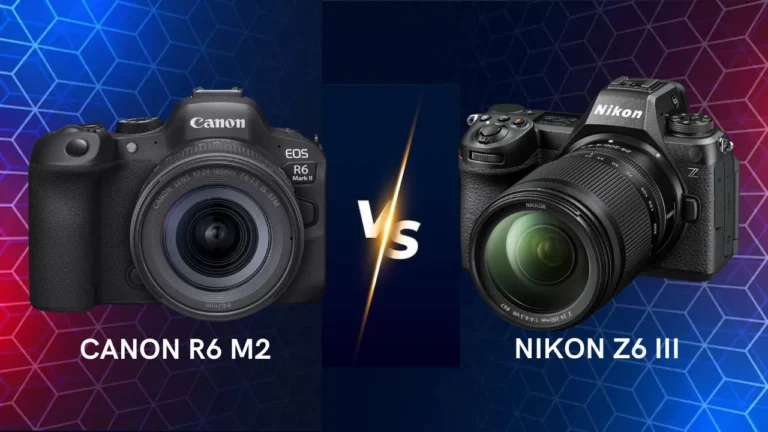
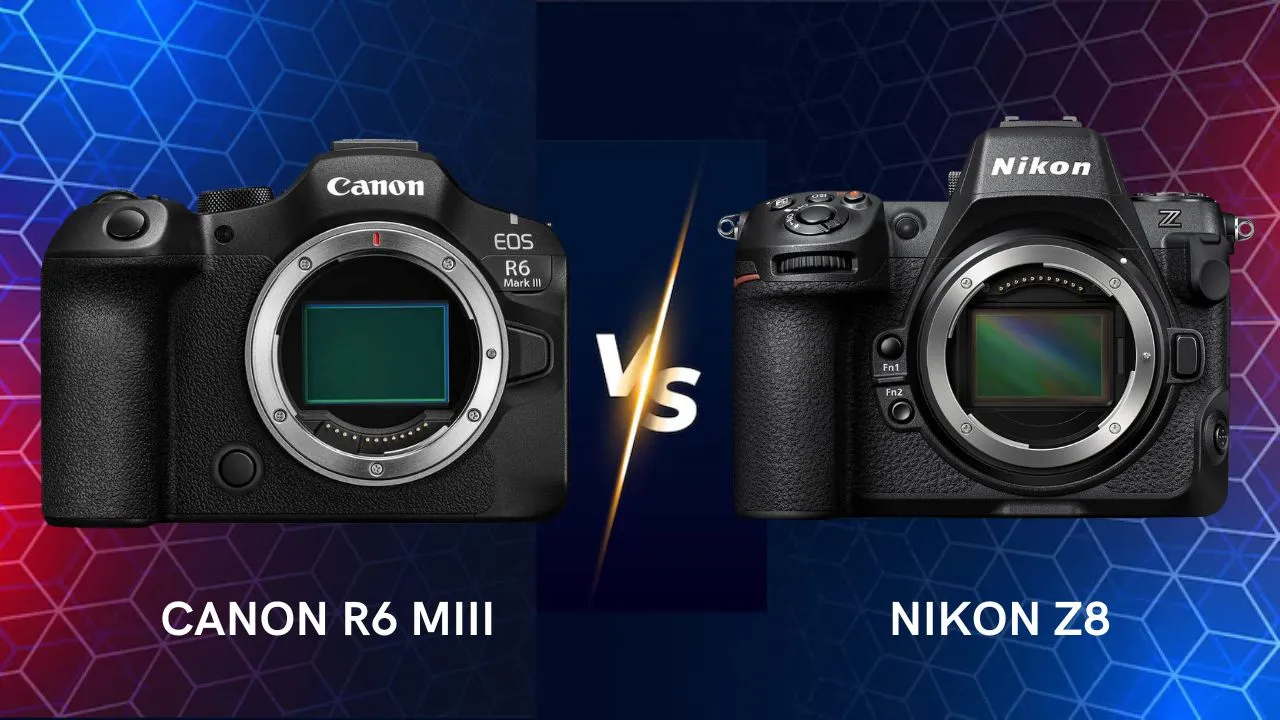
The Canon EOS R6 Mark III and Nikon Z8 are two of the most capable full-frame hybrid cameras in 2025 — both designed for professionals who demand top-tier photo and video performance in a single body.
The R6 Mark III is Canon’s latest high-speed hybrid, offering 7K RAW recording, 40 fps bursts, and advanced AI autofocus. The Nikon Z8, on the other hand, is essentially a compact version of the flagship Z9, with a 45.7 MP stacked sensor, 8K video, and lightning-fast processing.
Both cameras are hybrid monsters — but they cater to slightly different needs. Let’s break down how they compare and help you decide which one is better for your work.
⚙️ Overview – Speed and Hybrid Versatility vs Flagship Power
Canon EOS R6 Mark III:
A pro-grade hybrid camera built for speed, balance, and flexibility. It features a 32.5 MP full-frame sensor, 7K RAW Light recording, and Dual Pixel CMOS AF II with AI detection derived from Canon’s R1. Perfect for hybrid creators who need reliability and agility.
Nikon Z8:
A true professional powerhouse — it packs the same stacked 45.7 MP sensor and EXPEED 7 processor as the Nikon Z9, but in a smaller, lighter body. It delivers 8K 60p RAW video, 20 fps RAW bursts, blackout-free shooting, and unmatched dynamic range.
In short:
-
R6 Mark III = Compact, hybrid speed machine.
-
Z8 = Flagship-level performance in a smaller form.
📸 Specifications Comparison
| Feature | Canon EOS R6 Mark III | Nikon Z8 |
|---|---|---|
| Release Date | 2025 | 2023 |
| Camera Type | Full-Frame Mirrorless (Hybrid) | Full-Frame Mirrorless (Professional Hybrid) |
| Sensor | 32.5 MP Full-Frame CMOS | 45.7 MP Full-Frame Stacked BSI CMOS |
| Processor | DIGIC X | Dual EXPEED 7 |
| Lens Mount | Canon RF | Nikon Z |
| ISO Range | 100–64,000 (50–204,800 expanded) | 64–25,600 (32–102,400 expanded) |
| Dynamic Range | Up to 15 stops (CLog2) | Up to 15 stops (N-Log) |
| In-Body Stabilization (IBIS) | ✅ Up to 8.5 stops | ✅ Up to 8 stops |
| Autofocus System | Dual Pixel CMOS AF II (AI-powered) | 493-point Phase Detection AF (3D Tracking + AI Detection) |
| AF Detection | Humans, Animals, Vehicles | Humans, Animals, Birds, Vehicles |
| AF Working Range | EV -6.5 to 21 | EV -9 to 19 |
| Continuous Shooting | 12 fps (Mech), 40 fps (Elec) | 20 fps RAW / 30 fps JPEG / 120 fps (11 MP JPEG) |
| Shutter Type | Mechanical + Electronic | Electronic only (no mechanical shutter) |
| Shutter Speed | 1/8000 (Mech), 1/16000 (Elec) | 1/32000 (Elec only) |
| Video Recording | 7K 60p RAW Light / 4K 120p / 2K 180p | 8K 60p N-RAW / 4K 120p ProRes / 10-bit 4:2:2 |
| Color Profiles | Canon Log 2, Canon Log 3 | N-Log, HLG, ProRes RAW, N-RAW |
| Color Depth | 10-bit 4:2:2 | 12-bit (N-RAW / ProRes RAW), 10-bit 4:2:2 |
| Viewfinder | 3.69M-dot OLED (120Hz) | 3.69M-dot OLED (120Hz, blackout-free) |
| Screen | 3” Vari-Angle Touch LCD (1.62M dots) | 3.2” 4-Axis Tilting LCD (2.1M dots) |
| Storage | 1x CFexpress Type B + 1x SD UHS-II | Dual CFexpress Type B |
| Connectivity | Wi-Fi (2.4 & 5GHz), Bluetooth 5.1, FTP | Wi-Fi (2.4 & 5GHz), Bluetooth 5.0, Ethernet (via adapter) |
| Ports | Mic, Headphone, HDMI Type-A, USB-C | Mic, Headphone, Full HDMI, USB-C (10 Gbps) |
| Weather Sealing | ✅ Yes (Pro-grade) | ✅ Yes (Z9-level) |
| Battery | LP-E6P | EN-EL15c |
| USB Charging | ✅ Yes | ✅ Yes |
| Body Material | Magnesium Alloy | Magnesium Alloy + Carbon Fiber Composite |
| Weight (Body Only) | 699 g (25.7 oz) | 910 g (32 oz) |
| Price (Body Only) | ~$2,799 / €2,899 (Check on Amazon) | ~$3,999 / €4,299 (check on Amazon) |
🧱 Build and Handling
The R6 Mark III continues Canon’s ergonomic tradition: compact, intuitive, and perfectly balanced for hybrid shooting. Its deep grip and logical control layout make it ideal for run-and-gun creators.
The Z8 feels like a mini Z9 — rugged, dense, and extremely durable, with pro-level weather sealing and a larger chassis. It’s better suited for those who shoot long sessions in tough environments.
Verdict:
-
R6 Mark III: Lighter and more comfortable for travel and handheld shooting.
-
Z8: Built like a tank — ideal for professionals and harsh conditions.
🎯 Autofocus and Performance
Both autofocus systems are exceptional, powered by AI-driven subject recognition.
The R6 Mark III uses Canon’s Dual Pixel CMOS AF II — fast, intelligent, and reliable in all conditions, with detection for humans, animals, and vehicles. Its low-light AF (down to EV -6.5) is especially impressive.
The Z8 goes further with its 3D tracking and subject recognition powered by Nikon’s EXPEED 7 processors. It detects eyes, birds, animals, vehicles, and even planes with near-instant precision. The stacked sensor also eliminates blackout and rolling shutter.
Verdict:
-
R6 Mark III: Outstanding AF for hybrid creators and low light.
-
Z8: Industry-leading AF for professionals and sports shooters.
🎥 Video Capabilities
This is where both cameras truly shine.
Canon EOS R6 Mark III:
-
7K 60p RAW Light internal
-
4K 120p (no crop), 10-bit 4:2:2
-
Canon Log 2 / 3, waveform monitoring, LUT preview
-
Excellent thermal control
-
CFexpress + SD workflow flexibility
Nikon Z8:
-
8K 60p N-RAW / 8K 30p ProRes RAW
-
4K 120p / 4K 60p oversampled
-
12-bit internal RAW, 10-bit 4:2:2 recording
-
Full HDMI and advanced cooling design
The Z8 is a true cinema-ready machine with higher resolution and codec options for serious filmmakers. The R6 Mark III, while slightly lower in resolution, still offers stunning results and better ease of use for hybrid workflows.
Verdict:
-
R6 Mark III: Excellent hybrid camera for creators and pros.
-
Z8: Best choice for serious filmmakers and commercial work.
🧠 Image Quality
The R6 Mark III’s 32.5 MP sensor strikes a balance between detail and low-light performance. It produces beautiful color tones with Canon’s signature warmth and smooth roll-off.
The Z8’s 45.7 MP stacked sensor captures significantly more detail and dynamic range, rivaling medium-format cameras. Its files are large but incredibly flexible for post-processing.
Verdict:
-
R6 Mark III: Balanced resolution, great ISO performance.
-
Z8: Superior detail and dynamic range for professionals.
🔋 Battery Life and Workflow
Both cameras use efficient batteries with USB-C charging. The Z8 consumes more power due to its stacked sensor and dual EXPEED processors, but it supports hot-swapping via external power delivery.
The R6 Mark III’s CFexpress + SD slot combination offers flexibility and cost control, while the Z8’s dual CFexpress slots prioritize raw performance and redundancy.
Verdict:
-
R6 Mark III: More compact, efficient workflow.
-
Z8: More robust and professional for large data handling.
💰 Price and Value
| Model | Approx. Price | Ideal For |
|---|---|---|
| Canon EOS R6 Mark III | ~$2,799 / €2,899 | Hybrid creators, photographers, videographers |
| Nikon Z8 | ~$3,999 / €4,299 | Professional photographers, filmmakers, commercial users |
The R6 Mark III offers incredible hybrid power at a lower price, making it the better value for creators who want premium performance without going full flagship.
The Z8, however, is a true professional tool — a mini Z9 that competes directly with cinema cameras for image quality and performance.
Verdict:
-
R6 Mark III: Best value for hybrid professionals.
-
Z8: Best overall performance for pro photographers and filmmakers.
Check availability and price on Amazon 🛒
📷 Canon R6 Mark III — Amazon USA / Amazon Canada / Amazon UK / Amazon Australia
📷 Nikon Z8 — Amazon USA / Amazon Canada / Amazon UK / Amazon Australia
Note: camerafight.com participates in the Amazon Associates Program. As an Amazon Associate, we earn from qualifying purchases.
🏁 Final Verdict — Canon R6 Mark III vs Nikon Z8
| Type of User | Recommended Camera |
|---|---|
| Professional Photographer | Nikon Z8 |
| Filmmaker / Videographer | Nikon Z8 |
| Hybrid Photo + Video Creator | Canon R6 Mark III |
| Travel / Event Shooter | Canon R6 Mark III |
| Commercial / Studio Photographer | Nikon Z8 |
| Budget-Conscious Professional | Canon R6 Mark III |
✅ In short:
Choose the Canon EOS R6 Mark III if you want a fast, flexible, and affordable hybrid camera with world-class autofocus, 7K RAW video, and compact handling.
Choose the Nikon Z8 if you need a flagship-level tool — offering 45.7 MP resolution, 8K RAW video, and professional-grade durability that rivals the best in the industry.
Both cameras are phenomenal, but in 2025:
-
The R6 Mark III wins for versatility and value.
-
The Z8 wins for pure power and professional performance.