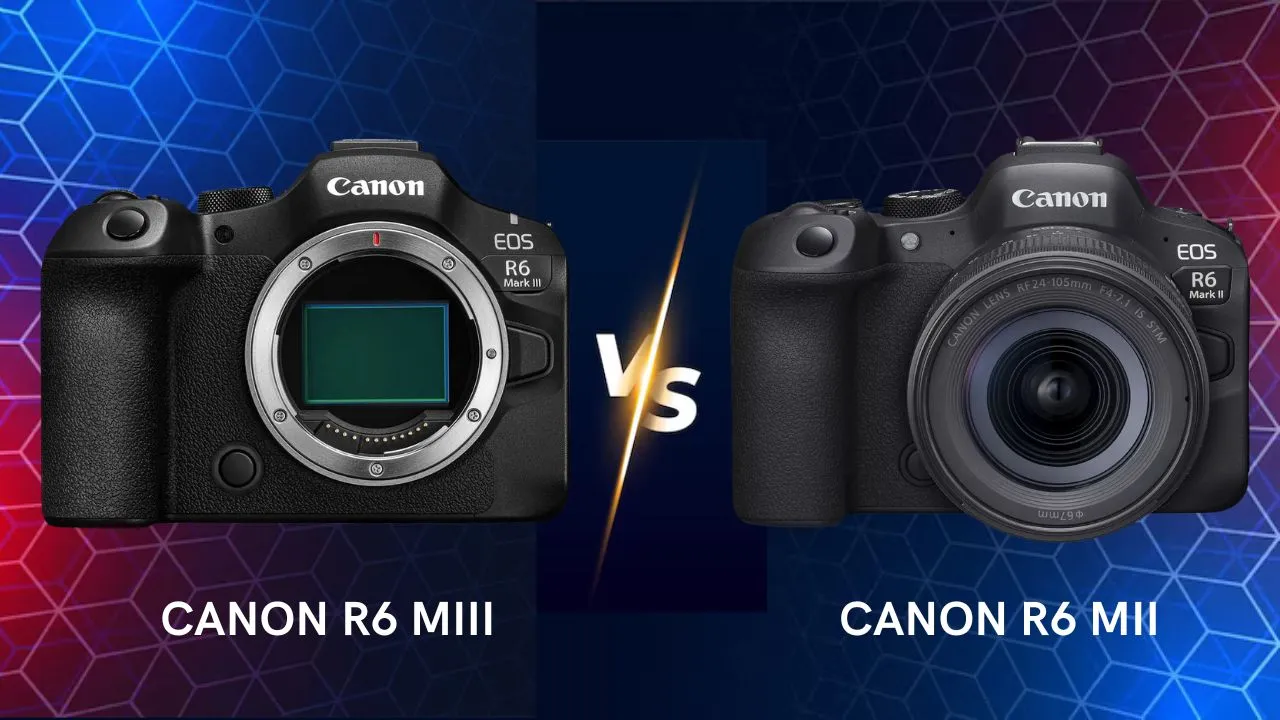
Canon EOS R6 Mark III vs Canon EOS R6 Mark II • What’s better?
Canon EOS R6 Mark III vs Canon EOS R6 Mark II • Which One Is Better?
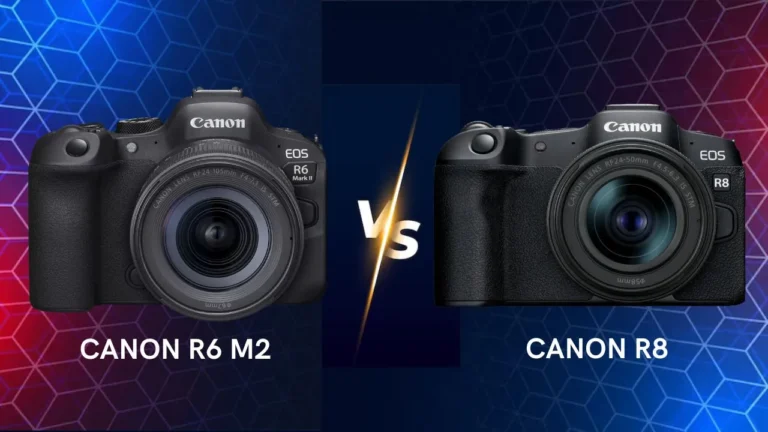
Canon’s beloved EOS R6 series has just received a major update — and the new Canon EOS R6 Mark III is making waves. Following the success of the R6 Mark II, Canon has taken everything users loved about that model and pushed it even further with more resolution, better video specs, and professional refinements.
At first glance, the R6 Mark III and R6 Mark II look almost identical. They share the same RF mount, Dual Pixel CMOS AF II system, and similar ergonomics. But under the hood, the R6 Mark III brings a brand-new 32.5 MP sensor, internal 7K RAW video, deeper buffers, and smarter autofocus — transforming it into one of Canon’s most powerful mid-range hybrids to date.
So, is the upgrade worth it? Let’s compare the Canon R6 Mark III vs Canon R6 Mark II in detail.
⚙️ Overview – Evolution, Not Revolution
Canon EOS R6 Mark III:
A full-frame mirrorless hybrid with a new 32.5 MP sensor, 40 fps burst rate, 8.5-stop image stabilization, and internal 7K RAW video. It’s Canon’s answer to hybrid shooters who need professional-level photo and video performance without stepping up to the R5.
Canon EOS R6 Mark II:
A proven all-around performer with a 24.2 MP sensor, 40 fps burst, 4K 60p oversampled video, and excellent autofocus. It’s reliable, fast, and versatile — still one of the best full-frame cameras for enthusiasts and professionals alike.
In short:
-
R6 Mark III = Higher resolution, 7K RAW video, better dynamic range.
-
R6 Mark II = Reliable, affordable hybrid still capable of professional results.
📸 Specifications Comparison
| Feature | Canon EOS R6 Mark III | Canon EOS R6 Mark II |
|---|---|---|
| Release Date | 2025 | 2022 |
| Camera Type | Full-Frame Mirrorless (Hybrid) | Full-Frame Mirrorless (Hybrid) |
| Sensor | 32.5 MP Full-Frame CMOS | 24.2 MP Full-Frame CMOS |
| Processor | DIGIC X | DIGIC X |
| Lens Mount | Canon RF | Canon RF |
| ISO Range | 100–64,000 (50–204,800 expanded) | 100–102,400 (50–204,800 expanded) |
| Dynamic Range | Up to 15 stops (CLog2) | Up to 14 stops |
| In-Body Stabilization (IBIS) | ✅ 8.5 stops | ✅ 8 stops |
| Autofocus System | Dual Pixel CMOS AF II (R1 Algorithms) | Dual Pixel CMOS AF II |
| AF Detection | Humans, Animals (Dogs, Cats, Birds, Horses), Vehicles | Humans, Animals, Vehicles |
| AF Working Range | EV -6.5 to 21 | EV -6.5 to 20 |
| Continuous Shooting | 12 fps (Mechanical), 40 fps (Electronic) | 12 fps (Mechanical), 40 fps (Electronic) |
| Shutter Speed | 1/8000 (mech) / 1/16000 (elec) | 1/8000 (mech) / 1/16000 (elec) |
| Video Recording | 7K 60p RAW Light / 4K 120p / 2K 180p | 4K 60p (oversampled from 6K) / 4K 180p (crop) |
| Color Profiles | Canon Log 2, Canon Log 3, HDR PQ | Canon Log 3, HDR PQ |
| Color Depth | 10-bit 4:2:2 | 10-bit 4:2:2 |
| Viewfinder | 3.69M-dot OLED (120Hz) | 3.69M-dot OLED (120Hz) |
| Screen | 3” Vari-Angle Touch LCD (1.62M dots) | 3” Vari-Angle Touch LCD (1.62M dots) |
| Storage | 1x CFexpress Type B + 1x SD UHS-II | Dual SD UHS-II |
| Connectivity | Wi-Fi (2.4 & 5GHz), Bluetooth 5.1, FTP | Wi-Fi (2.4 & 5GHz), Bluetooth 5.0 |
| Ports | Mic, Headphone, HDMI Type-A, USB-C | Mic, Headphone, Micro HDMI, USB-C |
| Weather Sealing | ✅ Yes (Dust & Moisture Resistant) | ✅ Yes |
| Battery | LP-E6P | LP-E6NH |
| USB Charging | ✅ Yes | ✅ Yes |
| Body Material | Magnesium Alloy | Magnesium Alloy |
| Weight (Body Only) | 699 g (25.7 oz) | 670 g (23.6 oz) |
| Dimensions | 138.4 × 98.8 × 88.3 mm | 138.4 × 98.4 × 88.4 mm |
| Price (Body Only) | ~$2,799 / €2,899 (Check on Amazon) | ~$2,499 / €2,799 |
🧱 Build and Handling
Both cameras look and feel nearly identical — the same grip, control layout, and button positioning. The R6 Mark III adds slightly improved ergonomics, a refined top dial, and a sturdier magnesium-alloy frame with enhanced sealing.
The biggest physical difference lies in the card slots — the R6 Mark III upgrades one SD slot to CFexpress Type B, allowing much faster buffer clearing and RAW video recording.
Verdict:
-
R6 Mark III: More durable and better suited for professional workflows.
-
R6 Mark II: Slightly lighter and simpler for everyday use.
🎯 Autofocus and Performance
Both cameras feature Canon’s Dual Pixel CMOS AF II, but the R6 Mark III inherits AI algorithms from the flagship Canon R1. This means more precise subject recognition and improved tracking for humans, animals, and vehicles — even in challenging lighting.
In real-world use, both are incredibly fast, but the R6 Mark III feels a bit “smarter,” with more refined transitions and improved focus accuracy during burst or video shooting.
Verdict:
-
R6 Mark III: Smarter, more reliable autofocus system.
-
R6 Mark II: Still extremely capable, but slightly less adaptive.
🎥 Video Capabilities
This is where the R6 Mark III makes a clear leap forward.
Canon EOS R6 Mark III:
-
7K 60p RAW Light recording (internal)
-
4K 120p (no crop) / 2K 180p slow motion
-
Canon Log 2 and Log 3
-
15 stops of dynamic range
-
Waveform monitoring and LUT preview
-
Pre-recording up to 5 seconds
-
Full-size HDMI Type-A
Canon EOS R6 Mark II:
-
4K 60p oversampled from 6K (no crop)
-
Canon Log 3 and HDR PQ
-
10-bit 4:2:2 recording
-
No internal RAW or waveform support
-
Micro HDMI output
Verdict:
-
R6 Mark III: Far more advanced video tool — true hybrid capability.
-
R6 Mark II: Excellent video camera, but limited for pro cinematography.
🧠 Image Quality
The R6 Mark III’s new 32.5 MP sensor delivers more detail and sharper images while maintaining great low-light performance. Dynamic range has improved slightly, and Canon’s color science continues to produce beautiful tones straight out of camera.
The R6 Mark II’s 24 MP sensor remains fantastic for general photography, with cleaner high-ISO performance and slightly smaller files, making it efficient for event and wedding work.
Verdict:
-
R6 Mark III: More resolution, better flexibility for cropping and detail.
-
R6 Mark II: Slightly better noise control in extreme low light.
🔋 Battery Life and Workflow
Both cameras use Canon’s LP-E6 series batteries with similar endurance (~580 shots per charge). The R6 Mark III improves thermal management for extended 4K or 7K recording and benefits from the faster CFexpress Type B card slot.
Verdict:
-
R6 Mark III: Better for intensive video and high-speed workflows.
-
R6 Mark II: Simpler, efficient for standard hybrid shooting.
💰 Price and Value
| Model | Approx. Price | Ideal For |
|---|---|---|
| Canon EOS R6 Mark III | ~$2,799 / €2,899 (Check on Amazon) | Hybrid shooters, professionals, and filmmakers |
| Canon EOS R6 Mark II | ~$2,499 / €2,799 | Enthusiasts and hybrid photographers on a budget |
–
The R6 Mark II remains an incredible value, offering flagship-like performance for a lower price.
The R6 Mark III, however, brings pro-level features — 7K RAW, CLog2, and CFexpress support — that justify its premium for advanced users.
Verdict:
-
R6 Mark II: Best value for most creators.
-
R6 Mark III: Best upgrade for professionals seeking 7K flexibility and faster performance.
Check availability and price on Amazon 🛒
📷 Canon EOS R6 Mark III — Amazon USA / Amazon Canada / Amazon UK / Amazon Australia
📷 Canon EOS R6 Mark II — Amazon USA / Amazon Canada / Amazon UK / Amazon Australia
Note: camerafight.com participates in the Amazon Associates Program. As an Amazon Associate, we earn from qualifying purchases.
🏁 Final Verdict — Canon R6 Mark III vs R6 Mark II
| Type of User | Recommended Camera |
|---|---|
| Beginner Creator / Enthusiast | Canon R6 Mark II |
| Professional Photographer | Canon R6 Mark III |
| Hybrid Photo + Video Shooter | Canon R6 Mark III |
| Event / Wedding Photographer | Canon R6 Mark II |
| Filmmaker / Cinematographer | Canon R6 Mark III |
| Budget Buyer | Canon R6 Mark II |
✅ In short:
Choose the Canon R6 Mark III if you want a more powerful, future-proof hybrid camera with 32.5 MP resolution, internal 7K RAW, and advanced autofocus performance.
Choose the Canon R6 Mark II if you’re an enthusiast or professional who values simplicity, reliability, and excellent 4K video without needing internal RAW or higher megapixels.
Both cameras are outstanding — but the R6 Mark III is the clear winner for creators who demand more flexibility and cutting-edge hybrid performance.
You may also want to read: