Canon EOS R6 III vs Sony A6700 • Which one is better?
Canon EOS R6 Mark III vs Sony A6700 • Which One Is Better?
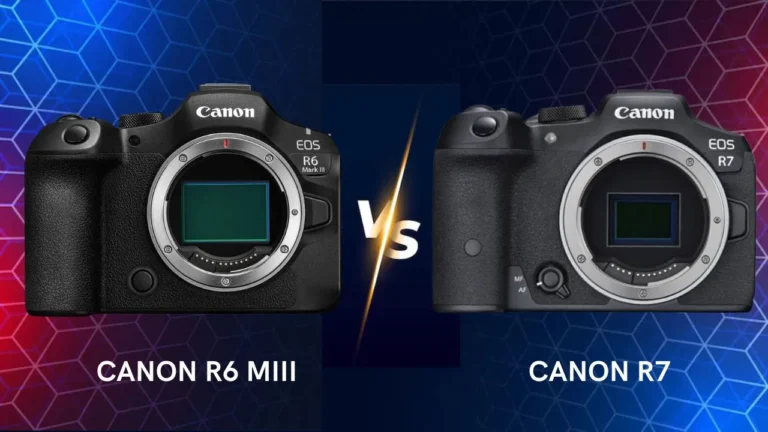
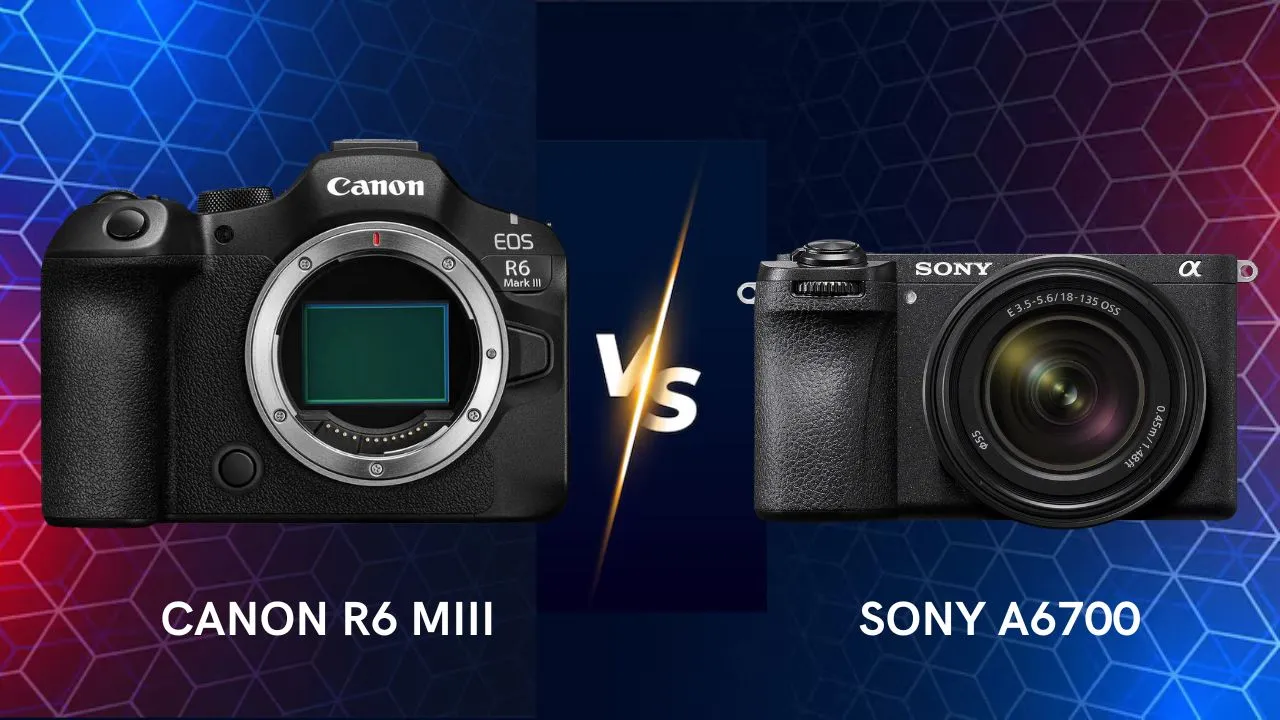
The Canon EOS R6 Mark III and Sony A6700 are two of the most advanced hybrid cameras in their respective categories — both designed to deliver top-tier photo and video performance for creators, enthusiasts, and professionals alike.
At first glance, both cameras share impressive specs: cutting-edge autofocus, 10-bit 4K video, and AI-driven subject recognition. However, they target different audiences.
The Canon R6 Mark III is a full-frame hybrid camera built for serious photographers and filmmakers who want maximum image quality, professional control, and cinematic video capabilities. The Sony A6700, on the other hand, is an APS-C powerhouse aimed at hybrid creators seeking a compact, travel-friendly body with exceptional autofocus and 4K performance.
So, which one is better? Let’s compare them in detail.
⚙️ Overview – Full-Frame Hybrid Power vs APS-C Efficiency
Canon EOS R6 Mark III:
Canon’s latest full-frame mirrorless camera boasts a new 32.5 MP sensor, up to 40 fps burst shooting, internal 7K RAW video, and 8.5 stops of in-body image stabilization. It combines the ergonomics and reliability Canon is known for with advanced video tools inherited from its Cinema EOS line.
Sony A6700:
Sony’s flagship APS-C camera brings a 26 MP BSI sensor, the powerful BIONZ XR processor, and a dedicated AI processing unit for next-generation autofocus and tracking. It offers 4K 120p recording, 10-bit color, and compact design — ideal for creators on the move.
In short:
-
R6 Mark III = Full-frame hybrid built for professionals.
-
A6700 = Compact APS-C hybrid optimized for creators and travel filmmakers.
📸 Specifications Comparison
| Feature | Canon EOS R6 Mark III | Sony A6700 |
|---|---|---|
| Release Date | 2025 | July 2023 |
| Camera Type | Full-Frame Mirrorless | APS-C Mirrorless |
| Sensor | 32.5 MP Full-Frame CMOS | 26 MP APS-C BSI CMOS |
| Processor | DIGIC X | BIONZ XR + AI Processing Unit |
| Lens Mount | Canon RF | Sony E-Mount |
| ISO Range | 100–64,000 (50–204,800 expanded) | 100–32,000 (expandable to 102,400) |
| Dynamic Range | Up to 15 stops (Canon Log 2) | Approx. 14 stops |
| In-Body Stabilization (IBIS) | ✅ 8.5 stops | ✅ 5 stops |
| Autofocus System | Dual Pixel CMOS AF II (R1 algorithms) | 759 Phase-Detection Points + AI Tracking |
| AF Detection | Humans, animals (dogs, cats, birds, horses), vehicles | Humans, animals, birds, cars, insects |
| AF Range | EV -6.5 to 21 | EV -3 to 20 |
| Continuous Shooting | 12 fps (mechanical), 40 fps (electronic) | 11 fps |
| Shutter Speed | 30s – 1/8000s (mech) / 1/16000s (electronic) | 30s – 1/8000s |
| Video Recording | 7K 60p RAW Light / 4K 120p / 2K 180p | 4K 120p / 4K 60p (no crop) |
| Color Profiles | Canon Log 2, Canon Log 3, HDR PQ | S-Cinetone, S-Log3, HLG |
| Color Depth | 10-bit 4:2:2 | 10-bit 4:2:2 |
| Viewfinder | 3.69M-dot OLED (120Hz) | 2.36M-dot OLED |
| Screen | 3” Vari-Angle Touch LCD (1.62M dots) | 3” Vari-Angle Touch LCD |
| Storage | CFexpress Type B + SD UHS-II | SD UHS-II |
| Connectivity | Wi-Fi (2.4 & 5GHz), Bluetooth 5.1, FTP, USB-C | Wi-Fi 5GHz, Bluetooth 5.1, USB-C |
| Ports | Mic, Headphone, HDMI Type-A, Multi-Function Hot Shoe | Mic, Headphone, Micro HDMI |
| Weather Sealing | ✅ Yes (Dust & Splash Resistant) | ✅ Light Weather Sealing |
| Battery | LP-E6P | NP-FZ100 |
| USB Charging | ✅ Yes | ✅ Yes |
| Body Material | Magnesium Alloy | Magnesium Alloy |
| Weight (Body Only) | 699 g (25.7 oz) | 493 g (17.4 oz) |
| Dimensions | 138.4 × 98.8 × 88.3 mm | 122 × 69 × 75 mm |
| Price (Body Only) | ~$2,799 / €2,899 (Check on Amazon) | ~$1,398 / €1,699 (check on Amazon) |
🧱 Build and Handling
The Canon R6 Mark III is built for professional use, with a weather-sealed magnesium alloy body, deep grip, dual card slots, and excellent balance with large lenses. It feels rugged and confident in the hand, suited for all-day shoots and outdoor work.
The Sony A6700 is significantly lighter and more compact — a better choice for travel or gimbal use. It has improved ergonomics over older A6000-series bodies but still lacks the deep grip and full-size HDMI of the Canon.
Verdict:
-
R6 Mark III: More durable, better handling for professional use.
-
A6700: Portable, ideal for travel and solo creators.
🎯 Autofocus and Performance
Both cameras use AI-powered autofocus with subject detection, but their approach differs.
The R6 Mark III inherits Canon’s advanced AF algorithms from the R1 and Cinema EOS series. It recognizes people, animals, and vehicles, tracking them reliably across the frame even in low light (down to EV -6.5).
The Sony A6700, powered by its dedicated AI processing chip, offers class-leading tracking accuracy for eyes, faces, and moving subjects, including birds and insects. Its real-time recognition is slightly faster and more adaptive.
Verdict:
-
R6 Mark III: Smooth, natural AF with outstanding reliability.
-
A6700: Smarter AI tracking and faster detection response.
🎥 Video Capabilities
Canon EOS R6 Mark III:
-
7K 59.94p RAW Light recording (internal)
-
4K 120p (no crop) / 2K 180p slow motion
-
Canon Log 2 & 3 with up to 15 stops DR
-
Open Gate 7K 30p for flexible cropping or vertical video
-
Waveform monitoring, LUT preview, proxy recording
-
No overheating in standard 4K modes
-
Full-size HDMI Type-A and dual card slots
Sony A6700:
-
4K 120p (no crop) and 4K 60p oversampled from 6K
-
S-Log3, S-Cinetone, and HLG picture profiles
-
10-bit 4:2:2 recording with full pixel readout
-
AI-based auto-framing and subject recognition
-
Great heat management for long 4K sessions
Verdict:
-
R6 Mark III: More cinematic and flexible (7K RAW + Open Gate).
-
A6700: Excellent for compact 4K production and social creators.
🧠 Image Quality
The Canon R6 Mark III’s 32.5 MP full-frame sensor offers better low-light performance, wider dynamic range, and smoother color transitions. It produces detailed, clean images with Canon’s signature color science — warm tones and pleasing skin rendering.
The Sony A6700’s smaller APS-C sensor is still extremely capable, delivering crisp, detailed images with impressive color depth. However, the Canon’s full-frame advantage makes a noticeable difference in shallow depth of field and noise control.
Verdict:
-
R6 Mark III: Best for professional photography and cinematic video.
-
A6700: Great balance of detail and portability for creators.
🔋 Battery Life and Workflow
Both cameras deliver solid endurance: around 570–600 shots or over 2 hours of 4K recording per charge.
Canon’s dual card slots (CFexpress + SD) and full-size HDMI offer superior flexibility for professional workflows, while Sony’s lighter body makes it better for run-and-gun setups.
Verdict:
-
R6 Mark III: Best for long-form professional projects.
-
A6700: Best for lightweight, travel-friendly work.
💰 Price and Value
| Model | Approx. Price | Ideal For |
|---|---|---|
| Canon EOS R6 Mark III | ~$2,799 / €2,899 (Check on Amazon) | Professionals, hybrid shooters, filmmakers |
| Sony A6700 | ~$1,398 / €1,699 | Creators, vloggers, travel filmmakers |
_
The A6700 delivers outstanding value — offering 90% of pro-level hybrid performance at half the price.
The R6 Mark III, however, justifies its higher cost with full-frame image quality, superior build, internal RAW video, and unmatched versatility.
Verdict:
-
A6700: Best value for creators and vloggers.
-
R6 Mark III: Best professional hybrid investment.
Check availability and price on Amazon 🛒
📷 Canon EOS R6 Mark III — Amazon USA / Amazon Canada / Amazon UK / Amazon Australia
📷 Sony A6700 — Amazon USA / Amazon Canada / Amazon UK / Amazon Australia
Note: camerafight.com participates in the Amazon Associates Program. As an Amazon Associate, we earn from qualifying purchases.
🏁 Final Verdict — Canon R6 Mark III vs Sony A6700
| Type of User | Recommended Camera |
|---|---|
| Beginner Creator / Vlogger | Sony A6700 |
| Professional Photographer | Canon R6 Mark III |
| Hybrid Photo + Video Shooter | Canon R6 Mark III |
| Travel Filmmaker | Sony A6700 |
| Studio or Documentary Filmmaker | Canon R6 Mark III |
| Budget Buyer | Sony A6700 |
_
✅ In short:
Choose the Sony A6700 if you want a compact, smart, and affordable hybrid camera for content creation, travel, and fast-paced shooting.
Choose the Canon R6 Mark III if you need full-frame quality, professional control, internal 7K RAW video, and a durable, weather-sealed body for demanding hybrid production.
Both are excellent — but they serve different creators.
The A6700 is the portable, AI-powered choice for creative storytellers.
The R6 Mark III is the pro-grade hybrid camera for those who want the best Canon has ever offered at this price point.